Plant Protein Benefits!

Camille Dubois
| 23-11-2026
 · News team
Protein is widely recognised for its role in maintaining muscle, supporting tissue repair, and helping the body feel satisfied after meals. However, the nutritional value of protein depends on more than its quantity. The foods supplying it also contain different combinations of fibre, minerals, vitamins, and amino acids that may influence metabolic health.
Research published in BMJ Nutrition, Prevention & Health in October 2026 suggests that replacing animal-based protein with plant-based alternatives may support weight reduction. The findings came from a dietary trial comparing a plant-based eating pattern with a Mediterranean-style diet.
What the Research Discovered
The study involved 62 people with overweight who participated in a randomised crossover trial. Participants followed a plant-based eating plan for 16 weeks and a Mediterranean-style plan for another 16 weeks, with a four-week break between the two periods.
The plant-based approach included fruits, vegetables, whole grains, and legumes while excluding animal products. The Mediterranean plan followed a different nutritional pattern, featuring vegetables, fruits, legumes, fish, nuts, olive oil, and selected lean meats. During the plant-based phase, participants lost an average of approximately 13 pounds, equivalent to 6 kilograms. No significant change in body weight occurred during the Mediterranean phase.
Researchers also examined changes in protein consumption. During the plant-based period, daily animal protein intake decreased by approximately 47.7 grams, while plant protein increased by 14.4 grams. Total protein consumption declined by around 33.3 grams per day.
Why Protein Sources May Make a Difference
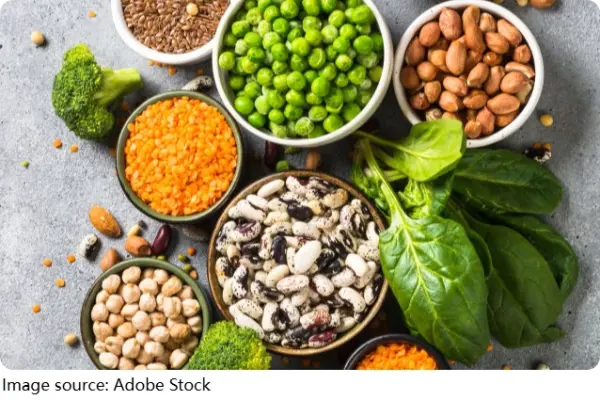
Animal and plant foods provide protein, but their nutritional compositions differ. Meat, eggs, and dairy products supply essential amino acids, while beans, lentils, soy foods, nuts, seeds, and whole grains provide protein alongside varying amounts of fibre and other nutrients.
Fibre is particularly important because it slows digestion and contributes to feelings of fullness. Meals containing beans, lentils, and whole grains may therefore help maintain satisfaction between meals and reduce the tendency to consume additional snacks. Plant-based foods also tend to have a lower energy density than many animal-based products. This means that a relatively generous portion can provide fewer calories, depending on preparation and accompanying ingredients.
The Possible Role of Amino Acids
The researchers examined several amino acids that differed between the two eating patterns. Four compounds received particular attention: isoleucine, lysine, methionine, and tyrosine. Participants who experienced greater reductions in these amino acids also tended to achieve greater weight reduction. Animal-derived foods generally contain higher amounts of certain amino acids than many plant-based alternatives.
However, the researchers could not establish that reducing these compounds directly caused the observed changes. Differences in fibre consumption, food energy density, carbohydrate intake, and other dietary characteristics may also have contributed. Consequently, the findings should not be interpreted as a recommendation to avoid individual amino acids.
Expert Insight
Yoshua Quinones, a board-certified internist with Medical Offices of Manhattan and a contributor to LabFinder.com, cautioned against interpreting the findings as proof that one eating pattern is universally superior. “These data don’t show that a vegan diet is generally better for weight loss than a Mediterranean diet,” Quinones explained to Medical News Today.
How to Introduce More Plant Protein
Replacing every animal-based meal immediately is unnecessary. Gradual adjustments can make dietary changes easier to maintain while introducing a wider range of nutrients. Several practical options include:
- Replace some meat in soups with lentils, chickpeas, or beans.
- Add tofu or tempeh to vegetable-based meals.
- Include edamame, peas, and beans in salads.
- Choose oatmeal or whole grains alongside nuts and seeds.
- Prepare bean-based chilli or lentil dishes for convenient meals.
- Combine different plant protein sources throughout the day.
Why More Research Is Still Needed
Although the trial provides useful evidence, its relatively small participant group limits how broadly the findings can be applied. The research also examined complete dietary patterns rather than changing protein sources in isolation. Participants simultaneously altered several aspects of their eating habits, making it difficult to determine how much of the weight reduction resulted specifically from replacing animal protein.

Replacing some animal-based protein with plant alternatives may support weight management, particularly when meals contain legumes, whole grains, vegetables, and other minimally processed ingredients. A balanced eating pattern, adequate nutrient intake, and sustainable food choices remain essential for long-term health.