Exercise for Healthy Aging

Samir
| 20-11-2026
 · News team
Regular physical activity plays an important role in maintaining health as people age. Exercise supports cardiovascular function, preserves muscle strength, improves balance, and helps maintain mobility.
Combining aerobic activity with strength and balance training helps preserve physical abilities and independence.
As people age, gradual changes in muscle mass, cardiovascular capacity, coordination, and endurance can affect everyday activities. A balanced exercise program helps maintain these functions through different forms of physical activity.
Cardiovascular Health and Endurance
Aerobic exercise improves cardiovascular fitness and the body's ability to deliver oxygen during physical activity. Running and jogging provide vigorous-intensity exercise, while brisk walking offers a moderate-intensity alternative.
Regular aerobic activity supports heart health, blood pressure regulation, and endurance. Beginners can start with comfortable walking sessions and gradually increase their duration and intensity. Running intervals may be introduced when appropriate for their fitness levels.
Maintaining Muscle Function
Muscle strength is essential for mobility and everyday physical performance. Resistance training helps maintain muscular function and supports movements such as standing from a chair, climbing stairs, and carrying groceries.
Chair squats, supported leg raises, and resistance-band exercises can strengthen major muscle groups. Running also activates the muscles in the legs and hips but does not replace targeted resistance training.
Including strengthening exercises at least twice weekly helps preserve the physical capacity needed for independent living.

Balance, Coordination and Mobility
Balance and coordination depend on the interaction of muscles, joints, sensory systems, and the nervous system. Maintaining these functions supports stable movement and physical independence.
Supported standing exercises, controlled weight shifts, and functional strength movements can improve stability. Multicomponent activities emphasizing balance and functional strength are particularly valuable when included regularly.
Exercise and Mental Health
Regular physical activity supports mental well-being by improving mood, supporting sleep quality, and helping regulate stress. Walking and running can also provide opportunities for social interaction and outdoor activity.
Medical Exercise Recommendations
A comprehensive exercise program should include aerobic activity, muscle strengthening, and balance-focused exercises.
The World Health Organization emphasizes the importance of regular movement: "All older adults should undertake regular physical activity."
General weekly recommendations include:
- Aerobic exercise: 150–300 minutes of moderate-intensity activity or 75–150 minutes of vigorous-intensity activity, or an equivalent combination.
- Muscle strengthening: Exercises involving all major muscle groups on at least two days each week.
- Balance training: Multicomponent activities emphasizing functional balance and strength on three or more days each week.
These recommendations are general targets. People with lower fitness levels can begin with shorter sessions and gradually increase activity according to their capabilities.
Exercise Safety and Medical Guidance
Exercise intensity should reflect individual health conditions, physical capacity, and previous activity levels. Gradual progression allows the body to adapt to increasing physical demands.
Important precautions include:
- Warm-up: Begin with gentle movements before more demanding exercise.
- Suitable footwear: Choose comfortable shoes with adequate support.
- Hydration: Drink sufficient water before, during, and after exercise.
- Recovery: Allow adequate rest between demanding sessions.
- Physical monitoring: Stop exercising if chest discomfort, unusual breathlessness, dizziness, or faintness occurs and seek medical assessment.
People with cardiovascular conditions, ongoing health concerns, or mobility limitations should seek medical guidance when planning a new exercise program.
Walking as an Effective Alternative
Running is not essential for maintaining cardiovascular fitness. Brisk walking provides an effective moderate-intensity alternative that can be adapted to different fitness levels.
Combining walking with resistance and balance exercises creates a comprehensive routine that supports cardiovascular endurance, muscle function, and mobility.
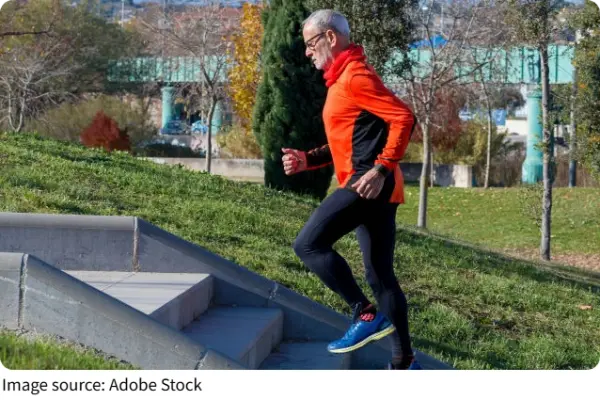
Regular physical activity is an important component of healthy aging. Aerobic exercise supports cardiovascular health, resistance training preserves muscle strength, and balance activities help maintain coordination and mobility.
Whether through running, brisk walking, or targeted strengthening exercises, choosing suitable activities and maintaining consistency can help preserve physical function, support long-term health, and promote independence.