Lightweight Supercar Race

Arjun Mehta
| 19-11-2026
 · Automobile team
Hello, readers. A decade ago, the fastest way to sell a supercar was to add power.
Bigger engine, bigger numbers on the spec sheet. But look at what makers are actually bragging about now, and you'll notice the conversation has shifted to the scale. Less mass, not more muscle, is where the real engineering fight is happening.
Weight is the enemy you feel
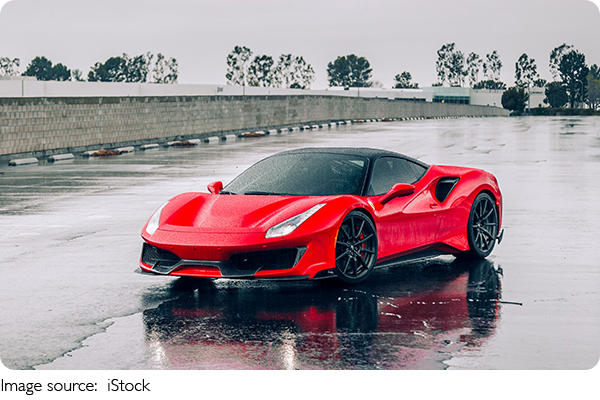
A lighter car doesn't just accelerate faster. It changes direction more cleanly, stops shorter, and wears its tires less. Ferrari's engineers have talked about this for years with the 488 Pista, which dropped roughly 90 kg compared to the standard 488 GTB through carbon fiber wheels, a lighter engine internals package, and stripped cabin materials. You feel that 90 kg in every corner entry. It's not a number on a brochure.
Carbon fiber does the heavy lifting
The single biggest shift is the move to a carbon fiber monocoque, the structural tub that everything else bolts onto. McLaren's entire Ultimate Series uses one, and the McLaren P1 weighed in at around 1,490 kg dry thanks in large part to that carbon tub. Carbon is roughly five times stronger than steel at a fraction of the weight, but it's expensive and slow to produce. That cost is exactly why it trickles down slowly from halo models to volume cars.
Aluminum is the quiet workhorse
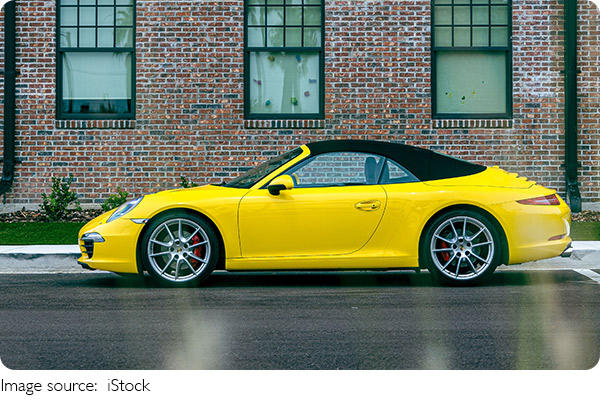
Not every panel needs to be carbon. Aluminum spaceframes are still the backbone of plenty of fast cars, and they're getting smarter. The Audi R8 uses an aluminum and carbon hybrid spaceframe, and the aluminum sections are bonded and riveted rather than welded, which saves weight at every joint. Honda's NSX went further with a mostly aluminum frame wrapped around a carbon floor. You don't always need the exotic material, you need the right material in the right place.
The small stuff adds up
Here's where it gets obsessive. Titanium exhaust systems, hollow anti-roll rods, carbon ceramic brake discs, even lightweight wiring harnesses. The Bugatti Chiron's titanium exhaust and 3D-printed titanium components shaved grams that most makers wouldn't bother chasing. Porsche's 911 GT3 RS uses carbon fiber reinforced plastic for the front lid and wings, and that's before you count the magnesium roof option. None of these are dramatic alone. Stack twenty of them and you've dropped 50 kg.
Why it matters more than power
There's a simple reason engineers chase weight instead of horsepower. Adding power is easy, just turn up the boost or add an electric motor. Removing mass is hard, and it pays off everywhere at once. A car that's 100 kg lighter will out-brake, out-corner, and out-accelerate a heavier car with the same power, and it'll do it on less fuel and with less tire wear. That's the whole game now.
The next time you read a supercar spec sheet, skip the horsepower line first. Look at the curb weight, then look at what it's made of. That's where the real story is, and it's the one that'll tell you how the car actually feels when you're behind the wheel.