San Juan Beyond Postcard

Celia
| 17-11-2026
 · Travel team
Some may treat San Juan as a cruise stop, a few hours of shopping before the ship pulls out.
But give it three days, and the city opens up in a way a port call never allows. You get the forts, the cobblestones, the beaches, and a food scene that runs from street-side snacks to serious sit-down dinners, all within a compact area you can actually walk.
Start with the old city
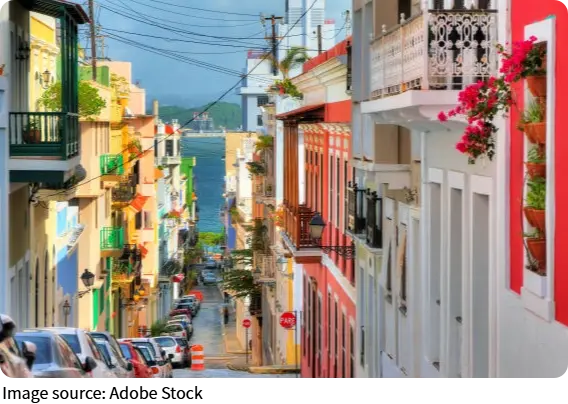
Old San Juan sits on a small island connected to the mainland by bridges, and the whole historic district is walkable in a day if you pace yourself. The streets are paved with adoquines, the blue-glazed cobblestones that were originally brought over as ship ballast. Walk Calle Fortaleza for the umbrella-lined stretch near the governor's mansion, then cut over to Calle San Sebastián for a quieter feel. The city walls and the Paseo de la Princesa offer shade and a sea breeze in the afternoon heat. Budget a full morning here, not an hour.
San Juan
The forts are worth the ticket
Castillo San Felipe del Morro and Castillo San Cristóbal are both part of the San Juan National Historic Site, and a single $10 ticket covers admission to both for the day. El Morro is the big one, a six-level fort with a lighthouse and a lawn that locals use for kite flying on windy afternoons. San Cristóbal is larger in land area and has tunnels you can walk through. Go early, before 10 a.m., because the stone walls soak up heat fast and the cruise crowds arrive mid-morning.
Where the beaches actually are
The old city doesn't have a real swimming beach, so don't plan your day around one there. Instead, head to Condado, about a 10-minute taxi ride east, where the beach runs right along Ashford Avenue. For calmer water and a more local crowd, continue to Ocean Park, a wide stretch of sand with fewer vendors and no high-rises directly on the water. Escambrón, near the entrance to the old city, is a small protected cove that works well for a quick swim.
Getting around without a car
You don't need to rent a car if you stay in the old city or Condado. Taxis from the airport run on a fixed zone rate, roughly $25 to $30 to Old San Juan, and you can confirm the price before you get in. Ride-share apps work too. Between the old city and Condado, a taxi is usually under $15. The public bus system, AMA, is free but slow and not built for visitor routes, so treat it as a backup.
What a weekend costs
A mid-range hotel in Old San Juan or Condado runs about $180 to $250 a night, more in winter high season. Budget around $40-$60 per day for meals if you mix casual spots with one nicer dinner. Museum and fort entry fees are modest: the $10 fort ticket and most small museums charge under $10. A realistic long-weekend budget, excluding flights, is between $600 and $800 per person for three nights.
Small things that save you hassle
Wear shoes with grip, because the blue cobblestones get slick when wet and the sidewalks are uneven. Carry cash for small vendors and the occasional street food cart. The old city is hilly, so plan your walking route downhill toward the water rather than back up. And check the ferry schedule if you're adding a day trip to Culebra or Vieques, since the passenger ferry from Ceiba books out on weekends.

San Juan rewards the traveler who slows down instead of checking off a list. Pick two anchors for each day, one fort or museum and one neighborhood, and let the rest of the time fill itself. You'll come back with a feel for the city that no shore excursion can give you.