Getting Around Ireland

Leila
| 06-11-2026
 · Travel team
Ireland may look compact on a map, but getting between its cities, villages and remote coastal landscapes requires a little planning. Public transport works well for major routes, while renting a car remains the easiest option for travelers who want to explore rural areas at their own pace.
The best choice often depends on the itinerary. Trains are comfortable for journeys between larger cities, buses reach more destinations, and a car opens up parts of the countryside that are difficult to access otherwise.
Travel Between Cities By Train
Rail travel is one of the most comfortable ways to move between Dublin and major destinations such as Galway, Cork, Limerick, Kilkenny and Waterford.
Booking in advance is usually the best way to keep costs down. Low online fares can start at around €13.99 each way between Dublin and Galway, €14.99 to Limerick and €21.49 to Cork. Prices increase as cheaper tickets sell out, especially around weekends and busy travel periods.
Trains are particularly useful for travelers who prefer to avoid driving. They usually arrive close to city centers, which also removes the need to find parking after reaching the destination.
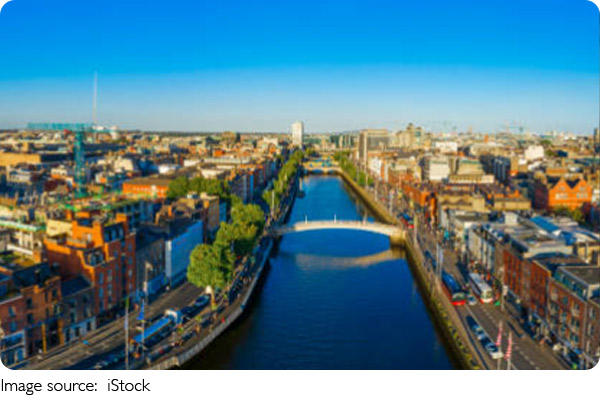
Dublin
Use Buses For Wider Coverage
Buses reach considerably more places than the rail network and are especially useful for smaller towns and rural areas.
Within Dublin, a 90-minute adults fare costs €2 when using a prepaid transport card. The same fare can cover eligible combinations of buses, trams and local rail services during that period.
Travelers using public transport frequently within the central Dublin zone benefit from a daily fare cap of €6 and a weekly cap of €24.
Local fares are also relatively affordable elsewhere. Bus journeys within Galway, Limerick and Waterford cost around €1.35 with a transport card, while fares in Cork are approximately €1.70.
Rent A Car For The Countryside
A car becomes particularly valuable when the itinerary includes the Wild Atlantic Way, the Ring of Kerry or smaller villages away from major transport routes.
Distances are not always large, but narrow rural roads can make journeys slower than expected. Driving is on the left, and visitors unfamiliar with this should allow time to adjust before heading onto winding country roads.
Rental prices vary considerably depending on the season, vehicle category and insurance. During popular summer periods, booking well ahead is strongly recommended. Additional expenses can include fuel, parking and road tolls, so the advertised daily rental rate should not be treated as the complete cost of the trip.
For two or more travelers sharing expenses, however, a car can become surprisingly practical and may offer much greater freedom than arranging several bus connections.
Explore Dublin Without A Car
Driving is rarely necessary in Dublin itself. Buses, trams and suburban trains cover most areas visitors are likely to explore, while many central attractions are within walking distance of one another.
Short public transport journeys cost around €1.50, while the standard 90-minute fare is €2. The automatic daily cap of €6 means travelers making several journeys do not need to worry about fares continuing to rise throughout the day.
Walking is often faster in the historic center, particularly when moving between areas around Trinity College, St Stephen's Green and the River Liffey.
Consider Cycling For Shorter Trips
Cycling can be an enjoyable option in cities and quieter rural areas, particularly when the weather is mild.
Long-distance routes can be more demanding because conditions vary considerably between dedicated cycle paths and narrow roads shared with traffic. Wind and rain can also change quickly, especially along the west coast.
For a more relaxed experience, bicycles can be rented for a day to explore greenways and other traffic-free routes. Prices vary by location, but a standard day rental commonly starts at around €20–€30, with electric bikes costing more.
Choose Transport To Match The Route
For a trip focused on Dublin, Galway and Cork, public transport is usually sufficient. Advance train fares can keep long-distance journeys relatively inexpensive, while local buses and trams make getting around cities straightforward.
A more ambitious itinerary through western Ireland is different. Many of the most memorable landscapes lie beyond railway lines and major bus routes, making a rental car far more useful.
Combining both approaches often works best: use trains between larger cities, then rent a car only for the days spent exploring the countryside. It keeps the journey flexible while avoiding unnecessary driving and parking costs in Ireland's busiest urban areas.