Cezanne's Art Legacy!

James Carter
| 05-11-2026
 · Art team
An artist's influence is not always measured by how many paintings they produce or how widely their work is recognised during their lifetime. Sometimes, it becomes clearer through the generations of creators who build upon their ideas.
A major exhibition in Paris brings this story into focus by examining how Paul Cézanne shaped the direction of modern painting, from his contemporaries to artists working today.
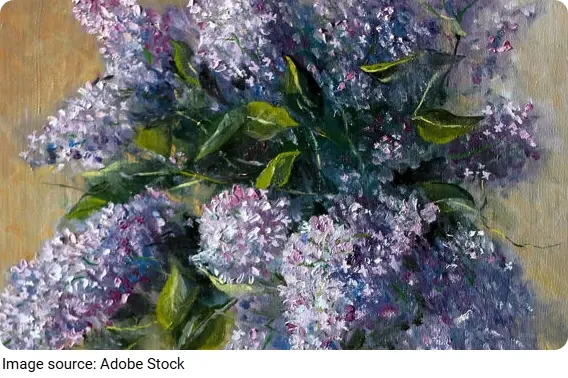
Titled Cezanne and Us, the exhibition brings together works by the French painter and a wide range of artists influenced by his approach. Rather than presenting a conventional retrospective, it places different generations in conversation, allowing visitors to compare how painters have interpreted and transformed his ideas.
A Major Exhibition in Paris
Presented at the Grand Palais, Cezanne and Us is a collaboration involving the Centre Pompidou, the Musée d'Orsay and the Musée de l'Orangerie. It marks the first major exhibition dedicated to Cézanne in Paris since 1995, making its return to the Grand Palais an important event for the city's art programme.
The exhibition includes approximately 180 works, with around 70 paintings by Cézanne and contributions from other artists. The selection brings together figures from different periods and artistic backgrounds, including Pablo Picasso, Henri Matisse, Piet Mondrian, Joan Mitchell, Bridget Riley and Peter Doig.
Why Cézanne Changed Painting
Cézanne was known for looking at familiar subjects in a distinctive way. Landscapes, arrangements of fruit, everyday objects and views of the natural world became opportunities to study shape, colour and structure. Instead of trying to reproduce every visible detail, he often simplified forms and built images through carefully considered areas of colour.
His approach encouraged painters to think more deeply about how a picture could be organised. A landscape, for example, did not have to function simply as a realistic view. Its composition, arrangement of shapes and relationships between colours could become equally important.
Influence Began During His Lifetime
Although Cézanne is now regarded as a major figure in art history, recognition did not arrive immediately. His work attracted attention from fellow artists and collectors before his reputation became widely established. Paul Gauguin was among those who acquired his paintings during the 1880s. Émile Bernard also helped bring attention to Cézanne by writing about his artistic approach in 1904. Other painters studied his methods while he was still alive, showing that his influence was already developing before his death in 1906.
The exhibition also highlights how his reputation spread beyond France. His paintings were shown in Berlin from the late 19th century and later appeared in important exhibitions in Moscow. These international connections helped introduce his ideas to artists working in different creative environments.
From Modernism to Contemporary Art
The exhibition follows Cézanne's legacy through several artistic movements. Visitors can trace connections between his work and the development of Cubism, abstraction and other approaches that reshaped painting during the 20th century. Artists such as Picasso and Mondrian responded to different aspects of his visual language. Some focused on the structure of objects, while others developed new ways to use colour and simplify compositions.
One particularly interesting comparison pairs Cézanne's The Bather, created around 1885, with Peter Doig's Bather from 2023. Doig's painting demonstrates how an earlier artwork can remain relevant to a contemporary artist without being copied directly. The relationship is based on interpretation, memory and creative response.
Landscapes, Objects and New Interpretations
Certain subjects appear repeatedly throughout Cézanne's career, particularly still-life arrangements and the landscapes around Mont Sainte-Victoire. These recurring themes provide a useful way to understand how later artists responded to his work. Two paintings of the mountain are included in the exhibition: Montagne Sainte-Victoire with Large Pine from 1887 and Mont Sainte-Victoire Seen from Les Lauves from 1904–05.
Cezanne and Us offers an engaging look at how one painter's ideas continued to shape artistic practice long after his lifetime. By placing Cézanne alongside artists from different periods, the exhibition makes his importance easier to understand through direct comparisons.
More than a tribute to a celebrated painter, the show examines how creativity develops through observation, experimentation and reinterpretation. It demonstrates that artistic influence is not simply about following an established style. It is also about taking an earlier idea and finding a new way to make it meaningful.