Sheet Pan Dinner Formula

Arjun Mehta
| 10-11-2026
 · Cate team
Some nights call for a hot, balanced dinner, but a long recipe and a sink full of dishes feel like too much. A sheet pan dinner is built for exactly those evenings.
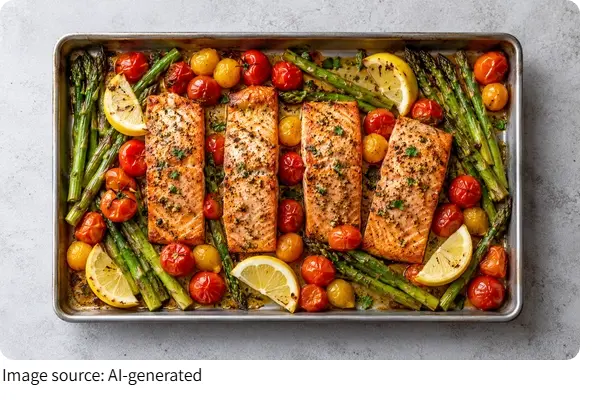
The formula relies on three core components, a protein, a vegetable, and a starch, all cooked together on a single rimmed baking sheet. Once you know the right temperature, how to cut ingredients for even cooking, and how to season simply, you can build dinner without a recipe.
Ingredients
The formula is measured per person and works best with sturdy, everyday ingredients. For each serving, you need:
- 4 to 6 ounces of protein, such as chicken thighs, salmon fillets, or firm tofu
- 1 to 1.5 cups of sturdy vegetables, such as broccoli, bell peppers, zucchini, or sweet potatoes
- 1 medium potato, 1 small sweet potato, or 1/2 cup of pre-cooked grains such as farro or quinoa
- About 1 tablespoon of olive oil per 2 cups of food
- Salt and any dry spices you like
These amounts make one serving, so multiply them by the number of people. Everything should fit in a single layer on a half-sheet pan (18x13 inches); if it does not, a second pan works better than a crowded one.
Choose a sturdy rimmed sheet, since thin ones can warp in a hot oven, letting oil pool and food brown unevenly. Prices vary, but a typical sheet pan costs around $15 to $25, and ingredients range from $3 to $8 per serving.
Steps
The method stays the same whatever you put on the pan:
1. Preheat the oven to 400°F (200°C).
2. Cut the protein into even pieces so it cooks in the same time as the vegetables.
3. Toss each ingredient separately with olive oil, salt, and any dry spices.
4. Place the starch, such as potato wedges, in the center or around the edges, then add the protein and vegetables with space between each piece.
5. Roast for 20 to 30 minutes, flipping everything halfway through.
6. Check the protein's internal temperature: 165°F for chicken thighs, 145°F for salmon, and 165°F for tofu.
Getting Better Browning
Spacing matters because, as the test cooks at America's Test Kitchen explain, gaps between pieces prevent a buildup of steam that stops food from browning. Oil helps too, since it carries heat from the metal of the sheet into the food.
If the side touching the pan has not browned at the halfway point, give it a few more minutes before flipping. Cutting broccoli into wedges gives it more contact with the hot metal, and broccoli and squash brown well on the lowest oven rack. For extra flavor, add a flavored salt or a spoonful of dressing after roasting.
Recipe Variations & Timing
A Mediterranean pan pairs chicken thighs, cherry tomatoes, red onion, and chickpeas with oregano and lemon, roasted for 25 minutes at 400°F. An Asian-inspired version uses salmon, broccoli, and sweet potato with soy sauce, ginger, and sesame oil, roasted for 20 minutes.
A Tex-Mex style combines shredded chicken, bell peppers, onions, and corn with cumin and chili powder, roasted for 25 minutes. Whatever the mix, cut harder vegetables such as sweet potatoes and carrots smaller than quicker-cooking ones like zucchini and bell peppers, so everything finishes together without burnt edges.
Storage & Reheating
Leftovers keep in an airtight container in the refrigerator for up to 3 days. Reheat them in a 350°F oven for 10 minutes to restore crispness, or in a covered skillet with a splash of water for 5 minutes. Avoid the microwave, which turns vegetables soggy.
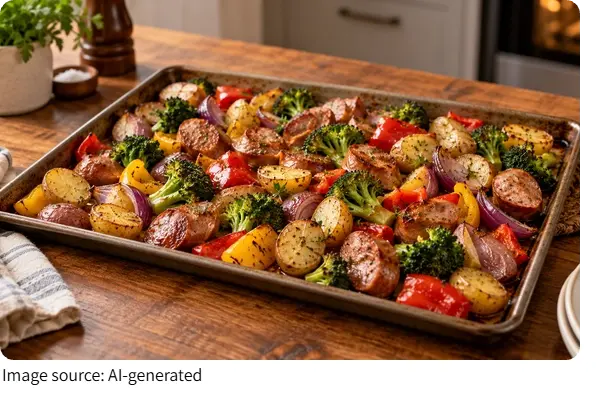
For busy weeks, chop the vegetables up to 2 days ahead and keep them in separate bags in the fridge, then toss them with oil and seasoning just before roasting. From there, changing the spice blend or sauce each time turns one formula into a set of go-to dinners. Happy cooking, Lykkers!