Walk Strong, Stay Steady
Julian
| 28-10-2026
 · News team
Walking supports everyday activities, from moving around the home to participating in the community.
Age-related changes, illness, surgery, or periods of reduced activity can affect strength, coordination, endurance, and balance.
A personalized rehabilitation program can help address these changes through structured exercises designed around individual abilities, health needs, and functional goals.
How Walking Rehabilitation Helps
Walking rehabilitation focuses on improving the movements required for everyday life, including standing up, taking steps, changing direction, and walking on different surfaces. A physiotherapist assesses mobility and develops an exercise plan that reflects the person's current abilities and recovery needs.
With consistent, appropriate practice, rehabilitation may improve leg strength, walking endurance, postural control, and confidence during daily activities. Targeted balance and strength exercises can also help reduce the risk of falls in people who benefit from this training.
Key Rehabilitation Exercises
Supported Walking Practice
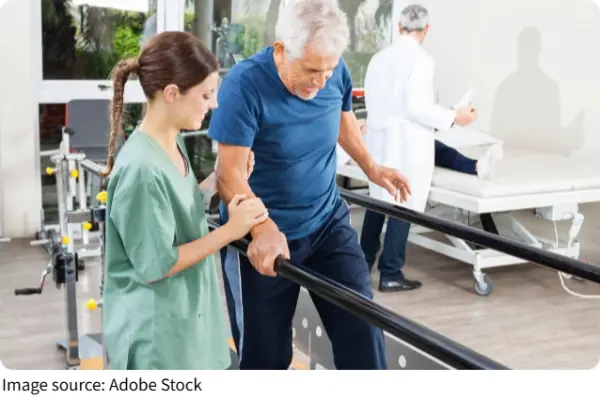
Walking with a suitable walking aid or under the guidance of a physiotherapist provides support while practicing controlled steps. Training may focus on posture, foot placement, weight transfer, and a steady walking pattern. The level of assistance should be tailored to the individual's abilities and rehabilitation progress.
Balance and Stepping Practice
Controlled weight shifting, forward stepping, and gentle side-stepping help develop stability and coordination. Exercises should begin at an appropriate difficulty level, with stable support or professional assistance when needed.
Leg Strengthening
Sit-to-stand practice and seated knee extensions help strengthen the muscles involved in standing and walking. The number of repetitions and level of resistance should reflect physical ability, comfort, and rehabilitation goals.
Step and Stair Training
Practicing low steps can help develop the strength and coordination required to manage stairs and curbs. This activity should be introduced only when appropriate, with suitable handrails or professional support to maintain stability.
Creating a Safe Exercise Environment
Before beginning rehabilitation, a healthcare professional should consider medical history, mobility, balance, pain, and individual exercise requirements. People recovering from surgery or a serious illness may need specific adjustments to their rehabilitation program.
Practical precautions include:
- Wear well-fitting footwear with non-slip soles.
- Keep walking routes clear and ensure adequate lighting.
- Use prescribed walking aids according to professional instructions.
- Begin with manageable sessions and increase activity gradually.
- Pause exercise and seek medical advice if significant pain, dizziness, or unusual breathlessness develops.
- Seek emergency medical attention for chest pain, fainting, or sudden weakness or difficulty speaking.
Home adaptations, such as secure handrails and clear pathways, can further support safer movement. A physiotherapist can help identify changes that suit the person's mobility and living environment.
Building a Sustainable Routine
Regular practice helps reinforce movement skills and supports gradual improvements in physical function. The appropriate frequency and duration depend on health status, current ability, and recovery progress. Shorter sessions with rest periods may be suitable for people who are beginning rehabilitation or have limited endurance.
For people aged 65 and older, general physical activity recommendations include aerobic movement, muscle strengthening, and balance training. These activities should be adapted to individual abilities and medical needs, particularly during recovery from illness, surgery, or injury.
The Centers for Disease Control and Prevention emphasizes the importance of physical activity: “Regular physical activity is one of the most important things you can do for your health.”
Progress can be assessed through meaningful changes in everyday function, such as standing up more easily, walking farther, turning with greater control, or completing familiar activities with less assistance. Regular reassessment helps the rehabilitation team adjust exercises and establish realistic goals.

Supporting Long-Term Independence
Walking rehabilitation provides a structured way to develop mobility, strengthen essential muscles, and improve balance. Combining individualized exercises with professional guidance and suitable home adaptations can help older people work toward greater independence in everyday life.
A successful program prioritizes safe movement, achievable goals, and gradual progress. By focusing on practical abilities rather than distance alone, rehabilitation can help individuals maintain function and participate more confidently in their daily routines.