Mantua's Palace Reawakens

Hana
| 21-10-2026
 · Art team
One of Italy's most remarkable historic residences is entering a new chapter after nearly 14 years of restoration. The Palazzo Ducale in Mantua, severely damaged by earthquakes in 2012, is approaching the completion of an extensive programme of repairs and improvements.
According to museum director Stefano L'Occaso, approximately 99% of the work has been completed. The project has strengthened vulnerable structures, restored historic interiors and reopened areas that visitors had rarely been able to explore.
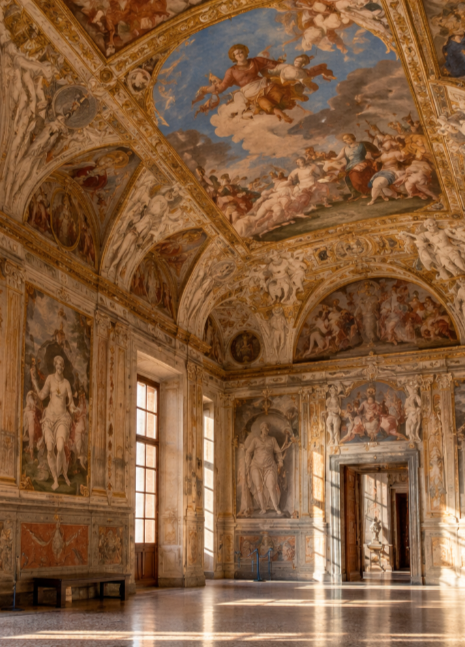
A Renaissance Treasure Reborn
Covering approximately 35,000 square metres and containing around 1,000 rooms, the Palazzo Ducale is among Italy's largest historic palace complexes.
Its origins date back to the 13th century, although much of its distinctive character developed under the Gonzaga family, who transformed Mantua into an important centre of Renaissance art and culture.
Unlike many comparable Italian residences that were demolished or extensively altered, the palace retains architectural features from several different periods. Its surviving interiors offer an unusually detailed picture of how an influential Renaissance court developed over centuries.
The complex eventually became a museum in the late 19th century. In 2008, Mantua's historic centre received UNESCO World Heritage recognition alongside nearby Sabbioneta.
Repairing The Earthquake Damage
Two powerful earthquakes struck northern Italy in May 2012, leaving significant damage throughout the palace. Among the most seriously affected structures was the bell tower of the Basilica Palatina di Santa Barbara, which came dangerously close to collapse.
Another major concern was the Camera Picta, a celebrated chamber decorated by Renaissance painter Andrea Mantegna between 1465 and 1474. Its elaborate frescoes, depicting members of the Gonzaga court, suffered a substantial fissure during the disaster.
Both the chamber and the bell tower had been repaired by the end of 2016. However, restoring the wider complex required considerably more time.
The subsequent programme combined structural reinforcement with careful conservation of decorative surfaces, ceilings and historic architectural details.
Forgotten Rooms Open Again
Several important sections have recently returned to public use.
The Appartamento Grande di Castello, commissioned by Duke Guglielmo Gonzaga, reopened in July 2026 following work on its ceilings, walls and floors. The rooms celebrate the family's achievements and had previously been accessible only occasionally.
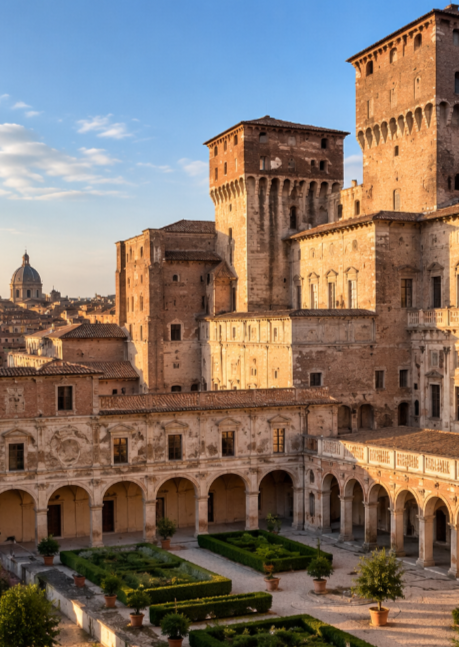
Restoration has also transformed the palace's south-western medieval tower. Following extensive cleaning and the installation of an earthquake-resistant floor, the structure is now regularly accessible to visitors.
In September, a restored portico beside the 17th-century Giardino dei Semplici reopened, allowing visitors to enjoy views of the garden from an upper-level corridor.
Another important reopening is expected before the end of 2026. The Sala delle Sigle, associated with Francesco II Gonzaga and Isabella d'Este, will welcome visitors again after remaining closed since the earthquakes.
Its restored presentation will include historic majolica tiles, ceramics and Renaissance glass.
Art Returns To Mantua
The restoration is accompanied by renewed attention to the Gonzaga family's artistic legacy. An exhibition dedicated to Ferdinando Gonzaga, running from 10 October 2026 until 10 January 2027, brings together works associated with the duke's patronage.
Loans from major European institutions, including the Louvre in Paris and Vienna's Kunsthistorisches Museum, help reconnect Mantua with artworks dispersed from the Gonzaga collections centuries ago.
The exhibition offers visitors an opportunity to understand the family's influence on European artistic traditions.
What Comes Next For The Palace?
Approximately €15 million has been invested in earthquake-related repairs and protective structural measures.
With more rooms and corridors accessible, museum administrators now face a different challenge: helping visitors navigate the enormous complex without feeling overwhelmed.
Improved visitor routes and clear information will become increasingly important as the palace expands its public spaces.
For Mantua, the restoration represents a significant investment in preserving its architectural heritage while making centuries of Renaissance history accessible to future generations.