Aspen Drought Secrets

Priya
| 20-10-2026
 · Plants team
Trees cannot move away when water becomes scarce, so they rely on internal processes to cope with difficult conditions. Yet the effects of a dry season may continue long after rainfall returns.
Research from the University of Utah suggests that quaking aspens retain a kind of biological record of earlier droughts, reflected in the chemical makeup of their leaves and the microscopic communities living on them.
A Three-Year Study of Aspen Trees
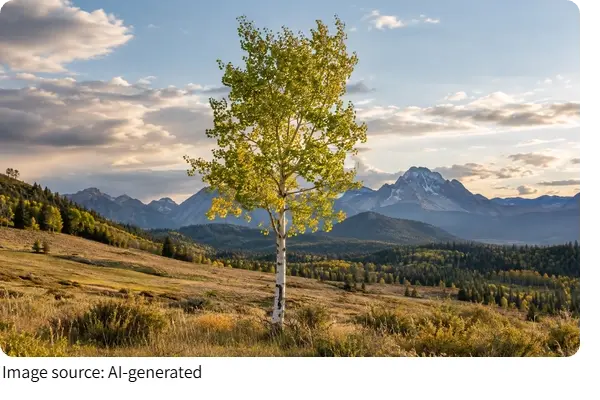
Researchers examined quaking aspen, a familiar tree across western North American mountain landscapes. The species is known for its distinctive leaves, which turn brilliant shades of yellow in autumn. It also plays an important role in forest ecosystems, making its health a significant concern for researchers.
The team established an experimental growing area at the University of Utah's Biology Research Experimental Garden. Starting in 2021, researchers grew aspen rootstock collected from mountain locations in five national forests across Utah and Colorado.
Between 2021 and 2023, they controlled the amount of water available to different trees to simulate varying degrees of drought. By growing the plants in a shared environment, the scientists could compare their responses while reducing differences caused by local growing conditions.
Leaves Carry Signs of Earlier Dry Conditions
One of the most notable findings was that aspens previously exposed to drought produced leaves with higher levels of compounds called salicinoid phenolic glycosides in subsequent growing seasons. These naturally occurring substances help discourage insects and other plant-eating animals from feeding on leaves. Their increased presence suggests that a period of limited water can influence how aspens protect themselves even after the original conditions have passed.
Researchers also observed an association between higher levels of these defensive compounds and less damage to the trees' leafy canopies. This suggests that the chemical differences may have practical consequences for how much foliage the plants retain. However, the findings do not establish that every drought-related chemical response benefits the tree. They reveal a lasting biological effect that requires further investigation.
Not Every Defense Increased
The research uncovered another important detail: drought-exposed aspens had lower levels of condensed tannins, a different group of compounds associated with protection against microbes. This contrast shows that a tree's response to drought is not simply a matter of increasing every protective substance. Instead, water stress may alter the balance of chemicals involved in different forms of defense.
Scientists are still working to understand why these shifts occur and whether they represent an adjustment that helps trees cope with changing conditions. A response that supports protection against one threat might not provide the same advantages against another.
The team also found that changes in leaf chemistry were associated with differences in the fungal communities living on the leaves. Because some fungi interact with plants in beneficial ways while others can contribute to disease, understanding these relationships is an important part of assessing tree health.
Why Aspen Forests Need Attention
Quaking aspens are experiencing declines in parts of their range. Several factors contribute to this problem, including insects, disease-causing organisms, grazing, and changes in forest composition that allow other tree species to become more dominant.
Understanding how drought influences aspen defenses could help researchers build a clearer picture of why some trees struggle to recover. A dry period may affect more than immediate water availability; it could also shape the biological interactions that influence a tree's condition later.
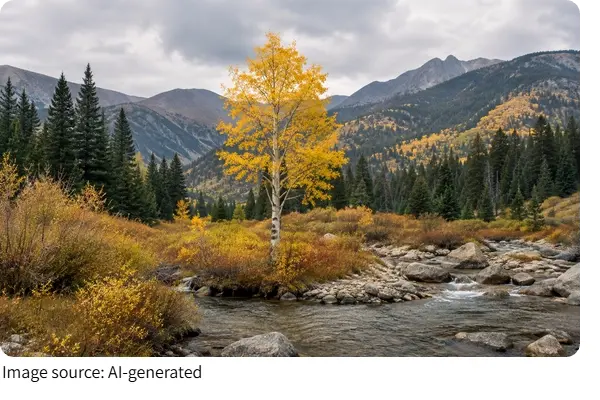
Aspens appear to carry more than a visible record of difficult growing seasons. Changes in their leaves suggest that past drought can influence later chemical defenses and the microscopic life associated with them. As research continues, these insights could contribute to better ways of assessing the resilience of aspen forests and understanding what they need to remain healthy in a changing environment.