Sea Lions Hear Human Noise

Amina Hassan
| 20-10-2026
 · Animal team
The ocean may seem like a world of natural sounds, but coastal environments are increasingly filled with noise from boats, ships, aircraft, and construction.
For marine mammals that depend on hearing to communicate and navigate their surroundings, understanding which sounds they can detect is an important step toward protecting their well-being.
Understanding Their Hearing Abilities
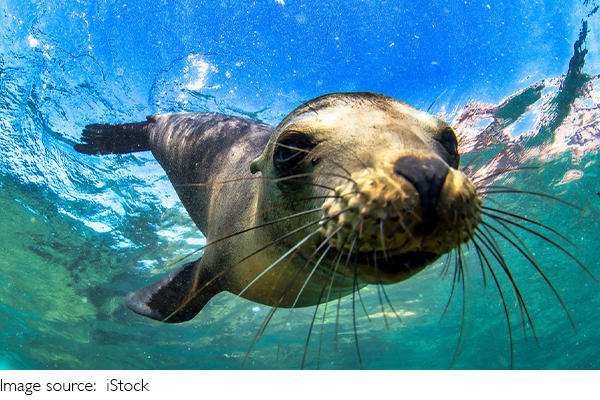
Researchers from Curtin University and Taronga Conservation Society Australia conducted hearing tests on Australian sea lions and long-nosed fur seals. The work provides an important baseline for understanding the hearing abilities of both species and assessing how sounds created by human activities might affect them.
Although scientists have studied hearing in various marine mammals, detailed information about these two Australian species has been limited. Knowing which sounds an animal can detect is essential before researchers can determine whether noise in its environment may interfere with everyday activities.
The findings are particularly relevant to the Australian sea lion, an endangered species whose population has been estimated at approximately 12,000 individuals. Better knowledge of its sensory abilities may help researchers assess environmental conditions that could influence its long-term well-being.
How Researchers Tested the Animals
The research team worked with two Australian sea lions and two long-nosed fur seals at Taronga Zoo Sydney. Marine keepers trained the animals to respond when they heard particular tones. During each test, an animal was expected to press a paddle after detecting a sound. Correct responses were rewarded with fish, helping the researchers measure hearing sensitivity through a structured process.
The animals participated voluntarily, using positive reinforcement rather than being forced to complete the tasks. This approach allowed the team to collect information while keeping the testing experience manageable for the animals. Researchers presented sounds at different frequencies and levels to determine which ones the animals could detect. Frequency refers to how rapidly a sound wave vibrates and is commonly perceived as the difference between lower and higher pitches.
A Key Finding About Sound Sensitivity
Both Australian sea lions and long-nosed fur seals showed their greatest sensitivity to sounds around 3.2 kilohertz. This result establishes a useful reference point for understanding their hearing in air. The finding does not mean the animals can hear only within this frequency range. Instead, it identifies a region where they were particularly sensitive during the tests.
Having this baseline allows scientists to compare the animals' hearing abilities with the sounds commonly produced in coastal environments. It also creates a foundation for future research into whether particular noises are simply audible or have measurable effects on animal behavior.
Professor Christine Erbe, a researcher at Curtin University's Centre for Marine Science and Technology, led the work. Her research focuses on understanding sound in marine environments and how noise may affect wildlife.
Why Human-Made Noise Matters
Noise from boats, ships, aircraft, trains, and construction can reach marine mammals when they are resting on land. Researchers compared the hearing information for long-nosed fur seals with sound sources associated with these activities and found that many such sounds would be audible to the animals while they were on land.
Hearing a sound does not automatically mean an animal will be harmed by it. The effect depends on factors such as the sound's intensity, frequency, duration, and the surrounding conditions. However, knowing that a sound falls within an animal's hearing range helps scientists identify which sources deserve closer attention.
Sea lions and fur seals rely on hearing for important activities, including communication and awareness of their surroundings. Research into their hearing can therefore support more informed assessments of noise near habitats and coastal areas.
What the Research Could Mean for Conservation
The findings may help inform environmental impact assessments and decisions about managing noise around marine habitats. As coastal development, shipping, and offshore activities continue, reliable information about wildlife hearing becomes increasingly useful. The research also demonstrates the value of studying animals through voluntary participation. Training techniques based on positive reinforcement can help researchers investigate sensory abilities without relying on procedures that unnecessarily distress the animals.
Nevertheless, further work is needed. The current tests examined hearing in air, so the results do not fully explain how these species hear underwater or how different sounds affect their behavior over time.
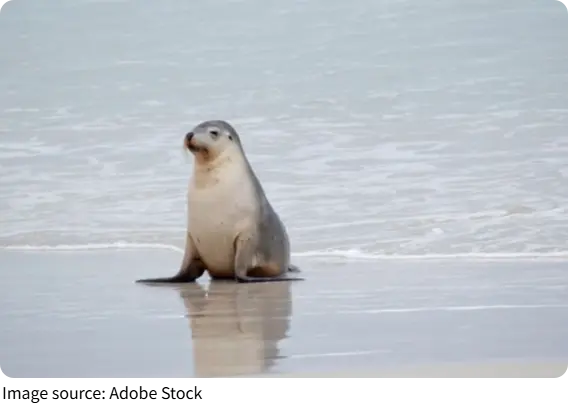
Understanding the hearing abilities of Australian sea lions and long-nosed fur seals gives scientists a clearer starting point for evaluating noise in their surroundings. The next challenge is determining when audible sounds become disruptive and how those effects differ between land and water. With more research, scientists may be able to develop better approaches to managing environmental noise and supporting the well-being of these remarkable marine mammals.