EVs Could Power Our Homes

Eleanor
| 15-10-2026
 · Automobile team
Electric vehicles could soon play a much bigger role in Europe's energy system. Beyond transporting passengers, their batteries could help power homes, support businesses and stabilise electricity networks during periods of high demand.
A four-year European research initiative called EV4EU has completed its work, demonstrating practical solutions for bidirectional charging. The technology allows electricity to flow both into and out of an electric vehicle's battery, potentially transforming millions of parked cars into flexible energy resources.
With approximately €9 million in EU funding, the project brought together 16 participating organisations and six associated partners to explore how this technology could operate in everyday conditions.
How Does Bidirectional Charging Work?
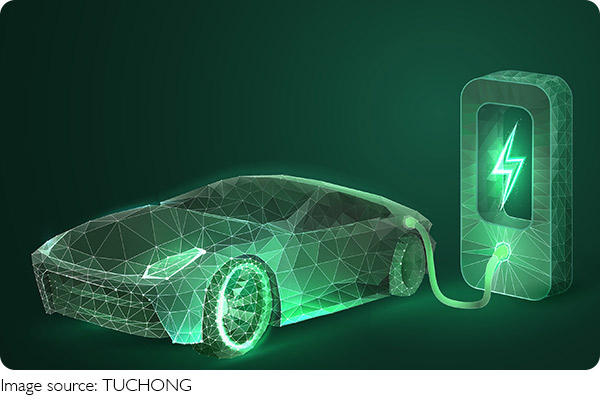
Conventional electric vehicle charging transfers electricity from the grid into a car's battery. Bidirectional charging allows that stored energy to be used elsewhere when needed.
Several applications are possible. Vehicle-to-Grid (V2G) technology enables electric cars to return electricity to the public network, potentially reducing pressure during peak demand. Vehicle-to-Home (V2H) allows a compatible car to supply electricity to a household, while Vehicle-to-Building (V2B) can support larger properties.
Another option, Vehicle-to-Load (V2L), powers individual appliances or equipment directly from the vehicle.
These systems could become particularly valuable as Europe expands its use of solar and wind energy, which generate electricity according to weather conditions.
A Major Breakthrough In Charging Technology
One of EV4EU's most important achievements was the successful development and testing of a bidirectional DC charging prototype using the Combined Charging System (CCS).
CCS is an established charging interface used by many electric vehicles, making compatibility with this technology an important step towards wider adoption.
Researchers also created open-source software to help charging operators coordinate energy transfers and communicate with compatible vehicles.
The project, coordinated by Portugal's INESC-ID research institute, additionally investigated virtual power plants. These systems combine numerous distributed energy resources, including electric vehicle batteries, so they can respond collectively to changing electricity demand.
Four Countries Test The Technology
Practical demonstrations took place in Portugal, Slovenia, Greece and Denmark, each focusing on different challenges.
In Portugal, researchers introduced charging solutions in residential and public buildings. The trials achieved an average 8.6% reduction in household charging costs and demonstrated up to 21.9% greater integration of renewable electricity.
Slovenian researchers explored how electric vehicles could participate in virtual power plants and local energy markets, including systems serving offices and schools.
In Athens, the project tested flexible charging arrangements and electricity pricing designed to reduce pressure on public charging infrastructure.
Meanwhile, Danish trials examined coordinated charging in car parks, with particular attention to improving electricity distribution and increasing the use of locally generated renewable power.
Could Drivers Save Money?
Bidirectional charging could eventually offer financial advantages to electric vehicle owners.
For example, a compatible car might charge when electricity is inexpensive and supply some stored energy when prices rise. Households with solar panels could also use their vehicle batteries to store surplus daytime generation for later consumption. However, actual savings would depend on electricity tariffs, equipment costs, vehicle compatibility and local regulations.
Battery degradation must also be considered, since additional charging cycles can influence long-term battery performance.
Researchers emphasised that intelligent control systems are essential for protecting battery health while ensuring drivers retain enough energy for their journeys.
What Happens Next?
Although EV4EU has demonstrated promising technical solutions, widespread adoption will require further progress.
Electricity networks need compatible infrastructure, while regulators must establish clear arrangements for energy trading and compensation.
Manufacturers and charging operators will also need to support reliable communication between vehicles, chargers and grid management systems.
Importantly, drivers must have confidence that participating will remain convenient and financially worthwhile.
The project's findings provide a foundation for larger commercial deployments, although the technology's expansion will depend on national energy markets and regulatory conditions.
As electric vehicle ownership grows, bidirectional charging could become an increasingly valuable part of Europe's energy transition, helping households manage electricity costs while making renewable power more useful throughout the day.