Rotate For Longer Life

Finnegan Flynn
| 08-10-2026
 · Automobile team
Tyre rotation is one of the simplest maintenance jobs to overlook. The tyres may still look fine, the car may feel normal and there is rarely an obvious warning when rotation is overdue. Yet leaving each tyre in the same position for too long can cause uneven wear that shortens its useful life.
For most vehicles, a good general interval is every 5,000 to 7,500 miles, although the manufacturer’s maintenance schedule should always take priority.
Why Tyres Wear Unevenly
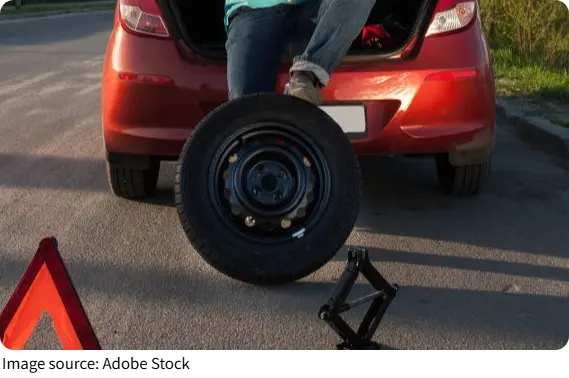
Each tyre does a slightly different job. Front tyres carry much of the steering load and play a major role in braking. On front-wheel-drive cars, they also have to transfer engine power to the road, which can make them wear faster than the rear tyres. Rear-wheel-drive vehicles distribute those forces differently, while all-wheel-drive systems place their own demands on all four corners.
Suspension geometry, wheel alignment, tyre pressure and driving style can also create subtle differences in wear. Rotating the tyres moves them between positions so the workload is distributed more evenly across the set.
Follow The 5,000 To 7,500 Mile Rule
For many cars, rotation every 5,000 to 7,500 miles is an effective routine. That interval often fits naturally with other scheduled maintenance, making it easy to combine tyre rotation with a regular service visit. However, modern oil-change intervals vary widely, so it is better to follow the actual mileage recommendation rather than rely automatically on the rule of rotating at every oil change.
If the tyres begin showing uneven wear, increased road noise or vibration before the scheduled interval, have them inspected sooner.
The owner’s manual should remain the final reference because some vehicles and tyre warranties specify different schedules.
The Correct Pattern Matters
Tyres should not simply be moved randomly from one corner to another.
The correct rotation pattern depends on the drivetrain, tyre design and whether the front and rear wheels use the same size.
Some vehicles use a straightforward front-to-rear pattern, while others allow tyres to be moved diagonally between axles to distribute wear more evenly.
Directional tyres are different. Their tread is designed to rotate in one particular direction, so they generally stay on the same side of the car and move only between the front and rear axles unless they are removed from the wheels and remounted.
Some Tyres Cannot Be Fully Rotated
Performance cars often use a staggered setup, with wider or differently sized tyres at the rear than at the front.
These tyres cannot normally be moved between the front and rear axles. If the tyres are the same size but staggered only by wheel position, side-to-side rotation may sometimes be possible. If they are both directional and different sizes front to rear, conventional rotation may not be possible at all.
That limitation can lead to less even tread wear, and some tyre manufacturers reduce treadwear warranty coverage for these configurations.
All-Wheel Drive Needs Attention
Regular rotation is particularly important on all-wheel-drive vehicles.
AWD systems work best when all four tyres have similar rolling diameters. Significant differences in tread depth can make one wheel rotate at a slightly different speed from another, potentially placing unnecessary stress on the drivetrain.
Keeping wear as even as possible helps maintain consistent grip and reduces the risk of having to replace tyres prematurely just to keep tread depths closely matched.
Use Rotation As An Inspection Point
A rotation appointment is also a useful opportunity to check the tyres more closely. Look for cuts, bulges, cracking, embedded objects and unusual tread patterns. Uneven wear on only one edge may point to an alignment problem, while cupping or irregular patches can indicate suspension or balancing issues.
Pressure should also be checked and adjusted to the vehicle manufacturer’s specification. If tyres are already close to replacement depth, paying for another rotation may have little value. At that stage, replacement planning is usually more important.
Do Not Confuse Rotation With Balancing
Tyre rotation and wheel balancing solve different problems.
Rotation changes where each tyre sits on the vehicle to manage tread wear.
Balancing corrects uneven weight distribution in the wheel-and-tyre assembly. It is usually needed when a driver feels vibration or when tyres are newly fitted, rather than automatically at every rotation.
Wheel alignment is different again. Alignment adjusts the angles at which the wheels sit relative to the road and vehicle.

Make It A Routine
The easiest approach is to record the mileage at every tyre rotation and schedule the next one within the recommended 5,000 to 7,500-mile range.
Regular rotation will not prevent every tyre problem, but it can help all four tyres wear at a similar rate, maintain more consistent grip and delay the expense of replacing part of the set earlier than necessary.
Combined with correct pressure, good wheel alignment and regular inspections, it is one of the simplest ways to get more useful life from a set of tyres.