Europe For Every Season

Eleanor
| 21-09-2026
 · Travel team
Europe does not have one perfect travel season. July may be made for mountain lakes and long evenings, while January can turn castles, volcanic islands and historic cities into completely different experiences.
Instead of asking where to go in Europe, it can be more useful to ask when each destination feels at its best. The result is a year-round travel map: some places come alive in summer sunshine, while others become more atmospheric once the crowds disappear and winter takes over.
Lake Bled For Summer Days
Slovenia is especially rewarding in summer, when Lake Bled becomes a natural base for swimming, cycling and walking beneath the Julian Alps. The 6km path around the lake is easy to complete in around 90 minutes, but it is worth allowing longer for viewpoints and cafés.
For a quieter experience, continue to nearby Lake Bohinj, where the scenery becomes wilder and the crowds thinner. Summer is also the best time to combine the lakes with hiking in Triglav National Park.
Lake Bled
Madeira For Hiking Year-Round
Madeira works in almost any season, but spring and early summer are particularly appealing for walkers because the island is green, temperatures remain manageable and flowers are at their most colourful.
The levada network is the highlight. In 2026, access to classified trails generally costs €4.50 per person, and reservations are mandatory. The longer Pico do Areeiro–Pico Ruivo route costs €10.50.
Winter remains surprisingly mild, which means Madeira can also double as a December or February escape when much of mainland Europe is cold.
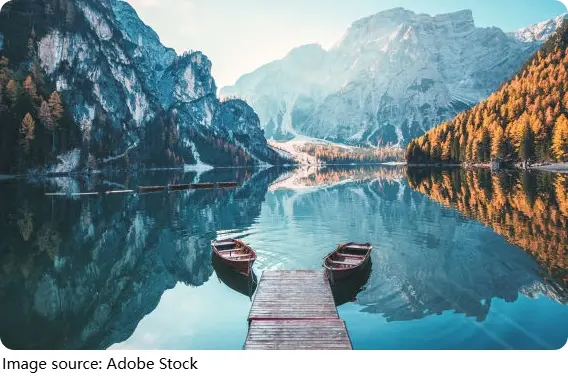
The Dolomites For Alpine Summer
Northern Italy’s Dolomites are at their most inviting from late June to September, when cable cars operate, high-altitude trails become accessible and mountain refuges reopen.
Instead of treating the region as a sightseeing stop, spend several days hiking between valleys and lakes. Lago di Braies is the famous image, but trails around Val Gardena and Alta Badia reveal a quieter side of the mountains.
Summer temperatures are also significantly more comfortable than in Italy’s major cities, making the Dolomites an excellent choice during hotter months.
Fuerteventura For Winter Sun
When northern Europe turns dark and cold, Fuerteventura offers a completely different winter.
January daytime highs average around 21°C, making beach walks, surfing and outdoor lunches realistic even in the middle of winter.
Corralejo Natural Park combines vast dunes with Atlantic views, while Cofete delivers a much more remote experience. Many of the island’s best attractions are beaches, landscapes and coastal walks, so a winter break can remain relatively inexpensive.
Cappadocia For Snowy Drama
Cappadocia is popular throughout the warmer months, but winter gives its rock formations and cave settlements a completely different atmosphere.
Snow can cover the valleys and fairy chimneys, while accommodation prices usually fall and visitor numbers drop sharply. Hot-air balloon flights remain weather-dependent, so cancellations are more likely, but Göreme’s cave dwellings, underground spaces and hammams provide plenty of alternatives.
It is one of those destinations where cold weather does not diminish the landscape — it can actually make it more memorable.
Cappadocia
Bilbao For A Rainy Weekend
Not every winter trip needs sunshine or snow. Bilbao is ideal when the weather encourages you indoors.
The city’s appeal comes from the combination of museums, architecture and food. Rainy afternoons suit the Guggenheim and Museo de Bellas Artes, while evenings are made for moving between pintxos cafes in Casco Viejo.
Winter temperatures are generally mild rather than freezing, and lower visitor numbers make central neighbourhoods easier to explore.
Santorini After Summer
Santorini is famous for summer, but that is also when its narrow streets become busiest. In winter, temperatures are closer to 14°C, so this is not the season for swimming. Instead, the attraction is having Oia, Fira and the caldera viewpoints largely to yourself. Hotel rates can fall significantly, although some properties and restaurants close temporarily.
For travellers interested more in scenery than nightlife, the trade-off can be worthwhile.
Lyon For Cold-Weather Food
Some cities simply feel better when the temperature drops, and Lyon is one of them.
Winter encourages slow meals, market visits and afternoons exploring the city’s covered traboules. It also works well as the beginning or end of a longer Alpine trip.
Rather than trying to escape winter, Lyon makes the season part of the experience: warm bakeries, cheese shops and small restaurants feel considerably more inviting after a cold walk beside the Rhône.
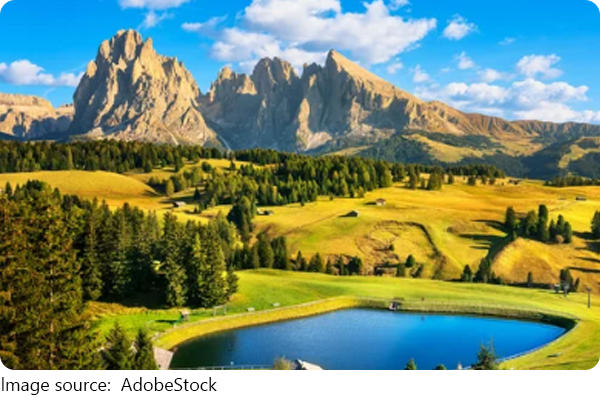
Europe rewards travellers who stop treating summer as the default. Head north and into the mountains when the days are long, then turn towards islands, atmospheric cities and snow-covered landscapes once winter arrives. Choosing destinations by season often means better weather, fewer crowds and a far more memorable trip.