UK EV Rules Reviewed

Pardeep Singh
| 03-09-2026
 · Automobile team
The UK’s electric-car transition is entering a more complicated phase. Battery-electric registrations are growing quickly, but the government has opened a consultation on whether manufacturers should be given more flexibility over future zero-emission vehicle targets.
Under the current Zero Emission Vehicle mandate, carmakers must ensure that an increasing share of their annual sales comes from zero-emission models.
The review does not abandon the shift toward electric cars. Instead, it asks whether the route between today and the 2035 goal has become too demanding for manufacturers and buyers.
Targets Rise Quickly
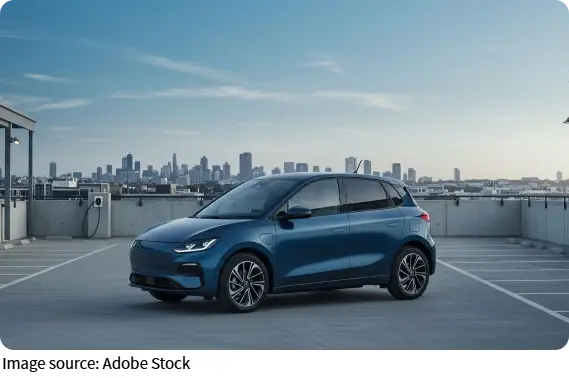
The ZEV mandate began in 2024, when 22% of each manufacturer’s new-car sales had to be zero-emission.
The requirement increased to 28% in 2025 and 33% in 2026. Under the existing schedule, it would climb to 38% in 2027, 52% in 2028, 66% in 2029 and 80% by 2030. The broader policy direction then points toward effectively all new cars becoming zero-emission by 2035.
Those numbers matter because manufacturers that fail to comply can face financial penalties, although previous changes have already introduced more flexibility.
EV Sales Are Growing
The consultation comes at an unusual moment because electric-car demand is not falling. July 2026 delivered one of the strongest months for UK EV registrations in recent years, with sales rising sharply compared with the same month in 2025. Battery-electric cars accounted for more than a quarter of the new-car market.
That represents meaningful progress, but it still leaves a gap between actual demand and the level manufacturers need to reach under the mandate.
Industry representatives argue that current EV sales are running around 10–13% below the levels required for full compliance with the existing trajectory.
The tension is therefore not between growth and decline. It is between how fast consumers are switching and how fast regulation expects the market to move.
Why Carmakers Want Flexibility
Traditional manufacturers have spent heavily developing electric models, battery supply chains and production facilities.
But persuading customers to switch at the required pace can involve large discounts and costly incentives. Industry representatives argue that regulations can require manufacturers to supply more EVs, but they cannot guarantee that enough consumers will want to buy them at the same speed. There are also wider concerns around supply-chain disruption, trade uncertainty and the cost of maintaining investment in UK manufacturing.
Chinese brands create another competitive pressure because many entered Europe with electric vehicles already central to their business models, rather than having to convert decades-old combustion-engine operations.
Previous Rules Were Already Eased
This is not the first adjustment to the mandate. Earlier changes reduced the maximum penalty for non-compliant vehicle sales and gave manufacturers more freedom to balance EV performance between different years. Smaller-volume manufacturers received additional flexibility, while hybrids were confirmed as remaining available between 2030 and 2035 under certain rules.
The latest consultation could go further. Possible options include lowering some annual targets or allowing greater flexibility while keeping the long-term 2035 objective intact.
What Happens Next
The consultation is scheduled to close on 23 October 2026. Manufacturers, charging companies, suppliers, retailers and consumers are all being invited to contribute. No final decision has been made, and the government could still keep much of the existing framework unchanged.
The outcome will matter far beyond one percentage target. It will help determine how aggressively carmakers price electric models, how quickly they invest in new vehicles and whether the UK can balance climate goals with a car market that consumers are willing and able to support.