Automatic Has the Edge!

Nora
| 31-08-2026
 · Automobile team
Manual transmissions have a loyal following for good reason, giving drivers greater involvement and control over gear changes. However, when it comes to pure acceleration, modern automatic transmissions usually have the advantage.
Their edge comes from how quickly they can shift gears and deliver power to the wheels. This allows many automatic cars to accelerate faster than their manual counterparts
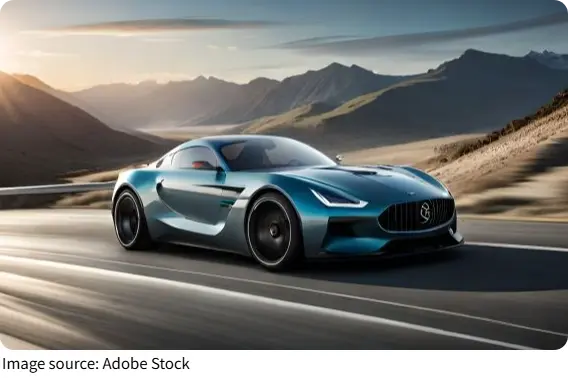
Why Automatics Accelerate Faster
The biggest advantage of an automatic transmission is that gear changes can happen extremely quickly without requiring the driver to operate a clutch pedal or manually select each gear. When accelerating hard, a manual driver has to coordinate several actions. The driver needs to decide when to shift, operate the clutch, select the next gear, and return to the throttle smoothly. Even an experienced driver needs some amount of time to complete the process.
A modern automatic can manage much of this process electronically. It can select the appropriate gear and perform shifts rapidly while the driver continues to accelerate. This helps maintain the engine's power during acceleration and reduces interruptions between gears.
Manual Cars Depend More on the Driver
A skilled driver can operate a manual transmission extremely well, but there is more room for small mistakes. Choosing the wrong moment to shift can affect acceleration. If a driver changes gear too early, engine speed can drop too far and reduce the available power. Selecting an inappropriate higher gear can also make the engine struggle to provide the response needed for strong acceleration.
An experienced driver may avoid these problems almost entirely, but an automatic transmission can consistently perform the same task without depending on human reaction time. This is especially noticeable during short acceleration runs, where even small differences in shift timing can affect the final result.
Manual Still Has Its Own Advantages
Being slower in a straight-line acceleration test does not mean a manual car is worse. For many drivers, the appeal of a manual transmission has little to do with achieving the quickest possible time. Manual gear selection gives the driver direct control over when the engine changes its operating range. That can make the driving experience feel more involved, particularly on roads where choosing the right gear is part of the enjoyment.
There are also manual performance cars that remain extremely quick. The Hennessey Venom F5-M Roadster, for example, uses a manual transmission and has been rated at 2,031 horsepower, with a claimed 0-to-60-mph time of 3.3 seconds. That figure shows that a manual transmission does not prevent a vehicle from being exceptionally fast. It simply may not be the most efficient choice when every fraction of a second matters.
What About Racing?
The answer becomes more complicated when looking at motorsport because different types of racing demand different things from a transmission. Automatic-style systems are well suited to situations where uninterrupted acceleration is the priority. Drag racing is a clear example, since getting maximum power to the wheels as quickly as possible is central to performance.
Other forms of racing place greater emphasis on driver control and gear selection. In these situations, the ability to choose when to change gears can still be valuable. Formula 1 provides another approach. Modern F1 cars use semi-automatic transmissions, allowing drivers to change gears using controls on the steering wheel rather than a conventional manual gear lever and clutch arrangement.
Why Gear Changes Matter So Much
Acceleration depends on more than engine power. The transmission determines how effectively that power is used across different speeds. An engine produces different levels of power and torque depending on its operating conditions. The gearbox keeps the engine within a useful range by selecting different gear ratios.
During rapid acceleration, minimizing the time between those changes can make a significant difference. This is where modern automatic transmissions have made major progress. Electronic control and rapid shifting allow them to respond quickly while maintaining strong acceleration.
Fastest Does Not Mean Best
For drivers choosing between manual and automatic, acceleration should not be the only consideration. The two transmission types offer different experiences. An automatic is generally the better choice for drivers who prioritize effortless operation and quick acceleration. A manual may appeal more to someone who enjoys actively managing the car and selecting gears personally.
When comparing otherwise similar vehicles, modern automatics generally have the advantage in outright acceleration. They can change gears quickly, maintain power more consistently, and remove the possibility of small driver-related delays. But speed is only one part of driving.
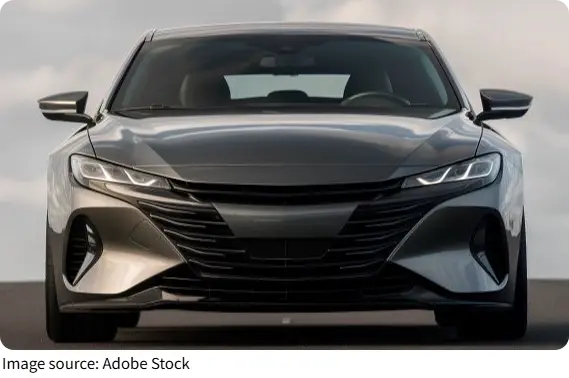
A manual transmission can offer a level of involvement that an automatic cannot completely reproduce. For some drivers, that connection matters more than winning a 0-to-60-mph test. In the end, the faster gearbox and the more enjoyable gearbox do not always have to be the same thing.