Downhill Brake Safety

Maya
| 28-08-2026
 · Automobile team
When we drive downhill for several minutes, it can feel natural to keep one foot on the brake pedal and control our speed that way. But Lykkers, continuous braking is not always the safest approach.
Long downhill sections place extra demands on the braking system, especially when the road is steep or winding. By using the right combination of gearing, controlled braking, and careful observation, we can reduce strain and make the journey more comfortable.
Why Constant Braking Creates Heat
The main concern with continuous braking is heat buildup. Whenever we slow a vehicle with the brake pedal, movement is converted into heat through the braking system. During a short stop, this is usually not a problem.
On a long descent, however, repeated or continuous braking gives the system less opportunity to cool. As temperatures rise, braking performance can change. The pedal may feel different, stopping distances can increase, and the vehicle may become harder to control.
This is why a driver should avoid treating the brake pedal as the only way to manage speed on a lengthy downhill section.
Use Lower Gearing
One useful way to reduce brake use is to select a lower gear when appropriate. This allows the engine to help control the vehicle's speed instead of relying entirely on the brakes.
For vehicles with manual transmissions, we can select a suitable lower gear before entering a steep descent. With an automatic transmission, the available gear-selection or downhill-control settings can serve a similar purpose, depending on the vehicle.
The key is to choose the gear before speed builds too much. Shifting early can make the descent smoother and reduce the amount of pedal braking needed.
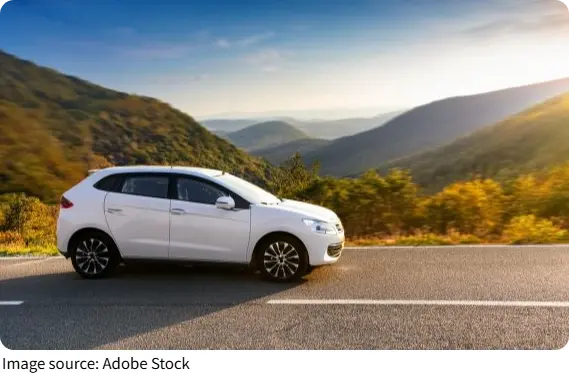
Brake With Control
Using lower gearing does not mean we should avoid the brakes. Brakes remain important whenever we need to reduce speed or respond to changing road conditions.
Instead of keeping the pedal pressed continuously, we can use short, controlled braking periods when appropriate. We allow the vehicle to slow to a suitable speed, then release the pedal and let the braking system cool while engine resistance helps manage the descent.
This approach can be especially useful on long slopes because it avoids unnecessary continuous heat buildup.
Watch Speed Before It Builds
Good downhill driving begins with anticipation. Rather than waiting until the vehicle is moving too quickly, we can look ahead and adjust our speed early.
Sharp curves, intersections, changing road surfaces, cyclists, and slower vehicles may all require additional care. Keeping a comfortable speed gives us more time to respond without making sudden braking inputs.
A safe following distance is also helpful. It gives us room to adjust gradually instead of repeatedly braking because another vehicle changes speed ahead.
Pay Attention to Warning Signs
During a long descent, we should pay attention to changes in braking behavior. A burning smell, unusual sounds, a different pedal feel, or reduced braking response deserves immediate attention.
If braking performance appears weaker than normal, we should find a safe place to stop as soon as conditions allow and give the system time to cool. We should avoid continuing downhill at the same pace simply because the destination is close.
If the vehicle does not respond normally when we press the brake pedal, the situation becomes more urgent. We should focus on bringing the vehicle to a safe stop rather than trying to complete the journey.
Plan Before the Descent
Before entering a long downhill road, we can take a few moments to prepare. Check our speed, select an appropriate gear, scan the road ahead, and make sure there is enough space around the vehicle.
Weather also matters. Rain, ice, loose gravel, or other slippery conditions can reduce grip and require gentler inputs. On such roads, smooth steering and gradual speed changes are especially important.
A little preparation can make the descent feel much more controlled and reduce the need for sudden actions.
Final Thoughts
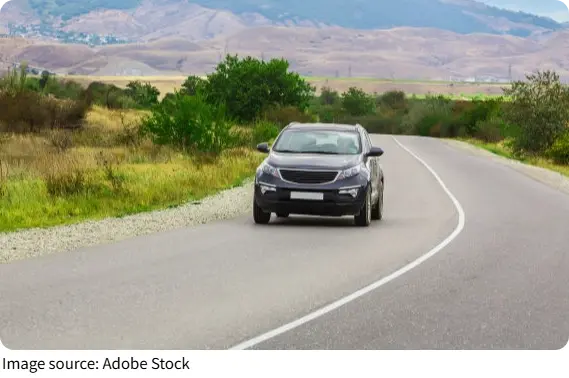
Keeping the brake pedal pressed throughout a long downhill drive can create unnecessary heat and reduce braking performance. Instead, we can combine suitable gearing with controlled braking and early speed adjustments.
The goal is not to avoid using the brakes. It is to use them thoughtfully. When we prepare before the descent, watch the road ahead, and respond smoothly to changing conditions, we can make downhill driving safer, calmer, and easier on the vehicle.
What Happens to Your Brakes on a Long Downhill Drive (Brake Fade Explained)
Video by Mechanical Truths