Flat Tire Guide

Mukesh Kumar
| 28-08-2026
 · Automobile team
When we discover that a car tire has lost air, it can be difficult to know what to do next. We may wonder whether we can continue driving, use a spare tire, or call for assistance.
The safest response depends on how much air remains and whether the tire shows visible damage. By taking a few careful steps, we can handle the situation calmly and avoid making the problem worse.
Stop in a Safe Place
If we notice a tire pressure warning, unusual steering, vibration, or a tire that looks lower than usual, we should slow down gradually and find a safe place to stop. A suitable parking area or other stable location is better than stopping somewhere exposed to moving traffic.
Once the vehicle is stationary, we can activate the hazard lights when appropriate. We should stay aware of nearby vehicles and avoid standing in an unsafe position while checking the tire.
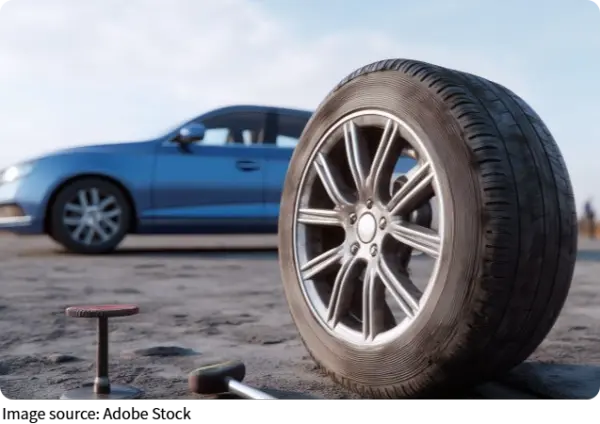
Check the Tire Condition
The next step is to see how much air the tire has lost. If it looks normal and the pressure is only slightly low, we may be able to add air and drive carefully to a nearby repair shop.
A tire that is visibly low requires more caution. Driving on it for too long can create additional internal damage and place extra stress on the wheel. If the tire is completely flat, we should avoid driving the vehicle unless a professional has confirmed that it is safe to do so.
Find the Possible Cause
A quick visual inspection can sometimes reveal why the tire lost air. Common causes include an object lodged in the tread, damage from a rough road surface, or an issue around the valve.
If we see an object stuck in the tire, we should leave it in place rather than pulling it out. Removing it may allow air to escape faster. Instead, we can arrange for the tire to be inspected and repaired properly.
Use a Spare Tire
If our vehicle has a spare tire and the necessary tools, replacing the damaged tire can be a useful temporary solution. We should choose a firm, level surface and follow the vehicle's instructions for lifting the car and securing the wheel.
After installation, we should check that the spare is firmly attached before moving. Some spare tires are designed only for temporary use, so we should follow the speed and distance guidance provided with the vehicle. The original tire should then be inspected as soon as possible.
Try an Emergency Repair Kit
Some cars carry an inflation device or emergency tire repair kit instead of a spare. Depending on the type of damage, such equipment may allow us to restore enough pressure to reach a repair location.
These kits are intended for temporary assistance rather than a complete repair. They may not be suitable for every type of tire damage. After using one, we should have the tire professionally inspected to determine whether it can be repaired safely.
Know When to Get Help
There are situations where professional assistance is the better choice. A completely flat tire, visible sidewall damage, a damaged wheel, or a tire that quickly loses air after inflation can indicate a serious problem.
If we do not have a spare or suitable repair equipment, we can contact roadside assistance or a mobile tire service. Waiting for trained help is often safer than attempting to move a vehicle with a severely damaged tire.
Check the Tire After Repair
Once the immediate problem has been handled, we should find out why the tire lost air. Simply adding air may provide a short-term improvement while leaving a slow leak unresolved.
We should also check the pressure after the repair and compare it with the recommended level for the vehicle. This information is commonly provided on the vehicle's information label or in the owner's manual.
Prepare Before the Next Trip
Regular tire checks can help us spot problems early. We can inspect the tread and sidewalls for visible damage and check tire pressure periodically. It is especially useful to do this before a long journey.
We should also know whether our vehicle has a spare tire, repair kit, inflation equipment, or another emergency system. Keeping the necessary equipment accessible can save time when a tire problem occurs.

Final Thoughts
A tire that loses air does not always require the same response. We can begin by stopping safely, checking the tire's condition, and judging whether it is safe to move the vehicle. A spare tire or emergency kit may provide a temporary solution, while a completely flat or visibly damaged tire calls for professional assistance.
The most important thing is to avoid rushing. When we respond carefully and understand the condition of the tire, we can reduce the chance of additional damage and get back on the road more safely.