Rear Distance Control

Malcolm
| 28-08-2026
 · Automobile team
When we reverse, the front of the car can feel easy to control, while the rear seems much harder to judge. The reason is simple: we cannot see the rear corners directly from the driver’s seat.
With a few consistent reference points, however, we can make reversing more predictable. Lykkers, if you are still unsure about where your rear bumper is, these practical habits can make a big difference.
Start With the Mirrors
Our side mirrors are the most useful tools when reversing. Before moving, we should adjust them so that they provide a clear view of the area beside and behind the vehicle. A small mirror adjustment can change how accurately we judge distance.
When reversing toward a parking space, we can watch the lines, corners, and nearby objects through both side mirrors. Instead of staring at only one mirror, we should switch our attention between the left and right sides. This helps us understand how the entire rear section is moving.
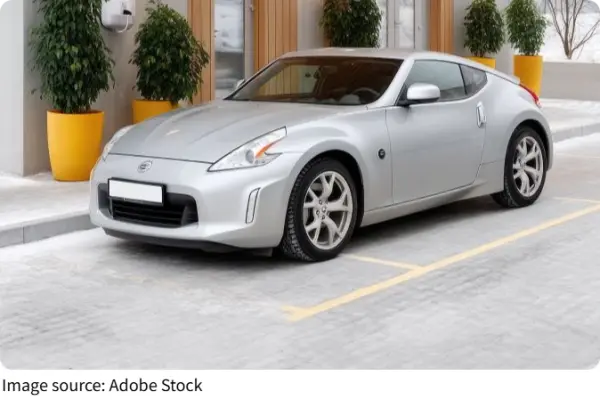
Use Parking Lines
Parking lines give us a stable reference point. As the car moves backward, we can compare the rear side of the vehicle with the lines beside it.
If the line appears to move closer to the vehicle in one mirror, we know that side is getting tighter. We can then make a small steering adjustment rather than waiting until the car is badly positioned.
Small corrections are easier than large ones. We should keep the vehicle moving slowly and allow enough time to check the mirrors after each steering change.
Watch the Rear Corners
The rear corners are especially important because they are often the parts closest to nearby obstacles. When reversing into a space, we should pay attention to how each rear corner relates to the parking lines or surrounding objects.
A useful habit is to identify a reference point before reversing. It might be a parking line, the edge of a space, or another clearly visible fixed point. Once we know how that point looks in the mirror, we can use it to judge whether the car is moving too close or too far away.
The exact appearance will vary between vehicles, so we should learn the reference points of our own car rather than relying on one universal distance.
Check Both Sides
One common mistake is watching only the mirror on the side where we expect the car to turn. The opposite rear corner can still move toward an obstacle.
We should therefore make a regular left-right check while reversing. If the parking space is narrow, we should slow down even more and make several short checks rather than trying to complete the maneuver in one continuous movement.
This habit is especially useful in unfamiliar vehicles because their rear length, mirror position, and turning response can feel different from what we are used to.
Use a Slow Pace
Speed makes distance harder to judge. When we reverse quickly, we have less time to notice changes in the mirrors and less time to correct the steering.
A slow pace gives us more control. We can pause when necessary, reassess the surroundings, and continue only when the path remains clear. If visibility is limited, getting out to check the position can also be a sensible choice when it is safe to do so.
We should also remember that parking sensors and rear cameras are useful aids, but they should support our visual checks rather than replace them. Camera images can change our perception of distance, especially when the view is wide or distorted.
Practice in an Open Area
The easiest way to improve is to practice where there is plenty of room. We can use clearly marked spaces and spend time learning how our vehicle appears in the mirrors at different positions.
For example, we can reverse slowly toward a line, stop, and then step out to compare what we saw in the mirror with the actual position. Repeating this several times helps us build a practical sense of where the rear corners are.
Over time, these reference points become more familiar, making everyday parking less stressful.

Final Thoughts
Judging the rear of a car while reversing is mainly a matter of building reliable visual references. We can use both side mirrors, parking lines, rear cameras, and nearby fixed points to understand the vehicle’s position. Slow movements and frequent checks give us more time to make corrections.
With regular practice, we can develop a much clearer sense of where the rear of our vehicle is without depending on guesswork.
Distance Estimation When Reversing A Car-Driving Lesson
Video by Helpful DIY