Big Brakes, Real Safety

Daniel
| 28-08-2026
 · Automobile team
Hello, and welcome. Most people think of a sports car's brakes as just a bigger pedal and louder squeal.
That's not how it works. The real difference sits behind the wheels, in the size of the discs and the bite of the calipers, and it's not about looking cool under the fenders.
Stopping distance starts with heat
When you brake hard from 120 mph, your car's kinetic energy turns into heat at the rotors. A small, basic brake disc can't absorb that energy fast enough. It heats up, the pads glaze, and you get fade exactly when you need stopping power the most. That's why performance cars like the Porsche 911 Carrera S come with 13.8-inch front rotors, not the 11-inch discs you'd find on a commuter sedan. More surface area means more room to shed that heat, and the pedal stays firm lap after lap.
Calipers do the squeezing work
A standard caliper has one piston pushing a single pad against the rotor. A performance caliper, like the six-piston Brembo units on a Chevrolet Corvette Z06, squeezes the pad from multiple points. The pressure spreads evenly, the pad contacts the rotor fully, and you get shorter stopping distances without mushing the pedal. You also get better modulation, which lets you trail-brake into a corner smoothly instead of jerking the car sideways.
Weight matters, but not how you think
Bigger rotors and larger calipers add unsprung weight, which sounds like a downside. The trade-off is worth it. The extra mass sits close to the wheel center, so the suspension still reacts predictably, and the braking torque you gain is massive. On a track, a car like the BMW M4 with its compound rotors and four-piston front calipers will pull up from 150 mph with confidence, while a stock sedan would need twice the distance and start smelling like burnt metal.
You feel it on the road too
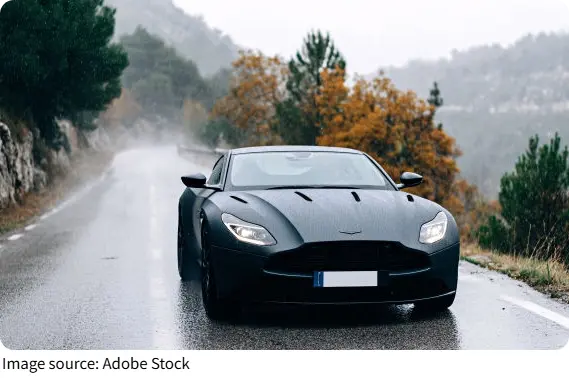
You don't need a racetrack to benefit. On a mountain pass, a set of high-performance brakes lets you brake later and carry more speed into a corner, which is both faster and safer. The pedal response is instant, not spongy, and you don't get that sinking feeling when the discs overheat on a long downhill. For a car like the Nissan GT-R, the standard 15.4-inch rotors and dual-piston calipers are the reason owners trust it on repeated hard stops during a Sunday drive.
So next time you see a sports car with big discs behind the wheels, don't call it show. That hardware is doing the real work, and when you need to stop in a hurry, you'll be glad it's there. Go for a test drive in something with serious brakes and feel the difference yourself.