Bike Tires Wear Faster

Caroll Alvarado
| 26-08-2026
 · Automobile team
Hello, and welcome. Car tires usually stay on for a long stretch, but motorcycle tires often need attention much sooner.
That is not just because a motorcycle is smaller. The way a motorcycle puts load through two contact patches, leans into turns, and asks one tire to handle drive or braking forces more directly changes how the tread disappears.
If you ride, you notice it in simple places first, the rear tire flattening in the middle after steady highway use, or the front showing uneven wear after repeated braking. The basic part is the same, a rubber tire wrapped around a wheel, but the working conditions are not.
Two tires do more work
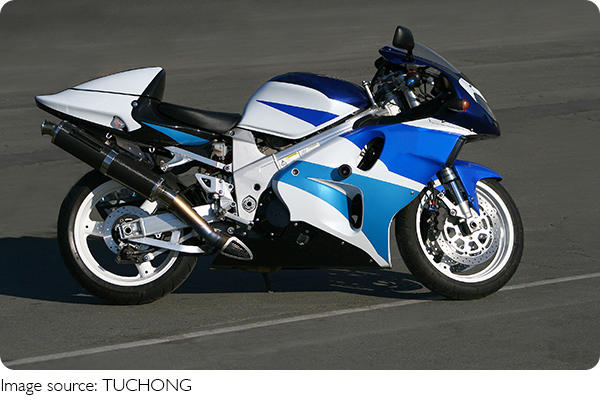
A car spreads its weight across four tires, but a motorcycle splits the job between two. That changes the load each tire carries, especially during acceleration and braking. On many motorcycles, the rear tire handles engine drive while the front takes a large share of braking force, so each tire gets stressed in a more concentrated way. You can see the result in common wear patterns. A rear tire often squares off in the center after long straight-road riding, while a front tire can develop uneven tread wear from repeated braking cycles. The contact patch is also smaller, so the force passing through each bit of tread is higher.
Leaning changes the contact patch
Car tires stay fairly upright in normal driving, but motorcycle tires do not just roll straight, they also work while leaned over. That is why motorcycle tires have a more rounded profile. As you lean into a corner, the part touching the road moves away from the center of the tread toward the shoulder. That means wear is spread across different zones, but it is also concentrated by riding style. A commuter who spends most of the week upright on highways may wear the middle first. A rider on twisty roads may wear the shoulders more heavily. The important difference is that a motorcycle tire is designed to operate across a curved surface, not mainly across a broad flat tread area.
Construction follows a different job
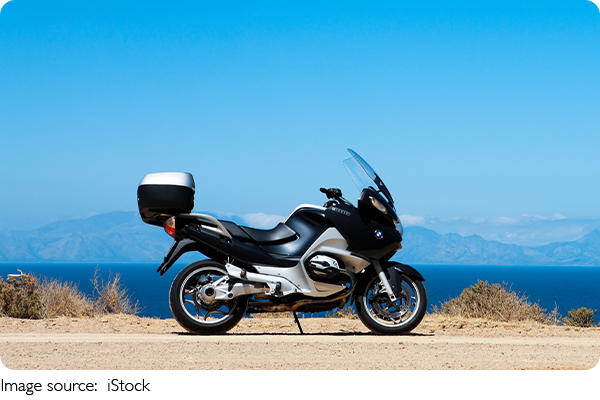
A tire is built from rubber, cord, and bead components, but the details change with use. Motorcycle tires are commonly designed to warm up quickly and provide grip while leaning, which can mean softer tread compounds than many car tires use for long service life. Softer rubber gives you stronger road feel and traction, but it also wears more quickly. Tire construction matters too. Bias-ply and radial designs manage flex in different ways, and that flex affects heat. Heat is a major part of tread wear. If a tire runs hotter because of speed, load, inflation error, or road conditions, the rubber degrades faster and the tread disappears sooner.
Wear does not happen the same way
Car tire wear is often discussed in terms of alignment, rotation, and even tread use across four positions. Motorcycles do not have that same pattern. You cannot rotate a motorcycle tire from one corner of the vehicle to another because there are only two positions and the front and rear usually differ in size and role. The front and rear also wear for different reasons. The rear deals with drive force and can wear quickly in the center. The front handles steering input and major braking loads, and it can show cupping or scalloped wear if conditions line up that way. Inflation pressure matters on both. If pressure is low, the tire flexes more, builds more heat, and wears faster. If pressure is wrong for the load, the shape of the contact patch changes and tread life drops.
Motorcycle tires get replaced more often because they are doing a different job, not because they are made carelessly or happen to be smaller. Two tires carry the whole machine, the tread rolls through a changing contact patch as you lean, and the front and rear wear in their own ways under braking and drive loads. If you ride, checking pressure, tread shape, and wear pattern is not extra fuss, it is basic upkeep. So if your motorcycle tires seem to disappear faster than car tires, you are not imagining it, you are seeing the result of a very different wear mechanism.