Single, Twin, Four

Elena Rossi
| 26-08-2026
 · Automobile team
Hello, friends. Most people expect engine size to explain nearly everything, but cylinder count changes the ride in a very direct way too.
A 650 cc single, a 650 cc twin, and a 650 cc four do not ask the same thing from your hands, your throttle control, or your patience in traffic. The difference shows up first in vibration and power delivery.
A single-cylinder engine fires once every two crankshaft revolutions, a four-cycle twin can space its firing events in a few different ways depending on crank design, and a four-cylinder spreads those events much more closely. You feel that immediately through the bars, footrests, and seat.
A single feels direct
A lot of riders assume a single is just the simple budget choice, but it also has a very specific road feel. A big single has one piston doing all the work, and that means stronger pulses each time combustion happens. On bikes such as the KTM 690 Duke or Suzuki DR650, you usually feel a noticeable throb at low and mid rpm, especially if you hold a steady speed for a while. That vibration is tied to the size and motion of one large piston changing direction again and again. The upside is equally clear. Because each power pulse is distinct, throttle response often feels immediate off the bottom, and low-rpm torque is easy to sense. In city riding, a single often feels eager at 30 to 50 mph without needing many downshifts. You open the throttle, and the bike answers right away. The tradeoff is that the power usually signs off earlier, so once revs climb, it can feel busy rather than smooth.
A twin balances two jobs
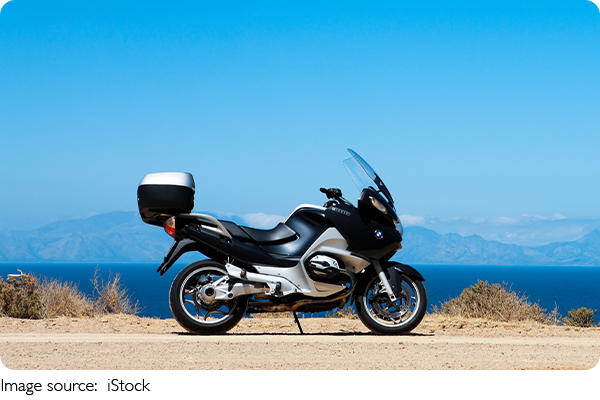
You might expect doubling the cylinders to simply cut vibration in half, but twins are more complicated than that. A parallel twin, a V-twin, and a boxer twin can all feel very different because crank layout and cylinder arrangement matter as much as cylinder count. A classic parallel twin with a 360 degree crank has both pistons moving together, which can create a strong rhythmic feel. A 180 degree design changes that timing and shifts the character. A 270 degree crank, used on several modern bikes, is popular because it gives a more uneven firing feel and a stronger sense of traction when you roll on the throttle out of a corner. Then there is the boxer twin, used by BMW, where the pistons move side to side in opposite directions. That layout helps cancel some forces naturally, so the engine can feel calmer at speed, though you may still notice a slight side-to-side reaction when you blip the throttle at a stop.
Four cylinders spread the work
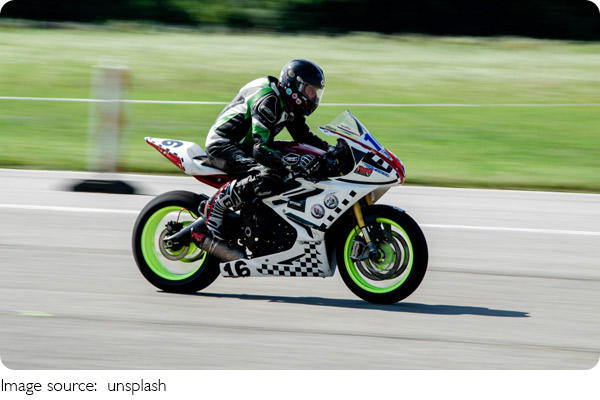
A four-cylinder often feels smoother not because the laws of physics disappeared, but because the work is divided among four smaller pistons and the firing intervals are closer together. On an inline-four such as the Honda CB650R or Yamaha YZF-R6, you usually get a cleaner, finer feel through the controls, especially as revs rise. That smoothness changes how you read the engine. Instead of one big shove from each firing pulse, the drive feels more continuous. Riders often describe that as linear or creamy, but the practical point is simple, you get less interruption between power cycles. That is why four-cylinder bikes often feel calmer on the highway at higher rpm than a large single. The other side of it is low-end response. On many four-cylinder street bikes, the bottom end can feel softer than an equal-capacity single or twin, and the stronger pull arrives later in the rev range. You usually need to rev it more to reach the part of the powerband where it becomes exciting.
Vibration changes how power feels
Here is the part riders notice but do not always separate clearly. Vibration and power output are connected, but they are not the same thing. A strong pulse can make an engine feel forceful even when peak horsepower is modest. That is why a single or some twins can feel punchy in normal riding. A smoother engine can be making more total power, but because the delivery is more even, it may feel less dramatic until speed builds. Compare a middleweight twin with a 270 degree crank to a 600 cc inline-four. The twin often feels stronger leaving a slow corner or pulling away from a light, while the four may be objectively faster once the tach climbs. Your body reads the pulse first, then the actual acceleration catches up.
If you ride mostly in town, a single or twin often feels easier to read at everyday speeds. If you spend long stretches on fast roads, a four usually feels more relaxed and less tiring through the bars and pegs. None of that makes one layout right for everybody. A Yamaha MT-07, a Kawasaki Ninja 650, and a Honda CBR650R all handle daily riding well, but they do it with very different engine manners. So when you choose between single, twin, and four, do not just ask how much power the spec sheet shows. Ask what kind of response you want under your right hand, and what kind of vibration you are willing to live with every mile. So pick the engine that matches the way you actually ride, not the one that just sounds impressive on paper.