Survive City Highways

Rafael
| 27-08-2026
 · Automobile team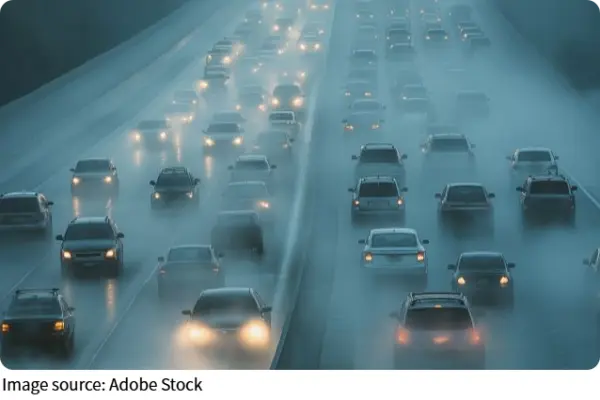
Good day, everyone. This article explains practical methods for managing distance and executing safe lane changes during heavy urban highway driving.Maintaining adequate space between your vehicle and the vehicle ahead reduces the risk of rear-end collisions. The standard guideline is the three-second rule.
To measure this distance, select a stationary object on the side of the road, such as a traffic sign or an overpass support pillar. When the rear bumper of the vehicle ahead passes that object, count the seconds until your front bumper reaches the same point.
If you arrive in fewer than three seconds, you need to increase your following distance. This interval provides necessary reaction time if the vehicle in front brakes abruptly. However, this three-second baseline applies primarily to dry roads and daylight visibility. When driving in rain, fog, or snow, increase the gap to five or six seconds to account for reduced tire traction and longer braking distances. Additionally, heavier vehicles, such as large SUVs or pickup trucks loaded with cargo, require more time to decelerate, making an extended following distance necessary regardless of weather conditions.
Navigating Stop-and-Go Traffic
Dense urban corridors frequently feature variable speeds and sudden traffic jams. In stop-and-go conditions, it is crucial to avoid sudden acceleration and harsh braking. Keep a constant visual check on vehicles several car lengths ahead, rather than focusing exclusively on the bumper immediately in front of you. This broader field of vision allows you to anticipate slowdowns earlier.
Maintain enough space so that you can see the rear tires of the vehicle ahead touching the pavement. This spacing prevents you from being boxed in if the vehicle ahead stalls or breaks down. Leaving this cushion also smooths out traffic flow behind you, reducing the accordion effect that contributes to congestion. When traffic stops completely on a highway, monitor your rearview mirror to confirm that approaching vehicles are slowing down.
Step-by-Step Lane Change Procedure
Executing a lane change in multi-lane urban environments requires a systematic process to ensure sufficient space and alert other drivers. Begin by checking your rearview and side mirrors to assess the flow of traffic in the adjacent lane. Once you identify a potential gap, activate your turn signal to communicate your intention. You can try this right now: before your next lane change, physically turn your head to check your blind spot, rather than relying strictly on your side mirrors.
Electronic blind-spot monitoring systems assist with detection, but a physical shoulder check remains a reliable method to confirm the lane is clear. After verifying the space, steer smoothly into the target lane while maintaining your speed or accelerating slightly to match the flow of traffic in that lane. Avoid braking during a lane change unless you are moving into a slower lane or exiting the highway. Keep scanning ahead during the maneuver to ensure no other vehicle is simultaneously merging into the same gap.
Highway Merging and Etiquette
Entering and exiting urban highways presents specific challenges due to the volume of vehicles and short merge lanes. When entering a highway via an on-ramp, use the acceleration lane to match the speed of the traffic currently on the highway. Drivers already on the highway should, when safe and possible, adjust their speed or change lanes to accommodate merging vehicles.
However, the merging driver ultimately bears the responsibility to yield and find a safe gap. When preparing to exit the highway, move into the designated exit lane well in advance. Late lane changes near exit ramps disrupt traffic flow and increase collision risks. If you miss your intended exit, proceed to the next available exit rather than attempting a dangerous maneuver across multiple lanes or reversing on the shoulder. Consistent predictability is the core of highway driving etiquette.
Handling Tailgaters and Hazard Light Usage
Tailgating is a common issue in dense traffic that compromises the safety of both vehicles. If a driver follows you too closely, avoid the urge to tap your brakes or accelerate rapidly. Instead, maintain a steady speed and increase the distance between your vehicle and the one ahead of you. This adjustment gives you more room to brake gradually, which forces the tailgater to slow down smoothly as well. When practical, move to a slower lane to allow the tailgating vehicle to pass.
Hazard lights serve a specific safety function and should be activated to warn drivers behind you of an immediate danger. Use your hazard lights if you encounter suddenly stopped traffic on a high-speed highway, or if your vehicle experiences a mechanical failure and you must drive at a severely reduced speed to reach the shoulder.
Applying these distance guidelines and lane change procedures directly improves your safety on crowded urban highways. The systematic approach to observing traffic flow and communicating your intentions minimizes risks for all drivers on the road. Practice these steps during your next commute to build consistent driving habits.