Why Mod Exhausts

Amina Hassan
| 24-08-2026
 · Automobile team
Hello, and thank you for reading. Stock exhausts look like a finished answer, but for a lot of riders they are just the starting point.
When you see someone swap the factory system for an aftermarket pipe, the goal usually is not one single thing. A motorcycle exhaust system handles engine gases, cuts noise, and often includes a muffler, a catalytic converter, and a header pipe.
Change that setup, and you can change sound, weight, heat management, engine response, and the way the bike looks when you park it. That is why this topic keeps coming up in garages and rider groups. You are not just changing a tube on the side of the bike, you are changing one of the bike's main working parts.

Sound is usually first
For many riders, the first reason is obvious, sound. A factory muffler is built to keep noise down, but an aftermarket muffler often does the opposite by letting more of the engine note through. On a single-cylinder bike, that can mean a sharper, more distinct pulse. On an inline-four, it can mean a smoother, higher note as the revs climb. You hear the difference right away, and so does everyone around you. That appeal is real, but the trade-off is real too. Mufflers exist to reduce sound, so once you fit a less restrictive one, noise rises. If you ride early in the morning in a tight neighborhood, that matters more than it does on an open road.
Flow changes the engine
A lot of riders talk about power, but the actual point is exhaust flow. The system carries burned gases away from the engine through the header and out through the muffler. If a new pipe reduces restriction, the engine may breathe out more easily. That can affect throttle response and where the engine feels stronger in the rev range. A full system that replaces both headers and muffler changes more than a slip-on muffler does, because it alters a bigger part of the gas path. On some bikes, that means you may need fuel-system adjustment to match the new flow. If you skip that part, the bike may not run the way you expected, even if the new exhaust sounds great standing still.
Weight matters more than you think
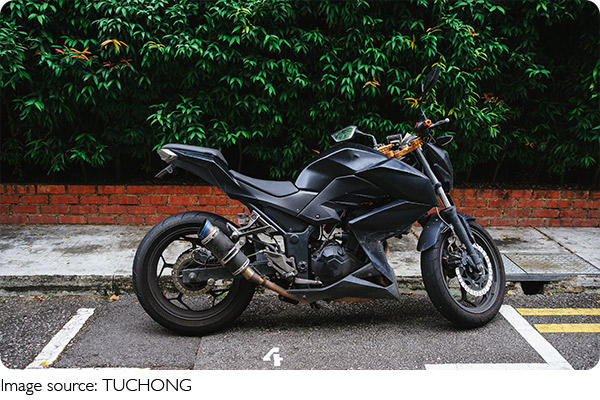
Some modifications are done for sound, but the weight drop is what you notice once you start riding. Exhaust systems can be heavy, especially when the factory setup includes a large muffler and emissions hardware. Riders often switch to lighter materials such as stainless steel, titanium, or carbon fiber parts to cut mass. A few pounds taken from high on one side of the bike can change the feel when you lean into a turn or move the bike around a parking space. You may not call that dramatic on paper, but on a smaller motorcycle the difference can be easy to notice. If you ride in city traffic every day, even pushing the bike backward into a tight spot can feel easier.
Looks and heat also count
People often say performance is the reason, but appearance matters just as much. A short canister, an underseat layout, or a clean stainless mid-pipe changes the whole side profile of the motorcycle. On some bikes, the stock unit looks oversized because it has to do several jobs at once, including noise control and emissions treatment. Riders who care about the bike's lines often want something slimmer. Heat is another practical reason. Exhaust wrap, heat shields, and routing all affect how much heat reaches your leg, luggage, or passenger area. If you have ever stepped off a bike after a long ride and felt the right side staying hot for several minutes, you already know why this gets attention.
A modified exhaust can make a motorcycle feel more personal, but it also asks you to think past the first impression. The gains riders chase are usually sound, flow, lower weight, cleaner looks, or less bothersome heat, and each one comes with a cost in noise, setup, comfort, or legality depending on where you ride. If you are thinking about changing yours, match the exhaust to the way you actually use the bike, not just to the way it sounds for ten seconds at idle. So if you want the mod to feel worthwhile, start with your real reason first, then choose the setup that fits that reason.