Supercar vs Sports Car

Mason O'Donnell
| 24-08-2026
 · Automobile team
Welcome, everyone. A lot of people treat supercars and sports cars as the same thing, but the gap is wider than a badge or a louder exhaust note.
You can line up a Porsche 718 Cayman and a McLaren 720S and see the difference fast. One is built to be sharp, balanced, and usable on a normal day.
The other is built to chase extreme numbers, dramatic design, and a sense of occasion every time you get in. If you have ever wondered where the line really sits, it usually comes down to intent, engineering, and how much compromise the car asks from you.

Purpose changes everything
A sports car is usually designed around driver involvement first, but it still leaves room for ordinary use. The Mazda MX-5 Miata is a clear example, it keeps power modest and weight low so you enjoy the steering, the shifter, and the way the car moves through a corner. A supercar pushes a different target. The Ferrari 488 Pista and Lamborghini Huracan Performante are not just trying to feel engaging, they are chasing extreme acceleration, high cornering grip, and major visual impact. That changes everything from tire width to cabin access. You do not just get a faster version of the same idea, you get a machine built around intensity.
Layout tells you a lot
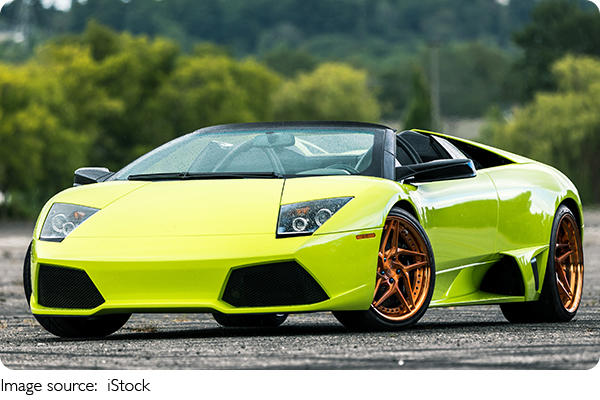
Most sports cars keep a simpler format, usually front engine or mid engine, two seats, and proportions that still make sense in daily traffic. The Chevrolet Corvette, Porsche 718 Boxster, and Toyota 86 all fit that broader sports car space, even though they feel very different from one another. Supercars tend to move toward more specialized hardware. Mid engine layouts show up often because they help weight distribution and high-speed handling, and cars such as the Audi R8 and Ferrari 488 lean hard into that setup. You also see bigger brakes, wider track widths, active aero pieces, and cooling openings that are there for function first. Those details are not decoration, they support the higher performance ceiling.
Speed is part of it
People usually start with horsepower, but raw output does not settle the whole question. A sports car can be quick without entering supercar territory. The Porsche 911 Carrera, for example, delivers serious pace, but many versions still balance that pace with comfort, visibility, and enough practicality that you could use one often. Supercars move the baseline upward. Cars such as the McLaren 720S or Ferrari 812 Superfast bring huge horsepower, very fast 0 to 60 times, and top speeds that push far past what most drivers will ever use. That said, the category is not defined by one number. A Lotus Elise can feel deeply focused without huge power, while a very strong grand tourer may be fast but still not register as a supercar because its mission is broader.
Drama comes with tradeoffs
This is where the split gets easier to feel in real life. Sports cars often ask less from you. A BMW Z4 or Porsche 718 gives you decent outward visibility, easier entry, more forgiving suspension tuning, and cabins that do not feel built around compromise. Supercars usually lean the other way. Think of the low seating position in a Lamborghini Huracan, the tight cargo space in a McLaren 570S, or the attention a Ferrari 488 gets when parked anywhere public. Those things are part of the package. You are paying for performance and presence, but you are also accepting stiffer ride quality, higher running costs, and less day-to-day ease.
Price shows the intent
Money does not define the category by itself, but it usually confirms what the car was built to be. Sports cars cover a wide range, from the Mazda MX-5 Miata at the accessible end to higher trims of the Porsche 911. Supercars sit much higher, and the price jump reflects more than extra horsepower. You are paying for low-volume engineering, advanced materials, specialized suspension and braking systems, and design that is meant to stand apart immediately. That is why models from Ferrari, McLaren, and Lamborghini tend to start where many sports cars top out.
If you are trying to sort the two categories, do not get stuck on one stat sheet line. Look at the whole package, the layout, the mission, the comfort tradeoffs, and the kind of driving experience the car is built to deliver. A sports car usually gives you involvement with fewer sacrifices, while a supercar turns the intensity up in nearly every area and expects you to accept the cost, attention, and inconvenience that come with it. So if you are comparing the two, ask yourself a simpler question, do you want something rewarding to drive often, or something engineered to feel extreme every single time you use it?