Cars Got Brains

Arjun Mehta
| 13-08-2026
 · Automobile team
Hi, Readers! Cars used to be like sturdy old toasters with wheels. You turned a key, the engine woke up, and the whole mission was simple: get from one place to another without too much drama. Now the car is changing into something far more clever.
It can sense, connect, guide, and even chat with the world around it. That shift from pure mechanical machine to mobile space did not happen overnight. It came from layers of electronics, software, connectivity, and changing expectations about what people want while they travel.
At the heart of this change is the rise of the connected car. A connected car uses internet access and local networks to communicate with devices inside and outside the vehicle. In plain words, the car is no longer a lonely metal box rolling down the road. It is more like a phone, computer, navigation helper, and comfort zone bundled together and wrapped in steel. Systems inside the car can link to smartphones, cloud services, maps, traffic platforms, and nearby infrastructure. That means driving is no longer just about pedals and steering. It is also about data.
Why intelligence grew fast
One major reason cars are getting smarter is safety. Sensors, cameras, radar, and control software help the vehicle notice what a human driver might miss. Features like parking assistance, lane support, adaptive speed control, and collision warnings are all part of this bigger shift. Carmakers are adding these tools because roads are busy, drivers are distracted, and people expect more support from machines. A smart car acts like a careful co-pilot who never gets tired of watching the road.
Another reason is convenience. People now live through connected screens. They expect navigation to update in real time, music and calls to move smoothly from phone to car, and vehicle systems to feel as easy as using an app. Once drivers got used to touchscreens, voice controls, remote locking, and app-based vehicle status checks, there was no going back. The car started acting less like a machine in the garage and more like a smart device with tires.
From transport tool to mobile space
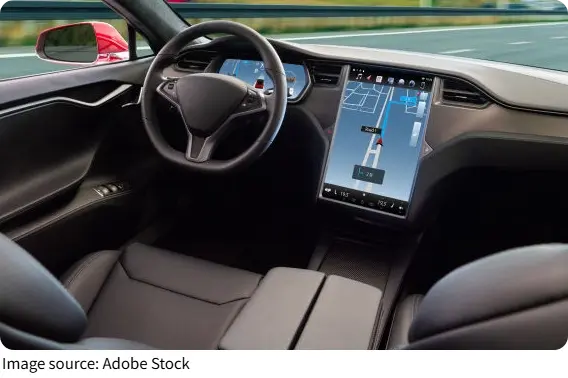
As intelligence grew, the meaning of the car changed too. Earlier, the car was mainly a transportation tool. Today, it is increasingly treated as a mobile space where people work, relax, communicate, and manage daily life. Larger displays, internet services, better cabin design, and digital assistants support this shift. During a trip, people may navigate, join calls, stream media, check vehicle health, or coordinate family schedules. The cabin becomes a tiny moving room, a bit like a backpack, office, and sofa all squeezed into one clever capsule.
This change is especially important because time in the car is no longer seen as dead time. If a vehicle can reduce driving stress through automation and guidance, passengers can use that time differently. Even before fully self-driving technology becomes common, partial automation and connected services already make the cabin feel more like a usable personal space. Carmakers are responding by rethinking seats, displays, storage, and interfaces.
The role of software and updates
A traditional car was mostly defined in the factory. Once built, its core abilities changed very little. A smart car is different. Software can add new functions, improve navigation, refine system behavior, and update entertainment features. In other words, the vehicle can keep evolving after purchase. That is a big reason intelligence is spreading so quickly. Software turns the car from a fixed product into something closer to an upgradable platform.
Connectivity also allows predictive maintenance and remote diagnostics. The vehicle can monitor systems, report issues, and sometimes help solve problems before they become major headaches. That saves time and can improve reliability. It is like having a very attentive assistant who notices your shoelace is loose before you face-plant on the sidewalk.
What this shift really means
The move from mechanical transport to mobile space reflects a wider change in how people think about mobility. A car is still expected to move safely and efficiently, of course. But it is also expected to connect with digital life, provide comfort, and support productivity and entertainment. Intelligence in cars is growing because technology now makes it possible, and because users increasingly demand it.
This evolution is not a distant fantasy; it is happening right now in garages and highways everywhere. While the engine remains the heart, the brain is now software. As sensors shrink and screens expand, the vehicle becomes a partner in your daily routine. We are moving toward a future where the road is just the background, and the journey itself is the main experience—safe, seamless, and surprisingly human.