Why Sports Cars Launch Fast

Declan Kennedy
| 03-08-2026
 · Automobile team
When a sports car launches forward with impressive speed, the moment feels almost effortless.
The sharp response, smooth surge of power, and rapid acceleration are not created by a single feature. They are the result of carefully balanced engineering that combines a powerful engine, a lightweight structure, excellent traction, and precise control systems.
Many people assume that engine power alone explains why sports cars accelerate so quickly. In reality, performance depends on how effectively that power is used. Engineers focus not only on increasing power but also on reducing weight, improving grip, and ensuring that every component works together efficiently. This balance gives sports cars their remarkable ability to respond instantly.
The Physics Behind Rapid Acceleration
Acceleration describes how quickly a vehicle changes its speed. According to basic physics, when the same force is applied, an object with less mass can generally accelerate more easily than a heavier one.
In a sports car, the engine produces the force that moves the vehicle forward. If the car is lighter, more of that force can be used to increase speed rather than overcome unnecessary mass. This is why two cars with similar engine output can deliver very different acceleration performance.
Why Lightweight Design Matters
Reducing weight is one of the most important goals in sports car engineering. Designers carefully evaluate every part of the vehicle to achieve a balance between strength, safety, and low mass.
Imagine two cars starting from the same position. If both receive the same driving force, the lighter car will usually gain speed more quickly because it has less mass to move. A heavier car can still accelerate strongly, but it requires more energy to reach the same level of performance.
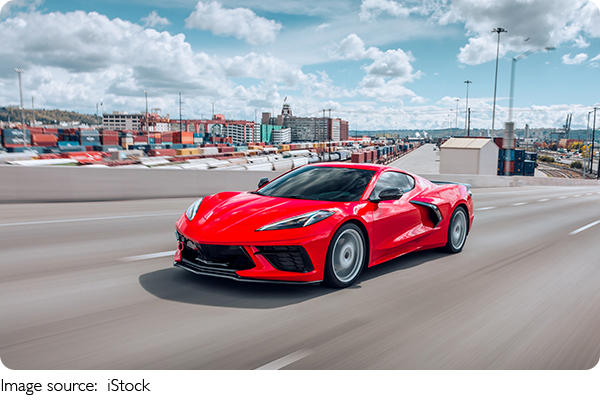
The Role Of Engine Power
A lightweight body alone cannot create outstanding acceleration. The engine must still deliver strong and immediate force to move the vehicle with authority.
High-performance engines are designed to produce power efficiently across a wide range of speeds. However, a very powerful engine in a heavy vehicle may not feel as responsive as a well-balanced sports car with a superior power-to-weight ratio.
How Traction Improves The Launch
Quick acceleration is not only about producing force; it is also about transferring that force to the road effectively. Tires, suspension, and control systems help the vehicle maintain grip during hard acceleration.
Without sufficient traction, excess power can be wasted. Modern sports cars are engineered to deliver power smoothly and efficiently so that the car can launch with stability, precision, and confidence.
Racing Cars Show The Extreme Example
Professional racing cars demonstrate these principles at the highest level. Every component is optimized to reduce weight, improve grip, and increase responsiveness.
Engineers study everything from chassis design to aerodynamics in order to create a machine that reacts instantly to driver input. Even small weight savings can contribute to better acceleration and handling.
Acceleration Means More Than Speed
In everyday conversation, acceleration usually means increasing speed. In physics, it has a broader meaning: any change in velocity, including changes in speed or direction.
When a sports car launches from a stop, it is accelerating. When it changes direction through a corner, it is also experiencing acceleration. Understanding this wider definition helps us appreciate the precision and control built into high-performance vehicles.
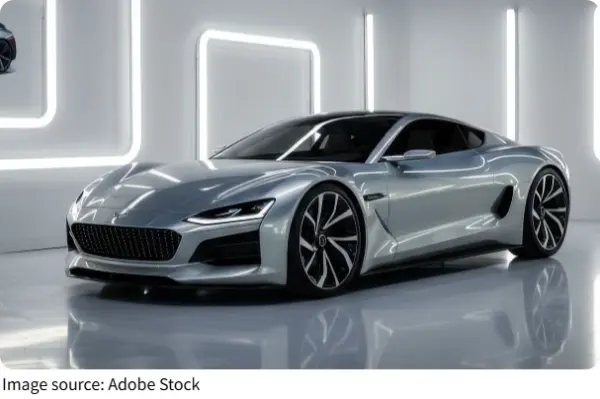
The Real Secret Behind A Fast Launch
Sports cars launch so quickly because several engineering elements work together as a single system. Strong engine performance provides the force, while reduced weight allows that force to create rapid movement more efficiently.
Traction, suspension, and precise control systems help transfer power to the road with stability and accuracy. When these elements are carefully balanced, the result is a launch that feels smooth, immediate, and exceptionally fast.
The next time you watch a sports car surge away from the starting line, remember that the excitement comes from more than raw horsepower. It is the harmony between power, weight, grip, and engineering precision that makes a sports car feel truly responsive and unforgettable.