Memory That Amazes

Santosh Jha
| 31-07-2026
 · Animal team
Hey there! Hearing a familiar voice after twenty years—no warning, no context—feels impossible. Yet it happens, and people always surprise themselves.
Several animal species pull off something remarkably similar as a matter of routine, holding onto detailed memories across timespans that would challenge most people.
The species setting the bar impressively high
Bottlenose dolphins currently hold one of the strongest claims to best memory in the animal kingdom, with documented cases of individuals recognizing the specific vocal signatures of other dolphins more than two decades after last hearing them.
Clark's nutcrackers operate on a completely different but equally staggering scale, caching up to 100,000 pine seeds across hundreds of square miles of terrain each autumn, then retrieving the majority of those hidden stores with real accuracy throughout the following winter and spring.
Research tracking these birds found they can recall precise cache locations for as long as nine months, an extraordinary feat of spatial memory considering how many individual hiding spots that actually involves keeping straight.
Where social memory turns out to be just as strong
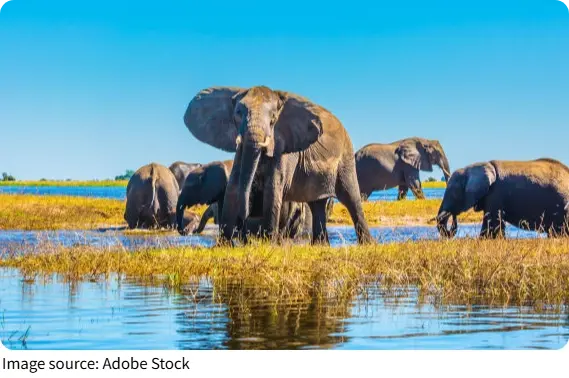
Elephants have been documented recalling drought-era water sources they hadn't visited in more than 35 years, knowledge that a herd's matriarch can draw on to guide her group through an environmental crisis decades after she first learned that particular route.
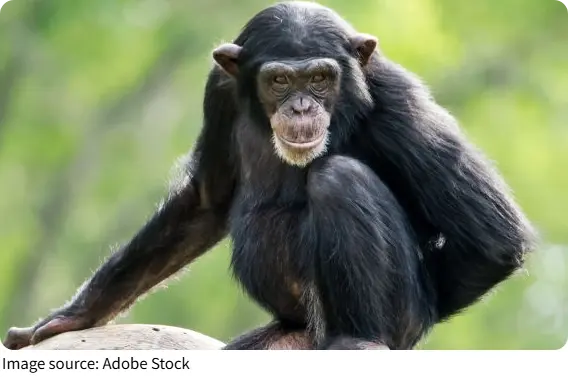
Chimpanzees show comparably strong social memory, with documented cases of individuals recognizing photographs of former group members even after gaps stretching close to three decades apart, alongside separate research showing young chimpanzees outperforming university students on rapid numerical recall tasks involving briefly flashed number sequences.
Corvids, crows and ravens especially, are known to recognize individual human faces for years afterward, remembering specifically who treated them well and who didn't, a distinction they carry forward and apparently pass along to other members of their own flock as a kind of shared warning system.
African Grey Parrots round out the list, with documented cases of individuals recalling specific conversations and phrases even after extended stretches without hearing them repeated at all.
What all this memory is actually built for
None of these abilities evolved simply to impress researchers running clever laboratory tests; each one solves a specific survival problem the species faced repeatedly over generations. A nutcracker that forgets even a modest share of its 100,000 hidden seeds risks real starvation before spring arrives, so the pressure to retain thousands of precise spatial locations was never optional in any meaningful sense.
An elephant matriarch's decades-old memory of a hidden water source can be the single difference between a herd surviving a severe drought and losing members to it, which explains why that kind of long-term recall would be selected for so strongly across elephant generations over time.
Even the more social forms of memory, a crow tracking who was kind and who wasn't, a chimpanzee recognizing an old group member years later, likely trace back to the practical value of correctly managing complicated relationships within a group that an individual's survival ultimately depended on.
So the next time a pet or a wild animal seems to remember something from years earlier that seems impossibly specific, that's probably not imagination or coincidence. Honestly, the animal kingdom takes memory a lot more seriously than most people give it credit for.