Expert-Only Sports Cars

James Carter
| 09-07-2026
 · Automobile team
Readers, modern sports cars are faster and more powerful than ever, with many affordable models producing performance that once belonged only to exotic supercars.
Advanced technology makes these cars easier to drive, but it cannot replace experience or good judgment.
Some high-performance vehicles demand precise control and leave very little room for mistakes. Here are five sports cars that new drivers should avoid until they have developed stronger driving skills.
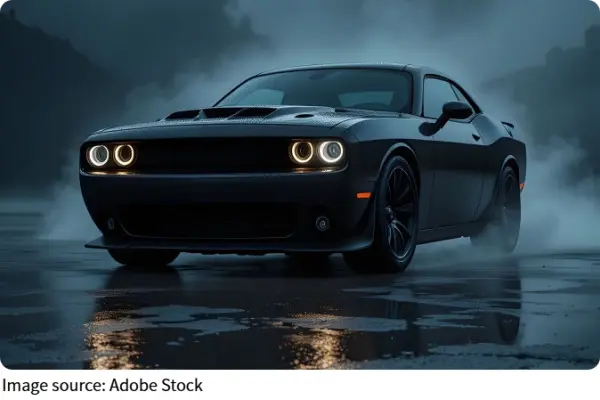
1. Dodge Viper RT/10: A Barely Tamed Racing Machine
When the first-generation Dodge Viper RT/10 debuted in 1992, it deliberately ignored many of the comfort and safety features that had already become common in passenger cars. Inspired by the philosophy behind the legendary Shelby Cobra, the Viper prioritized raw mechanical performance above everything else.
Its naturally aspirated 8.0-liter V10 generated approximately 400 horsepower and 465 lb-ft of torque while the car weighed only around 3,400 pounds. Even by modern standards, that power-to-weight ratio remains intimidating. What truly separates the Viper from newer performance cars is the lack of electronic safety systems.
Early versions came without traction control, anti-lock brakes, side windows, exterior door handles, or airbags. Every steering correction, throttle input, and braking decision depended entirely on the driver's skill.
The Viper responds instantly to aggressive throttle application, especially when exiting corners. Losing rear traction can happen suddenly, leaving inexperienced drivers with very little time to recover. Rather than correcting mistakes, the car exposes them immediately, making it one of the least forgiving American sports cars ever produced.
2. Chevrolet Camaro: Big Power Combined With Limited Visibility
The Chevrolet Camaro returned in 2010 with styling inspired by its late-1960s predecessor. While its muscular appearance attracted enthusiasts worldwide, its performance increased dramatically throughout its production run.
Even V6-powered versions produced well above 300 horsepower, while V8 models ranged from roughly 400 horsepower in early fifth-generation models to an astonishing 650 horsepower in the supercharged Camaro ZL1.
Acceleration is only part of the challenge. The Camaro's design creates unusually poor outward visibility. Thick roof pillars, a high beltline, and relatively small windows make it difficult to judge surrounding traffic, corners, pedestrians, and parking distances.
Experienced drivers often compensate using mirrors and familiarity with the vehicle's dimensions. New drivers, however, already have a heavy mental workload while learning traffic awareness. Combining restricted visibility with substantial horsepower significantly increases the chance of driver error.
3. Dodge Charger: The Sedan That Hides Supercar Performance
At first glance, the modern Dodge Charger resembles a practical four-door family sedan. That ordinary appearance can be misleading. Since its modern revival in 2005, the Charger has offered numerous V8 options producing between 340 and over 800 horsepower, depending on trim level. High-performance variants such as the Hellcat and Hellcat Redeye possess acceleration capabilities that rival dedicated supercars.
Despite its size, the Charger remains rear-wheel drive in many of its highest-performance versions. Applying too much throttle while exiting corners or driving on wet pavement can easily overwhelm the rear tires. Another concern is that many Charger trims look remarkably similar from the outside. Someone unfamiliar with the lineup may not immediately recognize whether a car produces 300 horsepower or more than 800.
4. Honda S2000: Precision Driving Required
The Honda S2000 is often viewed as a relatively approachable sports car because its engine produces around 240 to 250 horsepower—modest compared with today's high-performance models. However, horsepower alone does not determine how demanding a car is to drive.
The S2000 weighs less than 3,000 pounds and features a near-perfect 50:50 weight distribution with rear-wheel drive. Its high-revving VTEC engine delivers maximum performance near the top of the rev range, encouraging enthusiastic driving.
Earlier models also lacked modern stability control systems, while the suspension was engineered for sharp handling rather than forgiveness. One of the S2000's best-known characteristics is snap oversteer. If a driver suddenly lifts off the accelerator while cornering aggressively, the rear of the car can rotate unexpectedly. Recovering from this requires quick steering corrections and experience that most beginners simply have not yet developed.
5. Porsche Carrera GT: Built for Experts, Not Beginners
The Porsche Carrera GT represents one of the purest analog supercars ever created. Originally developed from Porsche's canceled Le Mans racing program, it retained much of its motorsport DNA when entering production. Mounted behind the driver sits a naturally aspirated 5.7-liter V10 producing approximately 610 horsepower.
Combined with a lightweight carbon-fiber chassis, the Carrera GT accelerates from 0 to 60 mph in under four seconds before reaching a top speed exceeding 200 mph.
Unlike many modern supercars, the Carrera GT offers very limited electronic intervention. There is no sophisticated stability system constantly correcting driver inputs. Steering, braking, clutch operation, and throttle management require complete concentration and refined technique.
Owning a high-performance sports car can be exciting, but learning vehicle control should always come before chasing horsepower. Cars with overwhelming acceleration, rear-wheel-drive dynamics, limited visibility, or minimal electronic assistance demand refined skills that develop only through years of driving experience.
Beginning with a more forgiving performance car allows drivers to understand braking, cornering balance, throttle modulation, and emergency reactions in a safer environment. Those lessons become invaluable before stepping into machines capable of reaching extraordinary speeds within seconds.