LiDAR for Motorcycles

Arjun Mehta
| 04-06-2026
 · Automobile team
Imagine riding your motorcycle through traffic, navigating sharp turns, and weaving past obstacles with ease, all while knowing you have advanced technology working behind the scenes to protect you.
Sounds like something out of a sci-fi movie, right?
In reality, laser radar (LiDAR) and laser sensors are slowly but surely making their way into motorcycles, enhancing safety in ways that were previously unimaginable.
Motorcycle safety has always been a concern, and while there have been advancements in helmet technology and protective gear, the integration of sensors like LiDAR can elevate safety standards to an entirely new level. But how exactly do these technologies work, and what benefits can they provide to riders?
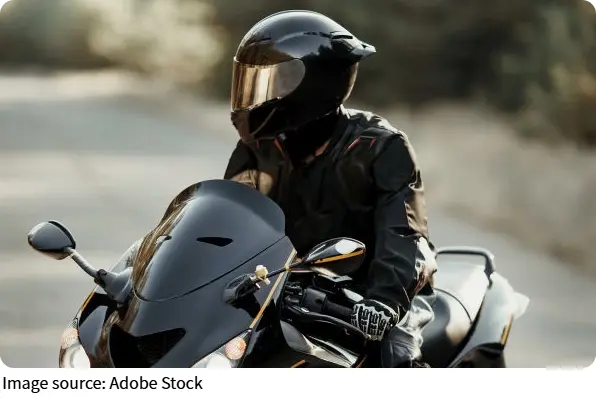
Understanding LiDAR and Its Role
LiDAR, short for Light Detection and Ranging, uses laser pulses to measure distances and create 3D maps of the surrounding environment. It works similarly to radar but uses light waves instead of radio waves. In a motorcycle, LiDAR sensors can be used to detect objects around the bike, providing real-time data about the rider's surroundings.
Mapping the Environment
One of the main benefits of LiDAR is its ability to create a highly accurate map of the environment around the motorcycle. It scans everything within the bike's vicinity—cars, pedestrians, road obstacles, and even other motorcycles. This 3D data can be used to enhance the bike's overall awareness, helping riders anticipate and avoid potential hazards.
For example, LiDAR can help detect a car that suddenly cuts into the rider's lane, giving them enough time to adjust their speed or maneuver. The more data the sensor gathers, the better the system can predict and react to changes in the environment.
Real-Time Obstacle Detection
LiDAR sensors provide real-time feedback, allowing the motorcycle to recognize obstacles before they even come into direct view of the rider. This can help prevent accidents, especially in low-visibility conditions such as rain, fog, or at night. By analyzing the scanned environment continuously, the system can detect obstacles early, making the rider aware of potential dangers and offering solutions like automatic braking or steering assistance.
How Laser Sensors Complement LiDAR
While LiDAR is already making waves in the motorcycle world, it works best when combined with other laser sensors. These sensors work in conjunction with LiDAR, offering a more comprehensive approach to safety.
Blind Spot Detection
Laser sensors are already used in cars for blind-spot detection, and they can be applied to motorcycles to offer similar functionality. By scanning the spaces around the rider, these sensors can alert them if another vehicle enters their blind spot. This can be crucial when switching lanes or making turns, as it ensures that riders are fully aware of their surroundings before making a maneuver.
Collision Prevention
Laser sensors can also help prevent rear-end collisions by alerting the rider when they are too close to a vehicle in front of them. By monitoring the distance between the motorcycle and the vehicle ahead, the system can provide warnings to slow down or even initiate emergency braking if necessary. This functionality adds a layer of security that traditional braking systems can't provide.
Real-World Example: LiDAR in Action
To illustrate the effectiveness of LiDAR and laser sensors in improving motorcycle safety, let's look at a real-world example. In 2020, a motorcycle brand launched a prototype equipped with LiDAR sensors. The bike was tested on a series of urban streets with heavy traffic, and the results were impressive. The system was able to detect pedestrians, cyclists, and vehicles at a much greater distance than a rider could see with their own eyes, allowing the rider to react much earlier to potential dangers.
Additionally, the system was able to map the environment in real-time, detecting hazards even in the darkest corners of the rider's view. As a result, the test riders reported feeling significantly more confident navigating through crowded city streets, knowing that the bike's sensors had their back.
Future Implications of LiDAR and Laser Sensors in Motorcycles
While LiDAR and laser sensors are still relatively new to the motorcycle industry, the potential for these technologies is vast. As manufacturers continue to refine these systems, we can expect to see even more advanced features that will drastically improve motorcycle safety.
Autonomous Riding
In the long term, these sensors could pave the way for semi-autonomous or fully autonomous motorcycles. By incorporating LiDAR and laser sensors into an advanced riding system, motorcycles could be equipped with self-driving capabilities, taking over in situations where the rider may be distracted or in danger.
For instance, in the event of an imminent collision, the bike could automatically steer away or apply the brakes to prevent an accident.
Enhanced Rider Assistance
Even without fully autonomous riding, these sensors can play a significant role in enhancing rider assistance systems. With continuous developments, we could see more intuitive and responsive safety systems that allow the bike to predict and adapt to the rider's needs, offering support in ways that were previously impossible.

The Road Ahead for LiDAR in Motorcycle Safety
LiDAR and laser sensor technologies represent the next frontier in motorcycle safety. With their ability to provide real-time environmental data, detect obstacles, and offer advanced safety features like blind-spot detection and collision prevention, these systems promise to make motorcycles safer than ever before.
As the technology continues to improve and become more accessible, it's only a matter of time before LiDAR and laser sensors become standard features on most motorcycles, just like airbags and anti-lock braking systems. For riders, these innovations offer peace of mind, knowing that their bike is equipped with the latest tools to keep them safe on the road.
With the growing potential of LiDAR, the future of motorcycle safety looks brighter and more secure. It's not just about faster bikes and sleeker designs anymore—safety is taking center stage, and technologies like LiDAR are leading the way.