V6 vs V8 Explained

Finnegan Flynn
| 01-06-2026
 · Automobile team
Both V6 and V8 engines arrange their cylinders in a V shape with two opposing banks — three per bank in a V6, four per bank in a V8 — joined by a common crankshaft.
That two-cylinder difference sounds small. In practice, it creates meaningful differences in size, weight, output, behavior, and the sound coming out of the exhaust.
For sports car buyers especially, the sound dimension is surprisingly significant; over 60% of performance car buyers say the exhaust note is a key factor in their purchase decision.
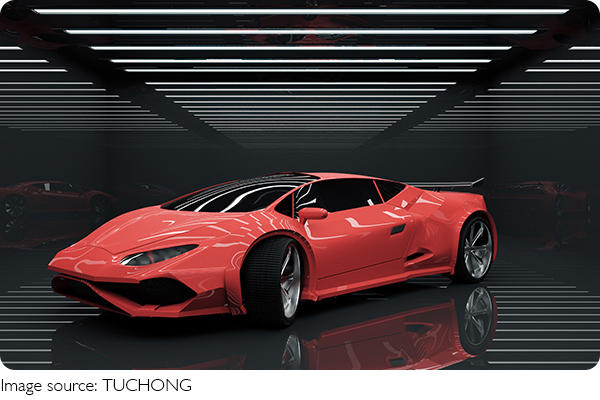
The Performance Differences
A V8's greater cylinder count means each individual cylinder does less work to produce the same total output as a V6 working harder. This translates to more natural high-performance capacity, particularly at sustained high loads. V8 engines tend to produce more horsepower and torque, offer quicker acceleration in performance applications, and handle the stress of extended high-speed use with more mechanical ease.
A V6 is shorter, lighter, and more compact. Lighter weight benefits handling dynamics, fuel economy, and packaging — a shorter engine leaves more room for other components and allows for more flexible vehicle architecture. Modern turbocharged V6 engines can match or exceed the power output of larger naturally aspirated V8s.
The Ford GT and Maserati MC20 both use twin-turbocharged V6 engines producing performance that competes directly with traditional V8 supercars.
Because V6 engines are typically arranged at a 60-degree angle while most V8s sit at 90 degrees, and because the firing order repeats sooner with fewer cylinders, a V6 can sound less smooth and refined than a V8. Engineers compensate with balancer shafts to dampen the inherent vibrations of the configuration.
Why They Sound So Different
The exhaust sound you hear isn't primarily combustion noise — it's exhaust pulses. Every time a cylinder fires, it sends a pressure wave through the exhaust system. The number of cylinders, their firing order, the crankshaft design, and the exhaust plumbing all interact to determine the specific frequencies that reach your ears.
In a V8 with a traditional crossplane crankshaft — the kind found in American muscle cars like the Ford Mustang GT — the pistons are arranged so cylinders on opposite sides of the engine fire in sequence, creating uneven exhaust pulse spacing. Those uneven pulses produce the characteristic low-RPM burble and high-RPM rumble of a V8. The result is a deep, rich tone with strong low-frequency content that many people describe as primal.
A flat-plane crankshaft V8 — preferred by Ferrari, McLaren, and other European manufacturers — places the pistons 180 degrees apart rather than 90 degrees. This creates more evenly spaced exhaust pulses, producing a higher-pitched, more mechanical scream at high revs. It's why a Ferrari V8 sounds so different from a Mustang V8, despite both having eight cylinders.
V6 engines generally have more evenly spaced exhaust pulses due to their configuration, producing a higher-pitched wail at high revs rather than the deep rumble of a crossplane V8. Some V6s — notably Nissan's twin-turbo VR38DETT in the GT-R, and Ferrari's own V6 in the 296 GTB — have been engineered to produce exceptionally interesting sounds. But the characteristic V8 rumble is hardwired into the physics of the configuration.
You can tune a V6 exhaust to be louder or more aggressive, but the fundamental tonal character of a V8 isn't something you can fully replicate with six cylinders.
For Sports Cars Specifically
In sports car applications, the choice becomes more nuanced than raw power output suggests. A turbocharged V6 can produce equivalent or greater power than a naturally aspirated V8 with better fuel efficiency and a lighter installation. The Ford GT's twin-turbo 3.5-liter V6 produces 660 horsepower — a figure that exceeds many V8 sports cars. The weight savings from a smaller engine can meaningfully improve a car's handling balance.
The V8 argument in sports cars is partly about what the numbers don't capture: the way power builds through the rev range in a naturally aspirated application, the specific sound that many consider essential to the sports car experience, and the direct mechanical connection between driver input and engine response that turbocharged engines partially filter.
The answer to which is better for a sports car truly depends on the application — and increasingly, the answer is whichever configuration the specific car was optimized around.
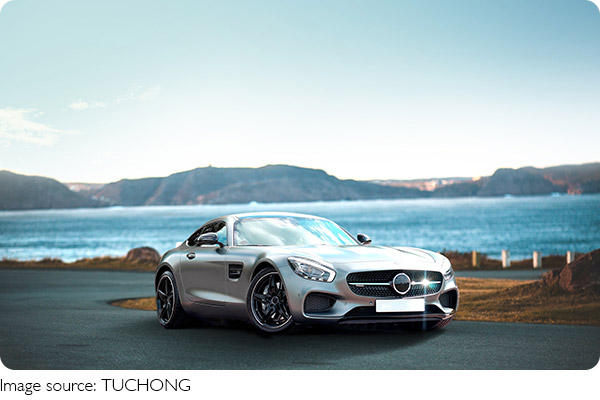
So which is better – V6 or V8? The honest answer has shifted over the past decade. Modern turbocharged V6 engines have erased the old power gap, offering competitive horsepower with lighter weight and better efficiency. But the V8 endures for reasons that don’t appear on a spec sheet: the deep, uneven rumble at idle, the linear power delivery in naturally aspirated form, and the sense of occasion that six cylinders struggle to fully replicate.
Drive both. Buy the one that makes you turn around and look back after you park.