Ukulele Vs Guitar!

Owen Murphy
| 20-05-2026
 · Art team
For beginners entering the world of string instruments, one common question is whether the ukulele is truly easier to learn than the guitar or if that idea is oversimplified. At first glance, the ukulele often seems more approachable because it is smaller, lighter, and has fewer strings.
However, learning an instrument depends on more than size or simplicity alone. Comfort, practice habits, musical goals, and technique all influence how easy an instrument feels to learn.
In practical terms, most beginners find the ukulele easier to start with than a standard acoustic guitar. Its compact design, lower finger strain, and simplified chord shapes reduce many of the early frustrations that cause new players to quit. That said, “easier” does not mean effortless. The instrument introduces its own learning curve, especially when players move beyond simple strumming patterns.
Fewer Strings Reduce Early Complexity
One of the clearest reasons beginners gravitate toward the ukulele is its four-string layout. A standard guitar uses six strings, which creates more combinations, wider chord voicings, and greater coordination demands. On guitar, even a beginner-friendly chord often requires multiple fingers pressing separate strings while avoiding accidental muting. Early learners frequently struggle to maintain clean sound because fingers unintentionally touch neighboring strings or fail to apply enough pressure. The ukulele simplifies this challenge. Many foundational chords require minimal finger movement, sometimes involving only one or two fingers.
This allows new players to focus on rhythm and timing instead of fighting hand positioning. The difference is not merely about numbers. A smaller string count reduces decision-making during strumming and chord transitions. Beginners spend less mental energy tracking finger placement and more time developing musical confidence.

Softer Strings Make Practice Less Intimidating
Another overlooked factor is physical comfort. Most beginner acoustic guitars use steel strings, which require greater finger pressure and often cause soreness during the first weeks of practice. While finger calluses naturally develop over time, early discomfort discourages many new musicians. Ukuleles commonly use nylon strings or synthetic materials with softer tension. They still require pressure, but significantly less force than steel-string guitars. This creates a friendlier introduction for younger players, casual learners, or adults with sensitive fingertips.
The lower tension also makes chord formation easier. Since players do not need to press as hard against the fretboard, hand fatigue develops more slowly during longer sessions. However, softer strings should not be mistaken for zero difficulty. Extended practice can still create discomfort, particularly when learning barre-style finger positions or maintaining consistent pressure.
Smaller Dimensions Improve Hand Comfort
The ukulele’s size offers another practical advantage: accessibility. For beginners with smaller hands, guitar stretches can feel frustrating. Certain chord shapes require fingers to spread across wide fret distances while simultaneously pressing multiple strings. This combination of reach and strength creates a common barrier during early learning. A ukulele neck is narrower, and fret spacing is shorter. Fingers travel less distance between notes, making transitions feel more natural. Younger players especially benefit from this design because it reduces hand strain without compromising musical development.
People often notice faster progress simply because their hands spend less time fighting awkward positioning. That said, the smaller dimensions create precision demands of their own. Players with larger hands may sometimes accidentally mute nearby strings because the spacing is tighter.
Easier to Hold, Easier to Keep Playing
Instrument comfort influences practice more than many beginners realize. A full-sized acoustic guitar requires arm positioning, posture adjustments, and body balance that may initially feel awkward. Long sessions can strain the shoulder or wrist if technique is inconsistent. The ukulele’s lightweight frame changes this experience considerably. Its compact body sits comfortably against the torso, making it easier to play while seated, standing, or traveling. Many players practice more frequently simply because the instrument feels accessible.
Consistency matters in musical growth. A smaller instrument that feels convenient often encourages short, repeated practice sessions—something strongly linked with faster skill development. For children or players with smaller frames, this advantage becomes even more noticeable.
Why the Ukulele Is Not Completely Effortless
Calling the ukulele “easy” can create unrealistic expectations. One challenge beginners encounter is string arrangement. On many soprano and tenor ukuleles, the highest-positioned string does not produce the deepest pitch. This tuning system, often called reentrant tuning, feels counterintuitive for people transitioning from guitar.
Instead of moving progressively from low to high tones, the sound order jumps unexpectedly. Beginners may struggle to understand melody shapes or fingerpicking patterns because their instincts no longer match the instrument’s structure. Rhythm also becomes deceptively important. Since the ukulele naturally produces a lighter, brighter sound, weak timing stands out more clearly. Players cannot rely on sustained notes or heavy resonance to mask inconsistent strumming. As skills improve, advanced techniques—including fingerstyle arrangements, chord melody, dynamic control, and jazz voicings—become increasingly demanding. At higher levels, the instrument is far more sophisticated than its beginner reputation suggests.
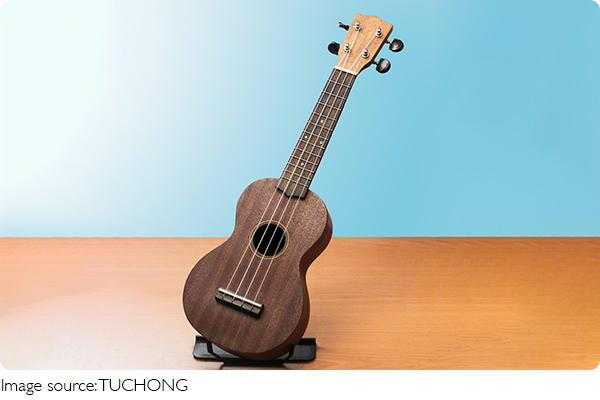
The ukulele removes several early barriers that make guitar intimidating: finger pain is reduced, chord shapes are simpler, stretches are smaller, and the instrument feels physically approachable. These factors create quicker wins during the first months of learning, which helps maintain motivation.