Climbing Footwork

Ethan Sullivan
| 12-05-2026
 · Sport team
There's a reliable way to identify a beginner on the wall: their shoes scrape.
Every step produces a thud or a drag, feet landing roughly somewhere in the vicinity of the hold rather than on a specific point of it.
This isn't just aesthetically wrong — it's the primary cause of wasted energy, over-gripping, and early pump. When foot placement is imprecise, the body overcompensates with the hands to maintain stability, and the forearms pay the price within minutes.
Precise foot placement means identifying the optimal contact point on a hold before the foot arrives there, and placing the toe exactly on that point on the first attempt, without readjustment. This sounds simple. It requires deliberate practice to become habitual, especially because the default tendency under any physical or mental pressure is to stop watching the feet entirely and focus on the hands.
Why Precision Matters More Than Grip Strength
Every foothold has an optimal contact zone. On an edge, it's the big toe or the outside edge of the shoe at the thickest part of the rubber. On a pocket, it's the center of the opening. On a smear, it's maximizing rubber surface area against the wall. Landing even a centimeter off-target reduces the friction available and forces the shoe to work harder against gravity, which transmits directly into more hand grip and forearm tension.
The key physical principle: the big toe is the strongest part of the foot and should be the primary contact point on most holds. When the foot lands flat or on the ball rather than on the tip of the toe, leverage is lost. Watch experienced climbers—their feet look almost deliberate, as if they’re carefully placing each toe on a target. That’s exactly what they’re doing.
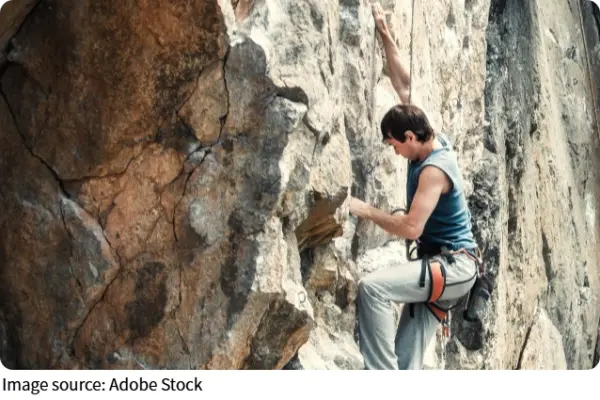
Drill 1: Silent Feet
Choose a route two grades below your current level. Climb it with the constraint that every foot placement must be completely silent — no thuds, no scrapes, no sounds of rubber dragging on the wall. If any noise is made, return that foot to the previous hold and place it again.
The reason silence produces precision is direct: placing a foot silently requires slowing down, looking at the hold, and guiding the toe with conscious intention rather than throwing the foot in the general direction of the wall. Noise comes from inaccuracy. Silence is the external sign of precise placement. This drill feels excruciatingly slow at first — that slowness is the point. Speed returns naturally once the placement habit is established.
Drill 2: Sticky Feet (Glue Foot)
Same route level as above. The rule: once the foot touches any hold, it cannot be moved or adjusted. Not a micro-adjustment, not a pivot to correct angle — nothing. If adjustment is needed, the foot must return to the previous hold and the placement attempted again from scratch.
This drill immediately reveals how often most climbers place a foot carelessly and then correct it. Sticky Feet eliminates that safety net entirely, which forces the climber to think through foot placement before it happens rather than after. The planning aspect is what transfers to real climbing: before lifting a foot, the climber must already know what contact point to aim for and what angle the shoe needs to land at for the next move to work.
Drill 3: Foothold Stare
This drill targets the visual attention habit that underlies all footwork. Choose a route, and as you climb, keep your eyes on each foothold from the moment the foot begins moving until three full seconds after the foot has landed and is fully weighted.
Most beginners glance at a foothold to identify it, then look away — often back up at the hands — before the foot actually arrives. The foot then lands approximately where it was aimed, which is close but not precise. The three-second stare after landing builds the habit of confirming placement through direct visual feedback rather than inference, and over time develops the spatial feel that eventually allows climbing without looking down as frequently.
Drill 4: Toe Stab
This drill can be done off the wall. Stand facing the climbing surface in your climbing shoes, balanced on one foot, roughly 50 to 60 cm from the wall. With the raised foot, reach out and precisely place the big toe on a specific foothold — not near it, exactly on it. Hold for two seconds, return the foot, and repeat on a different hold. Do 20 repetitions per foot.
This off-wall drill isolates the precision and balance aspects of foot placement without the added complexity of movement. The balance challenge on one leg also directly corresponds to the single-leg balance required on the wall whenever a foot is in transit between holds. Progression: choose more distant or harder-to-reach holds, requiring high-step-like reaches that challenge both precision and standing balance simultaneously.
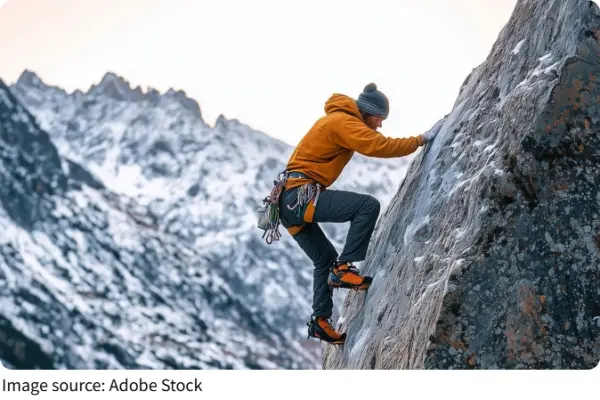
Drill 5: Downclimbing
After completing any route, rather than jumping or being lowered, descend the same route using the same holds. Downclimbing is inherently foot-first: the eyes must go to the feet and the feet must find holds below that the climber couldn't see while ascending. It's considerably harder than climbing up, which is exactly the point.
Downclimbing forces full conscious attention onto foot placement in a way that upward movement doesn't require. The climber must see each hold, place the foot deliberately, shift weight onto it, and only then release the hand. One downclimb session builds more footwork awareness than multiple normal ascents, making it a highly efficient addition to any training session regardless of level.