Night Anchors

Yuna
| 11-05-2026
 · Travel team
Some constellations feel like reliable old neighbors. While others pop in for a season and then disappear for months, a few star patterns keep showing up all year long.
For Lykkers, this guide explores those dependable sky companions, why they never seem to leave, and how you can spot them more easily without turning stargazing into homework with extra confusion on top.
The fun part is that these constellations are not magical exceptions. They simply sit close enough to a celestial pole that they keep circling without dropping below the horizon. Astronomers call them circumpolar constellations. The exact ones you can see all year depend on where you live, so your personal sky lineup is shaped by latitude.
Your Year Round Sky Team
Before jumping into star-spotting tricks, it helps to know what these all-season constellations actually are. They are not the flashiest shapes in every sky, but they are some of the most useful. They give you a stable reference point, and that makes everything else easier to find. Think of them as the anchor points of your sky map.
What year round really means
A constellation you can see all year does not stay in exactly the same place every night. That would be too easy. Instead, it circles around the pole, slowly changing position through the seasons and across the night. Sometimes it sits high, sometimes low, sometimes tilted in a way that makes it look like it woke up on the wrong side of the universe.
This surprises many beginners. You may find the same pattern in summer and then fail to recognize it in winter because it looks rotated. The stars are not playing a prank. Earth is turning, and your viewing angle changes with time. Once you expect this, the whole experience becomes less mysterious and much more enjoyable.
If you live in much of the Northern Hemisphere, famous circumpolar patterns often include Ursa Major, Ursa Minor, Cassiopeia, Cepheus, and Draco. In southern skies, the year round lineup is different, with patterns near the south celestial pole taking that role instead. So the first practical step is simple: learn the all-season constellations for your own latitude, not someone else’s.
Why these constellations never seem to leave
The reason is geometry, which sounds serious but is actually quite friendly here. Because these constellations lie close to the celestial pole, their daily circular path never dips below your horizon. They just keep looping around like dedicated runners on a track who never decide to go home.
This is easiest to imagine with the North Star area in northern locations. Stars near Polaris make small circles. Stars farther away make larger circles. Some of those larger circles still stay above the horizon all night and all year. Those are your circumpolar stars and constellations.
A useful way to test this idea is to watch the same patch of sky across several months. You will notice the pattern shifting position but never vanishing completely. That sense of continuity is one of the most satisfying parts of stargazing. The sky stops feeling random and starts feeling organized.
The easiest ones to start with
For many northern observers, Cassiopeia is a great place to begin because its W shape is cheerful, clear, and difficult to confuse with a random scatter of stars. It can look like a crooked letter drawn by someone on a bumpy bus, but that is part of the charm. Once found, it becomes a dependable signpost.
Ursa Major is another favorite, especially the Big Dipper part of it. Even when it tilts into odd positions, the scoop-like outline is often easy to pick out. Ursa Minor is fainter, but it matters because Polaris sits at the end of its handle. Draco curls between them in a long winding form, and Cepheus looks like a simple house shape in many sky guides.
The practical trick is not to memorize everything at once. Start with one bright shape and one supporting shape nearby. That way, your sky knowledge grows like a trail, not a pile.
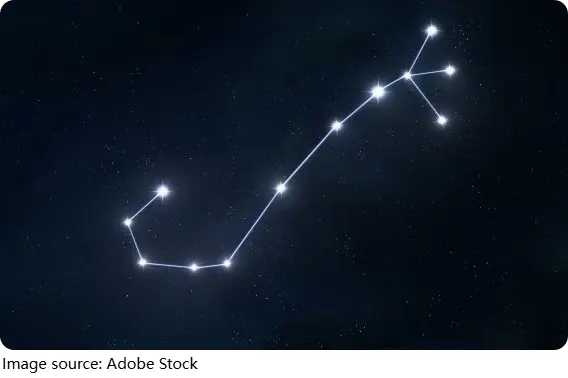
How to Find Them Easily
Knowing the names is nice, but spotting them in real life is where the fun begins. The good news is that year round constellations are perfect for building confidence because they are always available at some point during the night. You are not waiting months for a second chance.
Use one shape to find another
The sky is much easier when constellations become teammates instead of isolated puzzles. If you spot the Big Dipper, you can follow its pointer stars to Polaris. Once Polaris is found, Ursa Minor becomes easier to trace. Cassiopeia often sits on the opposite side of Polaris from the Big Dipper, so those two can work like a tag team.
This method is practical because it gives you a repeatable route. You are not staring upward hoping inspiration suddenly drops onto your face. You are moving from one clear landmark to another. Over time, those routes become familiar, and you need less help.
A fun challenge for your next clear night is to find one pattern and then use it to unlock two more. That turns stargazing into a little treasure hunt instead of a test.
Notice rotation instead of panicking
A common beginner problem is recognizing a constellation only when it matches the exact picture from a guide. Real skies are less polite. The shapes rotate. A dipper may pour sideways. A W may lean or look flattened. A dragon may seem more like a confused zigzag than a dragon. That is normal.
So instead of looking for the exact same orientation every time, focus on the spacing between bright stars and the general outline. Think of it like recognizing a friend whether they are standing, sitting, or wearing a hat that should have stayed at home.
You can practice this indoors too. Check a monthly sky map, note how one familiar constellation changes position across the seasons, and then compare that with the real sky. This trains your brain to recognize patterns, not frozen pictures.
Build a tiny stargazing routine
The easiest way to get better is to keep it simple. Pick one spot with a decent view and return to it regularly. Spend ten minutes outside on clear nights. Find one year round constellation first, then branch outward. That is enough. No grand expedition is required.
You can also keep a small notebook and jot down what you found, where it appeared, and what made it easy or annoying to recognize. Maybe Cassiopeia looked sharp above the trees. Maybe Draco was more slippery than expected. These tiny notes help you improve quickly because they turn vague memory into useful experience.
And here is a surprisingly helpful trick: let your eyes relax. New observers often try too hard and end up scanning the sky like they lost a sock up there. Slow down. Look steadily. Give your vision time to adjust. The stars reward patience far more than frantic staring.
Remember the hemisphere difference
For readers in the Southern Hemisphere, the same principle applies even though the constellations differ. Your all-year patterns gather around the south celestial pole rather than the north. So the best practical move is to learn the reliable constellations for your own sky first, then branch into seasonal visitors later.
This matters because many beginner guides lean northern, which can make southern observers feel like the universe forgot to send the right map. It did not. The map is just different. Once you switch to the correct view, everything becomes much clearer.
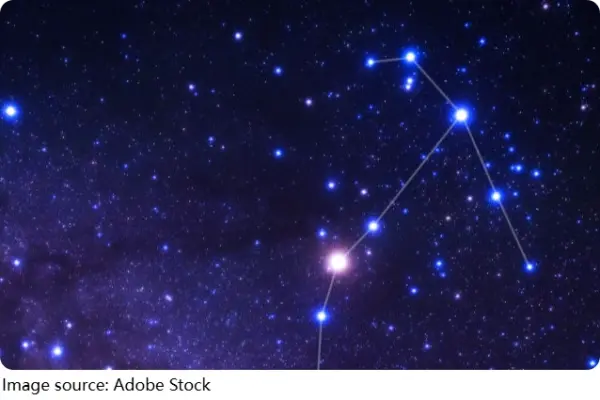
The constellations you can see all year round are some of the best guides for learning the night sky. They stay visible because they circle near a celestial pole instead of sinking below the horizon. Once you learn one or two of these dependable patterns, the sky becomes easier to read, more familiar, and much more fun to explore. Start small, look often, and let those steady stars become your regular night companions.