The Surfing Journey Begins

James Carter
| 06-05-2026
 · Sport team
If we have ever watched surfers gliding smoothly across the water, we might have wondered how they reached that level. The good news is that this journey is built step by step.
Today, we explore how we can grow from beginners into more skilled surfers through practical and clear stages. Each stage helps us feel more comfortable with the sea, the board, and the rhythm of moving water.
Starting with the Right Board Choice
The first step in our surfing journey is choosing the right board. This is more important than it may seem. A stable and beginner-friendly board helps us build confidence on the water. When we pick a board, we should consider our height, body balance, and learning goals. A wider and more stable board usually gives us better control when we are just starting out. This foundation allows us to focus on balance instead of struggling with instability.
Getting to the Shore and Preparing
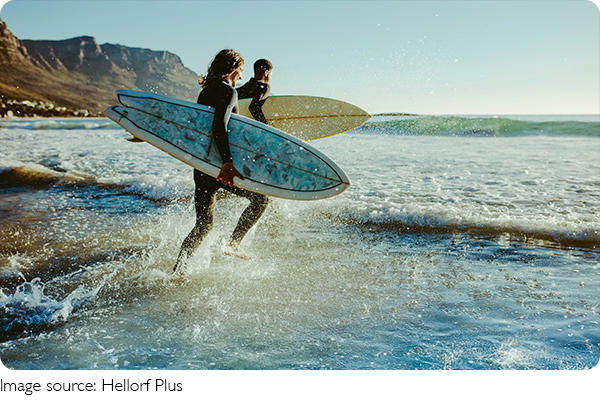
Once we have our equipment ready, we head toward the shoreline. The journey itself can be part of the excitement. When we arrive, the sea environment already sets the tone for learning. Before entering the water, we take a moment to observe the surroundings, check the conditions, and mentally prepare. This calm preparation helps us adapt better once we begin practicing.
Warm-up and Paddling Basics
Before entering deeper water, we start with warm-up movements. These help our body get ready for continuous motion. After that, we begin learning paddling. We lie on the board, keep our body centered, and move our hands in a steady rhythm along both sides of the board. Our fingers stay slightly curved to help push the water backward.
Breathing evenly is important here. When we coordinate movement and breathing, we conserve energy and maintain balance. At the beginning, guidance from an experienced coach can help us avoid common mistakes and build a solid foundation.
Reading the Ocean and Timing
As we move forward, we begin to understand how the water behaves. This stage is about observation. We learn to notice changes in water movement and identify the right timing for action. When we place our hands near the center of the board, we pay attention to how the surface shifts.
Instead of rushing, we wait for the right moment when the movement becomes smooth and suitable. This skill grows naturally with practice and patience.
Catching the Wave with Control
Now we enter a more exciting stage: catching movement on the water. We lie flat on the board, facing forward, while occasionally looking back to observe incoming swells. When the timing feels right, we start paddling with steady strength.
The key here is consistency rather than speed. Strong and controlled strokes help us align with the water’s motion. Over time, we learn to recognize patterns and improve our timing. This step is often where beginners feel the biggest improvement in confidence.
Standing Up and Balancing
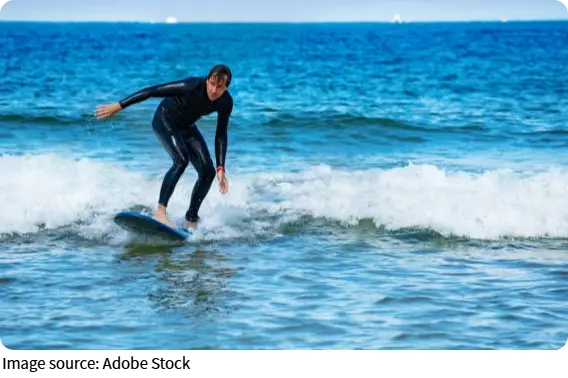
When the board gains enough movement, we attempt to stand. This is a crucial moment in our progress. We place our hands near the chest, move one foot forward, and slowly rise up with balance in mind.
Our feet stay shoulder-width apart, knees slightly bent to absorb movement. Keeping our gaze forward helps maintain direction. One arm can extend forward while the other stays closer to the body for balance. This posture helps us stay steady even when the water shifts beneath us.
Safe Exit from the Water
After practice, we also learn how to leave the board safely. If we are still seated, we maintain control and move calmly. If we fall, we try to fall backward into the water to reduce impact. Spreading the body slightly helps us float more easily and lowers the chance of hitting uneven underwater surfaces. Safety awareness is just as important as riding skills.
Understanding Wave Types
To improve further, we need to understand different water patterns. Some movements are soft and gentle near the shore, making them ideal for learning. These are great for building confidence.
More powerful movements appear farther out and require better timing and control. As we progress, we gradually move from easier conditions to more challenging ones, always respecting our own learning pace.
Water Movement and Safety Awareness
Water does not always move in a single direction. Sometimes it flows sideways along the shore, and sometimes it moves back away from the land. Understanding these patterns helps us stay oriented and safe.
When we recognize these movements, we can choose better positions and avoid unnecessary risks. With experience, we become more aware of how the environment changes and how to respond smoothly.
Final Waves of Reflection
Lykkers, every surfer starts with simple steps, and each stage builds real confidence. We do not rush the process. Instead, we learn, observe, and improve gradually. The ocean becomes more familiar as we spend more time in it, and each session adds a little more skill and comfort.
If we keep practicing with patience and awareness, the journey itself becomes just as rewarding as the ride.