Lake Baikal Winter Guide

Nolan O'Connor
| 23-04-2026
 · Travel team
The ice underfoot is not white. It is blue, a deep saturated blue that suggests considerable depth below rather than a frozen surface, and it is clear enough in places to see several meters down into the water that has been locked beneath it since December.
Long straight cracks run across the surface in lines that extend for hundreds of meters, the pressure fractures that form as the ice expands and contracts with temperature shifts.
Standing on this surface, in the middle of the world's deepest lake, with a 40-meter granite cliff rising directly from the ice ahead, produces a sensation that no description fully captures before the first visit.
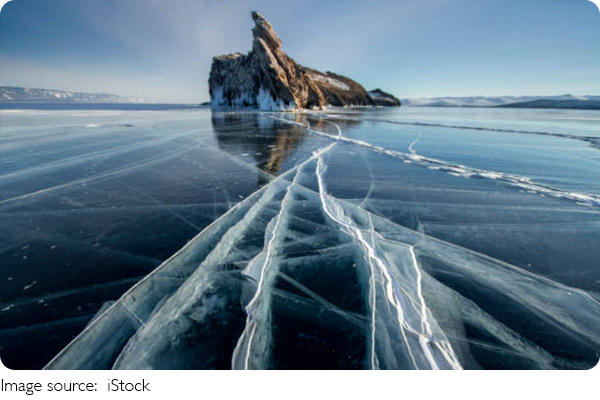
Lake Baikal in northern Asia is the deepest lake on Earth at 1,642 meters, the oldest at approximately 25 million years, and the largest by volume, containing approximately 20 percent of the world's unfrozen surface fresh water. In winter, from approximately January through March, the lake freezes to a depth of one to two meters, producing the transparent blue ice surface that has made Baikal's winter landscape famous in landscape photography. The ice is the experience, and reaching it requires a journey to one of the most remote major lakes on the planet.
Getting There
The primary base for Lake Baikal winter visits is Irkutsk, a northern city of approximately 600,000 residents located approximately 70 kilometers west of the lake's southern shore. Irkutsk International Airport receives direct flights from Moscow in approximately five hours, with tickets starting from approximately $100 to $200 each way on domestic Russian carriers. From international origins, connections via Moscow are the standard routing.
From Irkutsk, the most visited winter destination on the lake is Olkhon Island, reached by a combination of road and ice road crossing. The drive from Irkutsk to the Olkhon ferry point takes approximately five hours. In winter, a vehicle ice road across the frozen strait replaces the summer ferry, allowing cars and minibuses to drive directly onto the island. Organized transfers from Irkutsk to Olkhon cost approximately $20 to $30 per person each way.
Key Winter Experiences and Costs
Olkhon Island and the surrounding southern Baikal ice field provide the primary winter experiences, with the island's Shaman Rock at Burkhan Cape being the most photographed single location.
1. Burkhan Cape and Shaman Rock, the two-lobed granite cliff formation that rises from the ice on Olkhon's western shore, is freely accessible on foot across the ice from Khuzhir village, approximately a 20-minute walk. No entry fee. The ice surface around the rock base provides the foreground composition that makes this one of the most striking winter landscapes in Asia.
2. Ice trekking and cycling tours across the lake surface operate from Khuzhir village with local guides. Full-day tours covering the ice caves, pressure ridges, and open ice fields cost approximately $40 to $60 per person including transport by hovercraft or minibus across the ice.
3. Ice cave exploration along the western cliff faces of Olkhon, where freezing spray and seepage create formations of transparent blue ice attached to the rock walls, requires a guide and appropriate footwear. Guided ice cave tours cost approximately $25 to $40 per person for a half-day excursion.
4. Baikal ice fishing through holes drilled in the surface is practiced by local communities throughout the winter season and can be arranged through guesthouses in Khuzhir for approximately $15 to $25 per person including equipment and a guide.
Where to Stay
Khuzhir is the main village on Olkhon Island with a population of approximately 1,500 residents and the majority of the island's guesthouses and small hotels.
Nikita's Homestead is the most well-known guesthouse on Olkhon, a long-running family property with wooden bungalow accommodation from approximately $40 to $70 per person per night including meals. The property arranges ice tours and transport and has operated as the primary visitor base on the island for several decades.
Several smaller family guesthouses in Khuzhir offer basic but warm accommodation from approximately $25 to $45 per person per night, typically including breakfast and dinner. Staying in Khuzhir rather than Irkutsk is strongly recommended for winter visitors, as the early morning ice light and the evening aurora viewing from the island's elevated eastern shore require being on location rather than commuting from the mainland.
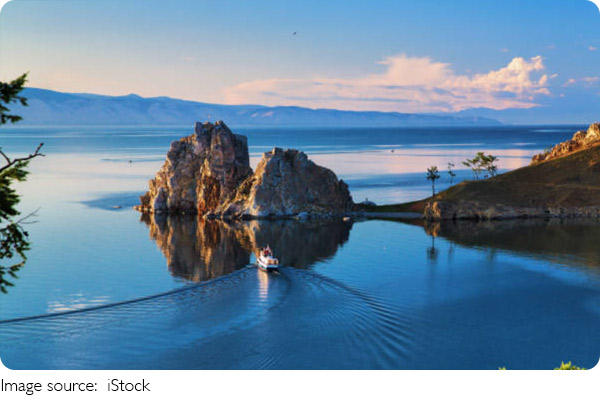
Lake Baikal in winter is one of those landscapes where the photographs that brought you there turn out to be inadequate preparation for the actual experience. The ice color, the transparency, the scale of the frozen surface extending to every horizon, and the specific silence of standing in the middle of the world's deepest lake on a surface that did not exist two months ago and will not exist two months from now — none of that arrives through a screen. It requires the journey, the cold, and the willingness to stand still on blue ice long enough for the place to become real.