Engadin Autumn

Amina Hassan
| 09-05-2026
 · Travel team
A weathered tree root sits in the foreground, its grain catching the same warm light that turns the larch forest behind it into a wall of orange gold.
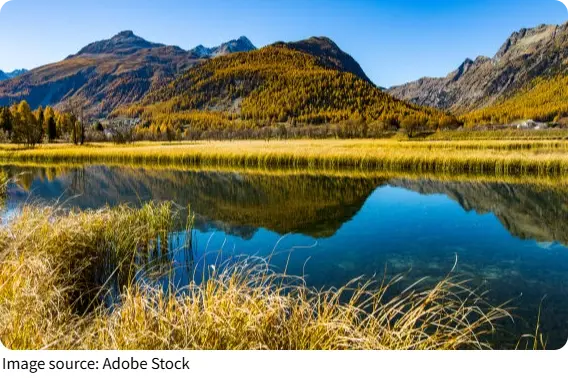
The lake in the middle distance reflects the color back from its dark surface. Snow-covered peaks close the frame at the top.
The composition arrived not by luck but by getting low, finding the foreground detail, and waiting for the afternoon light to come around to the right angle. This is how the Engadin valley photographs — not from the obvious viewpoints, but from the rocky slopes and forest edges where the real foreground material exists.
The Swiss Engadin in October is one of the most compressed and time-sensitive photography destinations in the world. The European larch color peak lasts approximately two to three weeks, the quality of light at this latitude in autumn is exceptional for approximately three hours each morning and two hours each evening, and the combination of orange forest, dark lake, and snow peak exists only in this specific valley during this specific window.
Getting there at the right time with the right approach produces images that no other landscape in Europe can offer.
Understanding the Light
The Engadin valley runs roughly northeast to southwest, which means the morning sun illuminates the western slopes facing the valley and the afternoon sun catches the eastern slopes. Lake Sils and the larch forests above Sils Maria face west and receive the most dramatic afternoon light, making the western shore trail the priority for late afternoon sessions between 3 p.m. and sunset.
The rocky slopes above the lake hold the compositional material that makes Engadin photographs distinct from generic alpine shots. Weathered boulders covered in lichen, exposed tree roots, and fallen logs provide foreground texture that separates images taken at knee height or ground level from those taken standing at eye level. Getting low is the single most effective technical decision available in this landscape.
The peak color window shifts by elevation. Larch forests above 2,000 meters turn first, typically reaching peak in early October. Valley-floor forests at 1,800 meters follow approximately one week later. Planning a visit that starts at higher elevation and moves progressively lower over several days extends the peak window and provides different compositions at each altitude.
Engadin
Getting There and Practical Logistics
St. Moritz is the main entry point for the Upper Engadin, reached from Zurich by direct train in approximately three hours and forty minutes. Tickets cost approximately $60 to $90 per person each way. From Milan, the Bernina Express reaches St. Moritz in approximately two and a half hours with tickets from approximately $40 to $60.
Within the valley, the PostBus network connects St. Moritz to Sils Maria in approximately 20 minutes for approximately $4 to $6 per person. For photographers wanting maximum flexibility to chase light across multiple locations in a single day, a rental car from St. Moritz starts from approximately $70 to $100 per day.
Best Photography Locations and Access
The Engadin offers several specific locations that consistently produce strong autumn images.
1. The Isola Peninsula on Lake Sils, reached by the lake circular walk from Sils Maria in approximately one hour, provides the forest-framed lake and peak compositions from multiple angles. The rocky shore at the peninsula tip offers foreground material at water level. Freely accessible with no entry fee.
2. The slopes above Maloja at the valley's western end, where the larch forest begins above the village and the terrain becomes rocky and open, provide elevated perspectives over the lake chain. Reach by walking uphill from Maloja village for approximately 45 minutes. No entry fee.
3. The Furtschellas cable car from Sils Maria rises to 2,756 meters, placing photographers above the treeline for overview compositions with the entire lake chain visible. Return ticket approximately $40 to $45 per person.
4. The Stazersee trail from St. Moritz Bad, a 3.5-kilometer loop through dense larch forest, provides enclosed forest compositions where the color fills the entire frame without any sky. Best in flat overcast light rather than direct sun. No entry fee.
Where to Stay for Early Access
Staying in Sils Maria rather than St. Moritz places photographers within a 10-minute walk of the most productive morning light locations.
Hotel Waldhaus Sils above the village offers rooms from approximately $250 to $450 per night with direct views over Lake Sils. Several smaller guesthouses in Sils Maria provide rooms from approximately $90 to $150 per night. In Pontresina, positioned directly within the forest zone, family hotels offer rooms from approximately $120 to $200 per night with immediate trail access from the front door.
The Engadin autumn rewards photographers who treat the valley as a week-long project rather than a single-day excursion. The light changes every morning, the color peaks at different elevations on different days, and the foreground material, roots, rocks, lichen, fallen needles, rewards the time spent exploring the slopes rather than staying on the main paths.
Plan for five days minimum, check the color forecast before booking, and set the alarm for well before sunrise. The valley delivers exactly what it promises to anyone willing to arrive early enough to receive it.