Engadin Valley Autumn Guide

Mariana Silva
| 09-05-2026
 · Travel team
Two lakes, one valley, and several hundred km² of European larch forest that spends approximately three weeks each October turning from green to a gold so vivid it reads as artificial against the snow-covered peaks above.
The Upper Engadin in southeastern Switzerland is one of the few places in the Alps where autumn color, high-altitude lakes, and permanent snow coexist in the same frame—a landscape photographers travel for and visitors struggle to leave.
The Engadin valley runs approximately 80 kilometers through the canton of Graubünden, with the Upper Engadin centered on the chain of glacially fed lakes between St. Moritz and Maloja.
The valley floor sits at approximately 1,800 meters elevation, surrounded by peaks rising above 3,000 meters, creating a high-altitude basin that catches light differently from lower alpine valleys and produces the specific quality of clear, sharp illumination that the philosopher Friedrich Nietzsche described as unlike anything else in Europe during the summers he spent in Sils Maria writing here in the 1880s.
What Makes the Engadin Autumn Extraordinary
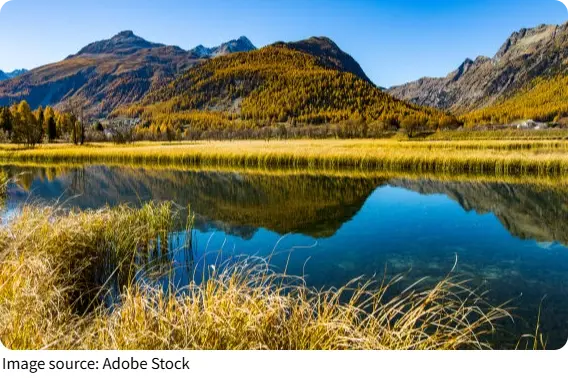
The color comes from the European larch, the only deciduous conifer native to the Alps. Unlike most conifers, the larch drops its needles each autumn, but before it does, those needles turn from summer green through yellow to a deep orange-gold that covers entire mountainsides in a single continuous tone.
The larch forests of the Engadin are among the most extensive in the Alps, covering the slopes between the valley floor and the treeline at approximately 2,200 meters in dense, unbroken stands.
The combination of larch color, fresh snowfall on the peaks above the treeline, deep blue lake water in the valley, and the clear high-altitude light that follows the first cold fronts of autumn creates the conditions visible in the valley's most celebrated views. Lake Sils and Lake Silvaplana, the two largest lakes in the Upper Engadin, produce mirror-perfect reflections on calm mornings that double the color and scale of the landscape above them.
The peak color window is narrow, typically running for two to three weeks in early to mid-October, and shifts slightly year to year depending on temperature and the timing of the first significant cold snap. Arriving a week too early means green trees. Arriving a week too late means bare branches. Getting the timing right rewards the extra planning it requires.
Getting There
St. Moritz is the primary entry point for the Upper Engadin, connected to Zurich by direct train in approximately three hours and forty minutes via Chur. Tickets cost approximately $60 to $90 per person each way depending on booking timing. From Milan, the Bernina Express connects northward through the UNESCO-listed Bernina railway line to St. Moritz in approximately two and a half hours, with tickets from approximately $40 to $60 per person.
Within the valley, the PostBus network connects St. Moritz to all surrounding villages including Sils Maria, Silvaplana, Pontresina, and Maloja, with frequent services and fares of approximately $4 to $8 per journey. A regional day pass covering all PostBus routes in the Engadin costs approximately $20 per person and suits visitors planning to cover multiple lake and village locations in a single day.
Engadin
Key Experiences and Costs
The Engadin's autumn experiences concentrate on walking, elevated viewpoints, and the lake reflection scenes that define the valley's visual identity.
1. Lake Sils circular walk, approximately 12 kilometers around the full lake perimeter through larch forest and open meadow, taking three to four hours at a comfortable pace. The Isola Peninsula section, approximately halfway around, provides the most celebrated reflection viewpoint in the valley. No entry fee.
2. Muottas Muragl funicular above Pontresina, rising to 2,456 meters for panoramic views over the entire Upper Engadin lake chain and surrounding larch forest in autumn color. Return ticket approximately $35 to $40 per person. Open daily from 8 a.m.
3. Furtschellas cable car from Sils Maria, reaching 2,756 meters with elevated views over Lake Sils and Lake Silvaplana simultaneously. Return ticket approximately $40 to $45 per person. Open through late autumn season.
4. The Stazersee lake walk above St. Moritz Bad, a shorter circuit of approximately 3.5 kilometers through dense larch forest reaching a small high-altitude lake whose broken wooden jetty and perfect reflection have become one of the most photographed compositions in Swiss autumn photography. No entry fee. Takes approximately one hour from St. Moritz Bad.
Where to Stay
Accommodation across the Upper Engadin ranges from grand historic hotels to quiet family-run guesthouses, with Sils Maria offering the most peaceful base and St. Moritz the widest range of options.
Hotel Waldhaus Sils above Sils Maria is the valley's most celebrated historic property, a grand hotel operating for over a century with direct views over Lake Sils and the surrounding larch forest. Rooms from approximately $250 to $450 per night during autumn season with full board options available.
Hotel Hauser in St. Moritz town center provides reliable mid-range accommodation from approximately $180 to $280 per night with easy PostBus access to all lake and village destinations. In Pontresina, family-run hotels positioned directly within the larch forest zone offer rooms from approximately $120 to $200 per night, providing the most immersive forest setting of any accommodation in the valley.
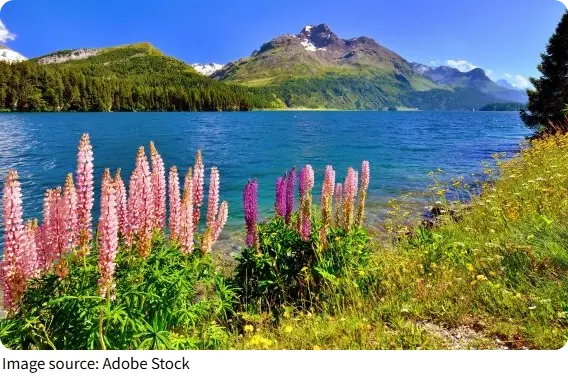
The Engadin in October operates on a schedule entirely its own. The larch color peaks when the temperature drops and not before, the reflections form when the wind drops and not before, and the light is at its best in the early morning hours before the valley thermals develop.
Building a visit around these conditions rather than around a fixed itinerary is how the valley reveals its full character. Stay four nights minimum, check the color forecast before booking, and leave the morning hours free for wherever the light and the calm water are pointing. The valley will use the time well.