Berchtesgaden Alps Guide

Darius
| 28-04-2026
 · Travel team
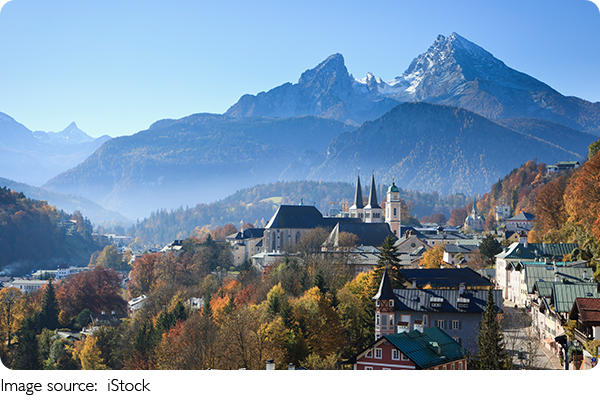
A wooden alpine hut sits on a slope covered in yellow wildflowers, its aged timber boards the color of dark honey in the morning light. Behind it, rising through layers of green forest and grey rock, the twin summits of the Watzmann reach 2,713 meters into a sky that is the specific deep blue of high-altitude Bavaria in late spring.
This is the Berchtesgadener Land in southeastern Bavaria, a corner of Germany that shares a border and a mountain range with Austria but has a landscape character entirely its own — steeper, wilder, and more dramatic than most visitors expect. As the morning mist clings to the jagged limestone peaks, the air fills with the scent of fresh pine and the distant chime of cowbells echoing across the valley.
The region serves as a sanctuary where the raw power of the Alps meets the meticulously preserved traditions of Bavarian village life. Every trail leading through the emerald-green meadows offers a new perspective on a landscape that has remained largely unchanged for centuries. Visitors are invited to immerse themselves in a world where the horizon is dominated by rock and ice, and the valleys are carved by the crystal-clear waters of ancient glaciers. This destination is more than a scenic stop; it is a profound experience of nature’s grandeur, providing a sense of stillness that is increasingly rare in the modern world.
Berchtesgaden is a small town of approximately 7,500 residents at the heart of the Berchtesgaden National Park, the only national park in the German Alps. The park covers approximately 210 square kilometers of mountain terrain including the Watzmann massif, the Königssee lake, and the high alpine plateau of the Steinernes Meer. The combination of accessible alpine scenery, historic town center, and the extraordinary Königssee makes this one of the most rewarding destinations in the German-speaking Alps.
Getting There
Berchtesgaden is located in the extreme southeastern corner of Bavaria, approximately 20 kilometers south of Salzburg in Austria and 150 kilometers southeast of Munich.
From Munich, direct trains run to Berchtesgaden via Salzburg in approximately two hours and thirty minutes, with tickets starting from approximately $25 to $40 per person each way. From Salzburg, the journey by regional train takes approximately one hour with tickets costing approximately $10 to $15 per person.
Munich Airport is the most convenient international entry point, with car rental starting from approximately $40 to $65 per day. The drive from Munich Airport to Berchtesgaden takes approximately one hour and forty minutes via the A8 motorway and then south through the Bavarian foothills. Having a car is strongly recommended for accessing the surrounding meadow and valley viewpoints that give the landscape its full character.
Key Experiences and Costs
Berchtesgaden's primary experiences combine the national park landscape with specific natural and historic attractions in the town area.
1. Königssee boat tour, the essential Berchtesgaden experience, crosses a fjord-like lake enclosed by vertical rock walls reaching 2,000 meters directly from the water's edge. Electric boats operate in silence across the lake to St. Bartholomä pilgrimage chapel on the western shore. Return boat ticket costs approximately $20 to $22 per person. Boats operate daily from 8 a.m. with frequency varying by season.
2. Watzmann panorama walk from Berchtesgaden town, a marked trail of approximately 3 hours return that rises through flower meadows and forest to an elevated viewpoint with the full Watzmann face visible directly ahead. No entry fee. The trail begins from the edge of town and is clearly signposted.
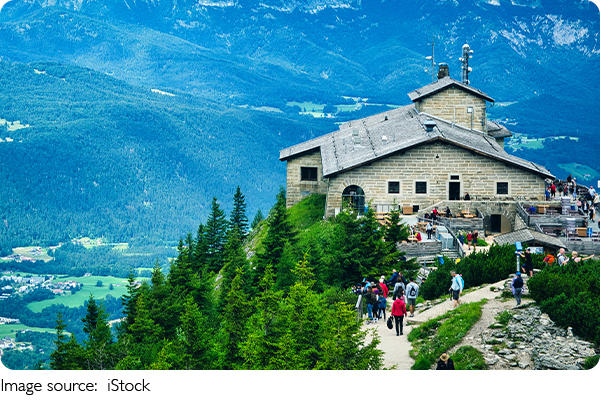
3. The Eagle's Nest, a historic summit building constructed in 1938 at 1,834 meters on the Kehlstein ridge above Berchtesgaden, is reached by a dedicated bus service and a short elevator cut through the mountain rock. The building now operates as a restaurant and viewpoint with panoramic views over the surrounding Alps. Bus and elevator return ticket costs approximately $35 per person. Open from mid-May through October.
4. Berchtesgaden National Park visitor center provides detailed trail maps and current conditions information for all hiking routes within the park. Entry is free. Open daily from 9 a.m. to 5 p.m.
Watzmann
Where to Stay
Accommodation in Berchtesgaden ranges from traditional Bavarian guesthouses to larger hotel properties with mountain views.
Kempinski Hotel Berchtesgaden sits on the hillside above the town with panoramic views over the valley and the Watzmann massif. Rooms start from approximately $250 to $400 per night during peak summer season. The hotel's elevated position provides some of the finest mountain views available from any property in the region.
Alpenhotel Kronprinz is a classic choice, offering understated rooms and suites with a historic Bavarian feel and excellent views of the surrounding peaks. Cost: $210–$240 per night. Several family-run guesthouses in the town center and surrounding villages offer traditional Bavarian accommodation from approximately $70 to $120 per night, with breakfast typically included and walking access to the main trail network.
What to Eat
Dining in Berchtesgaden is all about rustic comfort. You can enjoy a Bavarian Brotzeitplatte (a cheese platter with local spreads) for $12–$18 or try the famous Kaiserschmarrn (fluffy shredded pancakes) for $15–$22. To drink, grab a refreshing Almdudler herbal soda or fresh mountain milk for $4–$7. Whether you are at a mountain hut or a village cafe, the food is simple, hearty, and perfect for hikers.
Berchtesgaden works best for visitors who combine the ethereal boat crossing on Königssee with at least one morning walk through the surrounding meadow landscape. The flower meadows that surround the traditional alpine huts are at their most vivid from late May through July, when the buttercups and mountain flowers cover the slopes in a vibrant yellow and green palette that makes the Watzmann backdrop so distinctive. It is a place that rewards those who slow down, allowing the scale of the vertical rock walls and the silence of the alpine plateaus to shift their perspective.
Come for the lake, stay for the mountains, and leave ample time for the meadow walks that connect the two in the specific way that only a landscape this compressed and this vertical can manage. As you leave the valley, the image of the dark honey-colored timber huts against the deep blue sky will linger as a vibrant reminder of the enduring spirit of the Alps. Whether you seek the challenge of a summit or the peace of a lakeside chapel, Berchtesgaden offers a soul-stirring retreat that proves even in the heart of Europe, the wild and the majestic are still very much alive.