Tuscany's Val d'Orcia Guide

Camille Dubois
| 22-04-2026
 · Travel team
A single stone pine stands atop the crest of a gently rounded hill, its umbrella-shaped canopy catching the last warm light before a dramatic sky moves in from the west.
The surrounding fields shift between gold, green, and amber depending on the season and time of day.
There are no buildings or power lines—just the tree, the hill, the track, and the sky. This is the Val d'Orcia, a UNESCO World Heritage Cultural Landscape in southern Tuscany, famed for its rolling hills, hilltop towns, and iconic rural scenery. This guide will help you explore the valley’s must-see towns, authentic vegetarian cuisine, comfortable accommodations, and scenic routes.
Punto panoramico Val d'Orcia
Getting There
The Val d'Orcia is located in southern Tuscany, approximately 90 minutes by car south of Florence and 60 minutes southeast of Siena. A car is essential for exploring the valley properly, as the landscape's most rewarding viewpoints and hilltop villages are connected by secondary roads that public transport does not serve adequately.
- Car rental from Florence Airport: approximately $40–$60/day.
- From Rome: drive north via the A1 motorway for approximately 2 hours.
- The SS2 Via Cassia road connects Siena to Rome and passes through the heart of the valley, providing access to all main towns.
Key Towns and Experiences
The Val d'Orcia contains several distinct hilltop towns, each with its own character and practical significance as a base.
1. Pienza – The central piazza, cathedral, and papal palace form a unified composition and are freely walkable. Entry to the cathedral costs approximately $3 per person.
2. Montalcino – Fortress entry costs approximately $5 per person. The town is internationally known for its vineyards and olive oil production.
3. Bagno Vignoni – The historic pool itself is not for swimming but is freely viewable. Thermal bathing facilities at the nearby Posta Marcucci hotel cost approximately $25–$35 per person for day access.
4. San Quirico d'Orcia – A small town with well-preserved Romanesque architecture and the Horti Leonini, a formal Renaissance garden open to the public at no charge.
Where to Stay
- Adler Thermae, Bagno Vignoni: $250–$400/night, includes spa access.
- Agriturismo properties scattered across the valley: $90–$160/night, often including breakfast made from farm produce.
- Castiglion del Bosco, near Montalcino: $400–$600/night, luxury resort converted from a medieval estate.
Food
- Many agriturismo properties include breakfast. Tuscan cuisine highlights fresh pasta, cheeses, seasonal vegetables, and olive oil.
- Local restaurants serve lunch and dinner, with prices typically ranging from €15 to €35 per person.
Travel Tips
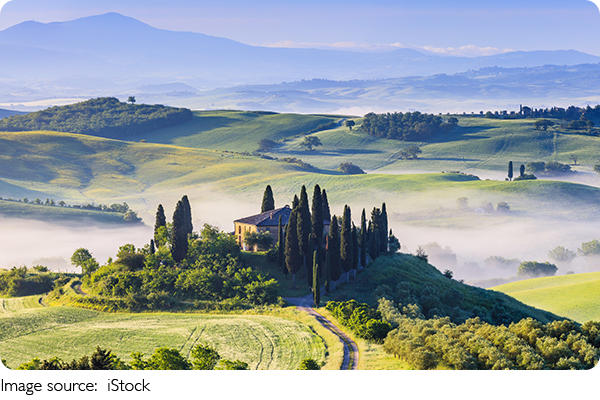
The Val d'Orcia works best for visitors who slow down completely and let the landscape set the pace. Drive the secondary roads between towns in early morning when the mist sits in the valley depressions and the light is horizontal and golden. Stop whenever something looks worth stopping for. The lone tree on the hilltop, the cypress avenue leading to a farmhouse, the dirt track curving across the hillside—these are not incidental details. They are the destination itself, and they require time rather than distance to fully appreciate.
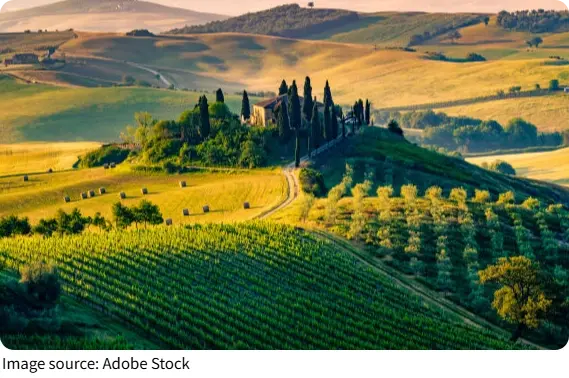
Visiting the Val d'Orcia is less about reaching a destination and more about experiencing the timeless rhythm of the landscape. From wandering hilltop towns and enjoying local vegetarian cuisine to relaxing in thermal spas and staying in charming agriturismos, the valley offers an unforgettable journey where every hill and path tells a story. Take your time, absorb the beauty, and let Tuscany’s rolling hills leave a lasting impression.