Helmsley Castle, Yorkshire

Simone
| 28-04-2026
 · Travel team
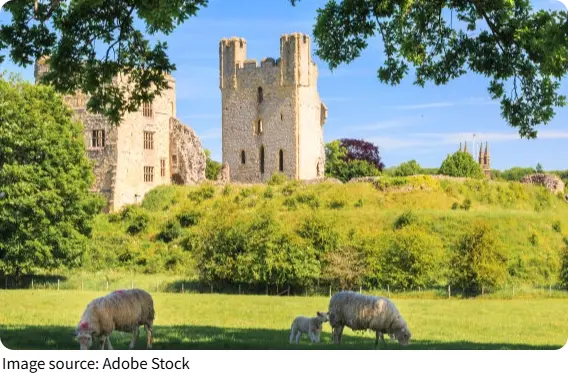
Eight centuries of Yorkshire weather have done almost nothing to diminish it. The keep rises from the hillside above the market town in honey-colored stone, its battlements intact and its three-story facade still presenting a formidable face to the valley below.
Around the base, the foundations of original curtain walls trace their rectangles in the grass—the ghost of a complete medieval fortress visible at ground level. Helmsley Castle is precisely what a medieval English fortification is supposed to look like, standing as a silent witness to the rise and fall of noble dynasties.
The town of Helmsley has grown comfortably around it over the centuries, creating a rare harmony between living community and ancient ruins. As the morning sun warms the limestone walls, the castle serves as a gateway to the wild beauty of the North York Moors. It is a place where the air feels thick with the stories of Norman barons and Elizabethan lords who once walked these grounds. Visitors are invited to explore the deep double ditches and hollowed towers that once defied sieges and time itself. This site offers a sense of rugged permanence that is both humbling and deeply atmospheric, providing a window into the soul of Northern England. Whether viewed from the bustling market square or the quiet banks of the River Rye, Helmsley Castle remains an enduring anchor for the Yorkshire landscape.
Helmsley Castle
What Helmsley Castle Actually Is
The castle was founded in the early 12th century by Walter l'Espec, a Norman baron, and developed significantly over the following two centuries into a substantial defensive complex. The keep that dominates the site today dates from the late 12th century and stands approximately 30 meters tall, its east face featuring the distinctive paired windows visible from the town below.
The castle's most unusual architectural feature is its twin ditches — an inner and outer defensive ditch cut into the bedrock around the site's perimeter — which gave the fortification an additional layer of protection beyond its stone walls. The earthwork banks created by the excavated material from these ditches are still clearly visible around the castle's north and west sides, giving the site a three-dimensional topographic character that flat-plan castle layouts lack.
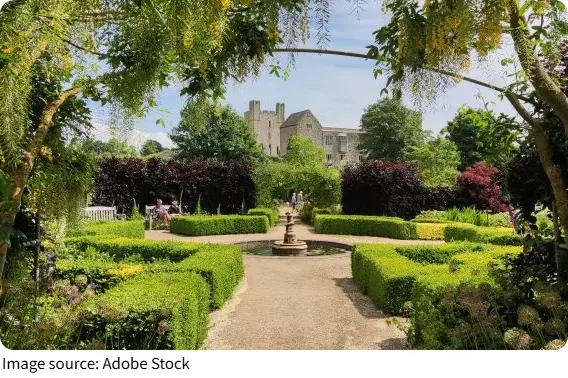
The site passed through several significant ownerships after the medieval period, including the Rievaulx Abbey estate and the Duncombe family, whose descendants continue to own the adjacent Duncombe Park. An Elizabethan mansion was built against the castle's south range in the late 16th century, fragments of which survive alongside the medieval stonework and create a layered historical character unique among Yorkshire fortifications.
Getting There
Helmsley is located approximately 25 miles north of York and 14 miles east of Thirsk in the southern foothills of the North York Moors. The most practical way to reach it is by car — the town sits at the junction of the A170 road that runs east-west across the moors between Thirsk and Scarborough.
From York, the drive takes approximately 45 minutes via the A64 and A170. Car rental from York city center starts from approximately $45 to $65 per day for a standard vehicle. From Leeds Bradford Airport, the drive to Helmsley takes approximately one hour via the A61 and A170.
Public bus service 31X connects Helmsley to York's railway station, with a journey time of approximately one hour and a fare of approximately $6 to $8 each way. Services operate several times daily during the week with reduced frequency on weekends. York itself is served by frequent direct trains from London King's Cross in approximately two hours, with tickets from approximately $30 to $60 each way depending on booking timing.
Opening Hours and Entry Costs
Helmsley Castle is managed by English Heritage and is open to visitors throughout most of the year, with seasonal variations in opening hours.
Standard opening hours run from 10 a.m. to 5 p.m. during the main season from spring through autumn, with reduced hours of 10 a.m. to 4 p.m. during winter months. The castle is closed on selected days during the winter period — checking the English Heritage website before visiting is recommended for winter visits.
Entry costs are as follows.
1. Standard entry — approximately $10 to $12 per person for non-English Heritage members, covering access to the keep interior, the surrounding grounds, and the on-site museum which covers the castle's history from its Norman foundation through the Elizabethan period.
2. English Heritage members — free entry, which makes membership worthwhile for visitors planning to visit multiple English Heritage properties during a UK trip. Annual membership starts from approximately $75 per person.
3. Children under 5 — free entry regardless of membership status.
The on-site museum within the castle grounds contains a well-curated collection of artifacts from the site's excavations and provides detailed context for the architectural phases visible in the standing remains.
Where to Stay in Helmsley
Helmsley's market town setting provides a genuine selection of accommodation within easy walking distance of the castle and the North York Moors trailheads.
The Feversham Arms Hotel is Helmsley's finest property, a boutique hotel with heated outdoor pool and rooms from approximately $180 to $280 per night. The hotel's restaurant is considered one of the best in North Yorkshire and makes it a practical choice for visitors wanting quality dining alongside the castle visit.
The Black Swan Hotel, a historic coaching inn on the market square dating from the 16th century, offers traditional inn accommodation from approximately $120 to $180 per night with the castle visible from its upper windows. Several bed and breakfast properties in Helmsley town offer comfortable rooms from approximately $70 to $110 per night — a more economical option that places guests within the same walking distance of the castle and the surrounding countryside.
What to Eat
Helmsley is a culinary hub for the North York Moors, offering a variety of cozy, traditional options. You can enjoy a classic Yorkshire Ploughman’s Lunch featuring local Wensleydale cheese, crusty bread, and pickles at one of the market square cafes for $12 to $18. For a sweet treat, a traditional Afternoon Tea with warm scones and clotted cream typically costs $10 to $15. Vegetarian travelers should look for hearty vegetable and lentil savory pies or locally sourced herb-roasted root vegetables, with main courses in the town’s inns ranging from $15 to $25. To drink, a cup of Yorkshire Gold tea or a glass of locally pressed apple juice costs about $4 to $6.
Helmsley Castle rewards the visitor who takes the time to read the landscape around it as carefully as the tower itself. The ditches, the earthworks, the Elizabethan fragments, the museum — together they tell a more complete story than the keep alone. The town around it, with its independent shops and cafes on the market square, makes the visit feel embedded in living Yorkshire rather than isolated in historical amber. Combine the castle with a walk into the North York Moors from the town edge and a meal at one of the market square restaurants, and Helmsley delivers a version of English countryside that the more famous destinations in the county rarely match for quality of experience.