Con Dao

Simone
| 28-04-2026
 · Travel team
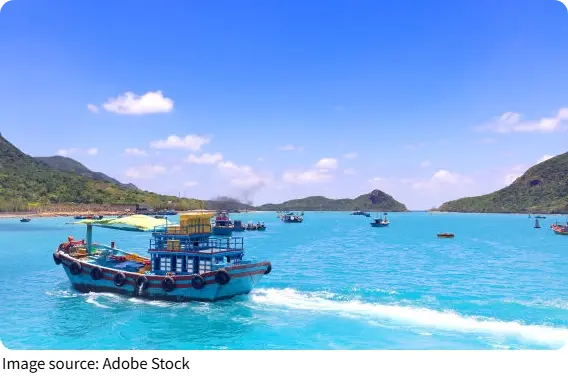
A single wooden fishing vessel moves slowly between clusters of rust-red boulders rising from water so clear and so green it reads as improbable. The stillness of the scene makes every sound feel distant, as if time itself has slowed.
Light reflects off the surface in shifting patterns that blur the line between sea and sky. In moments like this, the landscape feels almost untouched by the modern world.
No resort in sight. No beach umbrellas. No crowds negotiating for sunbeds. The silence is broken only by the gentle movement of water against stone. It feels like a place removed from the usual rhythm of tourist destinations. he landscape remains raw and undisturbed, offering a rare sense of calm.
Côn Đảo
Con Dao is that kind of place — remote, beautiful, and hard to reach. That has kept it looking this way while the rest of Vietnam's coastline developed around it.
Con Dao is an archipelago of 16 islands, 185 kilometers off Vietnam's southern coast. Con Son is the only settled island, with about 8,000 residents. The rest are uninhabited and protected within Con Dao National Park. Here is what it offers.
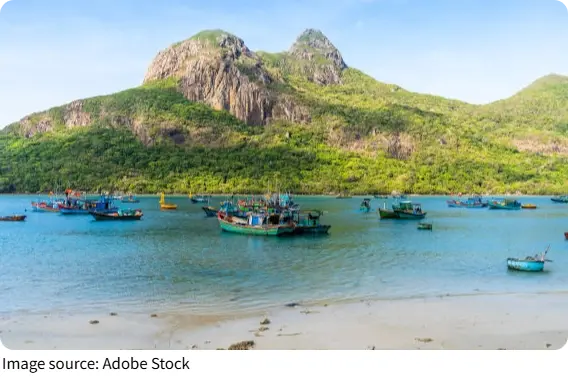
What Makes Con Dao Different
Con Dao is remote by design. No bridge, no large resorts, no developed tourist areas. That is exactly why it works. The coastline mixes white sand with pink granite boulders, polished by waves. In sunlight, they shift from rust to pale pink.
The marine environment is among Vietnam's least degraded. The national park protects coral, seagrass, dugongs, and sea turtles. Between July and October, turtles nest on the beaches — one of Southeast Asia's best wildlife experiences.
Getting There
Con Dao is accessible by air and, less reliably, by sea. Vietnam Airlines and Bamboo Airways operate daily flights from Ho Chi Minh City to Con Dao Airport, with journey times of approximately 45 minutes. Tickets start from approximately $40 to $80 each way depending on season and booking timing. The airport is small and services are limited — booking well in advance is essential during peak season from November through April.
From Con Dao Airport, the journey to Con Son town takes approximately 10 minutes by taxi at a cost of approximately $5 to $8. Motorbike rental in town is the most practical way to explore the main island independently, with daily rental rates of approximately $8 to $12.
The high-speed ferry from Vung Tau on the mainland takes approximately three hours and operates on a schedule that varies with weather and demand. Ferry tickets cost approximately $25 to $35 each way. This option is significantly more weather-dependent than the flight and is not recommended as the primary transport for visitors with fixed return schedules.
Key Experiences and Practical Costs
Con Dao National Park covers the majority of the main island's land area and all of the surrounding islands. Entry fees apply for access to specific park areas and activities.
1. Sea turtle watching tours — conducted between July and October by national park rangers on the designated nesting beaches. Tours depart late evening and cost approximately $15 to $25 per person. Advance booking through the national park office or your accommodation is essential as group sizes are strictly limited to minimize disturbance to nesting turtles.
2. Snorkeling and diving — the reef systems around the uninhabited islands offer some of the clearest water and healthiest coral in southern Vietnam. Day boat trips to the best snorkeling sites cost approximately $20 to $35 per person including equipment. Certified dive trips start from approximately $40 to $60 per dive with equipment.
3. Dam Trau Beach — considered the finest beach on the main island, located within the national park approximately 15 kilometers from Con Son town. Entry costs approximately $2 per person. The beach is reached by a short walk through forested park land and sees a fraction of the visitor numbers that comparable beaches elsewhere in Vietnam attract.
4. Bay Canh Island — the most visited of the surrounding uninhabited islands, reached by boat from Con Son in approximately 30 minutes. Day trips cost approximately $15 to $25 per person and include access to the island's beaches, lighthouse, and forest trails. Sea turtle nesting activity on Bay Canh is among the most significant in Vietnam.
Where to Stay
Côn Đảo offers accommodation options that are more limited than Vietnam’s mainstream destinations, which helps preserve its quiet island atmosphere.
Six Senses Con Dao is the island’s flagship luxury resort. It offers private pool villas directly on the beachfront, with rates starting from approximately $600 to $900 per night during peak season. The property also supports marine conservation projects and offers guided excursions within the national park.
Con Dao Resort provides comfortable mid-range accommodation with sea views, priced from approximately $80 to $150 per night.
Several smaller guesthouses in Con Son town offer basic but clean rooms from approximately $25 to $50 per night. These options place visitors within walking distance of local restaurants and the national park office, where tours and permits are arranged.
Where to Eat
Côn Đảo offers a simple but fresh local food scene, focused mainly on seafood and traditional Vietnamese dishes.
Local restaurants in Con Son town serve meals starting from around $3 to $8 per dish, including rice, noodles, and fresh seafood caught daily.
Mid-range restaurants typically cost around $10 to $25 per person, offering more variety such as grilled seafood, hotpots, and Vietnamese specialties in a more comfortable setting.
For a more relaxed experience, small beachfront eateries serve freshly grilled fish and seafood meals, often priced between $15 and $30 per person, with views of the ocean.
Con Dao's remoteness is now attracting the attention that changes places. Flights are increasing. Awareness is spreading. The window for that experience — a boat through red rocks and turquoise water with no resort in sight — is not infinite.
It is still worth the effort.