Walk Ubud’s Rice Fields

Owen Murphy
| 13-04-2026
 · Travel team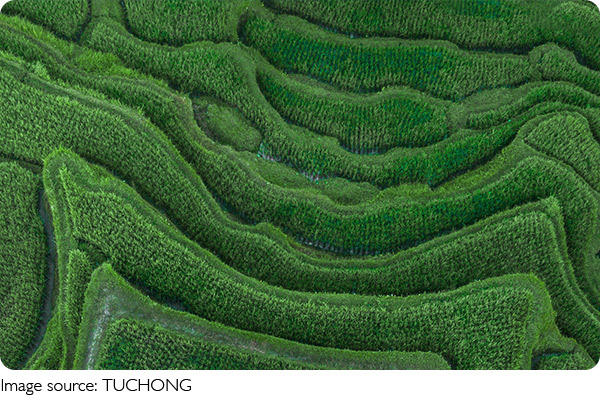
Have you ever gazed at an aerial photograph of Bali's lush green fields and felt an irresistible desire to walk among them?
Ubud’s countryside offers exactly that experience — a living tapestry of rice terraces, palm trees, and village life.
While the town itself attracts visitors with bustling markets and temples, the surrounding fields provide a tranquil, immersive journey through a centuries-old agricultural system.
Alaya Resort Ubud
Discovering Ubud's Fields
Ubud's countryside does that to people. And the remarkable thing is that the reality, at ground level, is even better than the aerial view suggests.
While most visitors to Ubud spend their time in the town center browsing markets and visiting temples, the fields and villages that surround the town offer a completely different experience — one that requires nothing more than a willingness to walk slowly and pay attention to the landscape around you.
What Makes Ubud's Fields Different
The agricultural landscape surrounding Ubud is managed under the subak system — a cooperative water-sharing tradition that has governed rice cultivation across Bali for over a thousand years. Water is distributed from a single upstream source through an intricate network of channels, tunnels, and weirs, reaching dozens of individual farming plots simultaneously and ensuring equitable access across the community.
UNESCO recognized the subak system as a World Heritage cultural landscape, highlighting its unique integration of spiritual belief, community organization, and agricultural engineering. Walking through the fields allows you to experience a living system that connects farmers to a centuries-old community structure.
The fields themselves change dramatically depending on the agricultural cycle:
- Flooded fields reflect the sky in the weeks before planting, creating a mirror-like landscape.
- Young rice plants at early growth stages turn terraces an almost electric green.
- Mature crops produce the layered, textured scenery that photographers often capture from above.
Each phase lasts several weeks and provides a distinct visual experience.
The Best Walking Routes
Several walking routes connect Ubud's town center to surrounding villages and fields, ranging from easy flat walks to more challenging trails through river valleys and terraced hillsides.
- Campuhan Ridge Walk: The most accessible trail for first-time visitors. Starting near the Ibah Hotel on Ubud's western edge, it follows a narrow ridge between two river valleys for approximately 9 km round trip. The walk passes open grasslands, small farming plots, and the village of Bangkiang Sidem before returning via the same ridge. Duration: 2–3 hours at a comfortable pace. No guide required.
- Penestanan and Sayan Routes: Accessible from Ubud’s western side, these trails go through active farming villages where subak channels are clearly visible. The fields are at close range rather than viewed from a ridge. These routes are less marked and benefit from a local guide, available through most Ubud accommodations for $15–$25 for a 2–3 hour walk.
Practical Information
- Season: Dry season (April–October) offers clear skies and comfortable temperatures. Wet season (November–March) brings intense greenery and dramatic clouds but also daily rainfall.
- Entry Fees: Most walking paths are free. Some privately managed field areas collect a small donation of $1–$2.
- Best Walking Hours: Early morning (6 a.m.–9 a.m.) or late afternoon (4 p.m.–6 p.m.) for cooler temperatures and golden light. Avoid midday in the dry season due to direct sun exposure and temperatures exceeding 30°C.
Ubud Travel Essentials
Accommodation:
- Alaya Resort Ubud: Near Campuhan Ridge trailhead, contemporary design, rooftop pool, rates from $180 per night.
- Komaneka at Bisma: Forested river valley below western ridge, dramatic views, rooms from $350 per night.
- Family-run guesthouses in Penestanan and Sayan: Simple, comfortable rooms with field views, rates $30–$60 per night.
Food Options:
- Local Warungs (small eateries): Traditional Balinese dishes, prices $2–$5 per meal.
- Restaurants in Ubud town center: Mid-range options, international cuisine, prices $8–$15 per meal.
- Resort dining: Buffet or à la carte, prices $20–$40 per meal.
Transportation:
- Scooter rental: Approx. $5–$7 per day.
- Private driver: Full-day tour around Ubud and surrounding villages, approx. $40–$50 per day.
- Taxi or ride-hailing apps: Short trips inside Ubud town $3–$7, longer trips to rice terraces $10–$15.
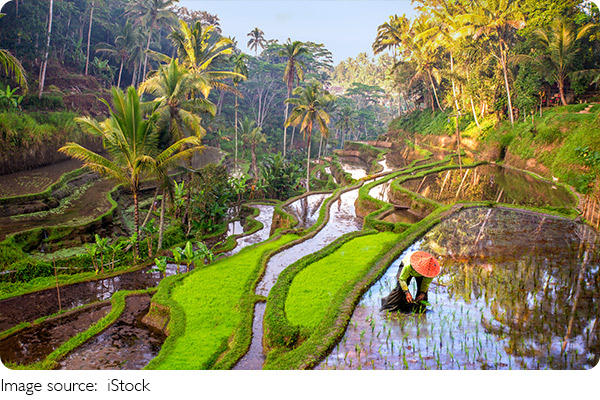
The aerial view of Ubud’s fields draws visitors in, but the ground-level experience is what truly captivates. Walking among terraces cultivated for over a thousand years, listening to water flow through ancient subak channels, and observing farmers tending plots once worked by their grandparents provides a unique, timeless travel experience. Whether you visit now or save it for a future trip, Ubud’s green fields promise memories that linger far longer than any photograph.