Jump Rope Trips

Chandan Singh
| 25-03-2026
 · Sport team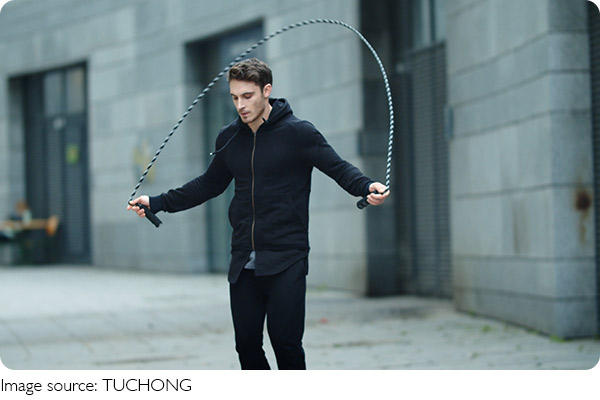
You're in a good rhythm. The rope's turning smoothly. Then—snap—it hits your toes, and everything stops.
Few things are more frustrating than tripping over a rope when you are just getting into the flow. It feels random, but it's usually not. Most rope trips come from small, repeatable technique mistakes.
The good news? Once you identify what's causing the rope to catch, you can correct it quickly. Let's break down the key adjustments that stop those mid-workout interruptions.
Check Your Rope Length First
Before changing your movement, make sure the equipment isn't the problem. A rope that's too long slaps the ground and slows down. Too short, and it clips your feet no matter how well you jump.
Step on the center of the rope with one foot and pull the handles straight up along your sides. The handles should reach around chest height—not your shoulders, not your waist.
Actionable example: If the handles rise above your shoulders, shorten the rope by adjusting the knots or trimming it if it's designed for that. Test it with 30 slow jumps and see if the rope clears your feet more easily.
Ensuring your rope is the correct length reduces unnecessary slack and keeps its path consistent. Many frequent trips disappear immediately once sizing is fixed.
Lower Your Jump Height
A common mistake is jumping too high. When you lift your feet excessively, your timing changes. The rope reaches the ground before you do, and your toes land on it.
Aim to jump just 2–3 centimeters off the floor—barely enough for clearance. Stay on the balls of your feet and keep your knees slightly bent to absorb impact.
Actionable example: Practice 50 slow, low jumps while watching your reflection in a window or mirror. If your head visibly bobs up and down a lot, you're jumping too high. Focus on staying compact.
Lower jumps improve timing and reduce fatigue. The rope passes faster and more predictably when your movement stays tight.
Keep Your Hands in the Right Position
Wide arms are a hidden cause of tripping. When your hands drift outward, the rope shortens in front of you, increasing the chance of catching your toes.
Keep elbows tucked near your ribs, hold your hands slightly in front of your hips, and maintain equal distance on both sides.
Actionable example: Place a small towel under each arm and try jumping without letting it fall. This encourages stable elbow positioning and prevents wide swings.
Correct hand placement ensures the rope maintains a full, round arc instead of narrowing in front of your body.
Use Your Wrists, Not Your Arms
If your entire arm is swinging, the rope speed becomes uneven. Large arm movements slow the rope at the top and speed it up at the bottom, making timing unpredictable.
Rotate from your wrists with small circular motions, keep shoulders relaxed, and avoid lifting your arms high as you spin.
Actionable example: Try spinning the rope beside you without jumping for 30 seconds. Focus on wrist movement only. Once the rotation feels smooth, add light jumps while keeping the same wrist control.
Even rotation helps the rope strike the floor at the same point every time, improving rhythm and reducing surprise trips.
Improve Timing With Slow Practice
Speed hides mistakes. Slowing down exposes them. If you constantly trip at higher speeds, step back and rebuild your timing.
Jump at half your normal pace, listen to the rope tapping the ground, and match your jump to that sound consistently.
Actionable example: Count aloud for 60 seconds—“one” each time the rope hits the ground. If your feet and the rope sound out of sync, slow further until they align.
Practicing slowly trains coordination. Once timing improves at low speed, gradually increase pace without losing control.
Stay Relaxed Under Fatigue
Many trips happen when you're tired. As fatigue builds, shoulders rise, jumps get heavier, and rhythm slips.
Take a deep breath every 20–30 seconds during longer sets, shake out your arms briefly if tension builds, and reset your posture after a trip instead of rushing back in.
Actionable example: During a five-minute session, schedule a five-second reset after each minute. Stand tall, inhale deeply, relax your shoulders, then resume jumping.
Staying calm prevents tension from disrupting your coordination. A relaxed body reacts faster and moves more efficiently.
Tripping over the rope isn't bad luck. It's usually a small mechanical issue—rope length, jump height, hand position, or timing. Once you slow down and correct these details, the rope starts to feel predictable instead of frustrating. The next time you catch your toes, don't get annoyed. Treat it like feedback. Adjust one thing, try again, and you'll notice fewer interruptions and longer, smoother sessions.